






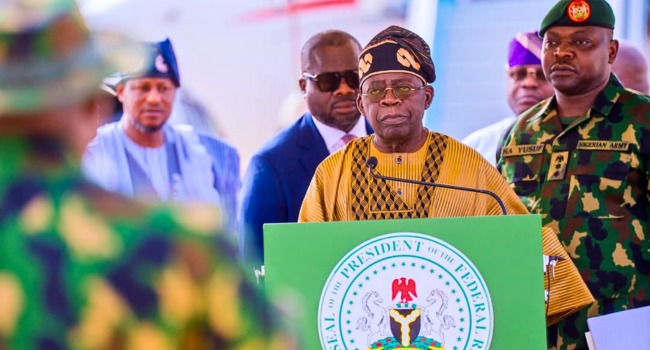
President Bola Ahmed Tinubu, on Wednesday, marked the second anniversary of his administration, highlighting the bold reforms and measurable progress made since he assumed office in May 2023.
Addressing Nigerians in a nationwide broadcast, Tinubu saluted the “resilience and undaunted spirit” of citizens, emphasising that the country is now on a firm path to economic stability and inclusive growth.
Recalling the state of the nation when he took over, Tinubu noted that “the economic and general situation of the country I inherited required that we redirect the country’s affairs with a bold and new vision.” He defended the immediate removal of fuel subsidies and the unification of the foreign exchange windows as necessary steps to prevent national collapse.
“These two were no longer sustainable and have become a chokehold on our nation’s neck, strangling our nation’s future,” the President said.
According to him, the administration’s Renewed Hope Agenda has been focused on restoring economic health, improving national security, reforming governance, and reducing poverty. While acknowledging the difficulties faced by Nigerians due to reforms, Tinubu maintained that the alternative would have led to a “fiscal crisis, runaway inflation, external debt default, and a plunging Naira.”
He announced that inflation is beginning to ease, especially for staple foods like rice, while the oil and gas sector is experiencing recovery with rig counts up by over 400% in 2025 compared to 2021. New investments in the sector have reached over $8 billion.
On fiscal performance, Tinubu revealed that Nigeria’s deficit has dropped from 5.4% of GDP in 2023 to 3.0% in 2024, with the country recording over N6 trillion in revenue in Q1 2025 alone. He also disclosed that external reserves rose from $4 billion in 2023 to over $23 billion by end of 2024, and that the country had paid off its IMF obligations.
Tax reforms were among the major milestones of the administration. “By the end of 2024, our tax-to-GDP ratio rose from 10% to over 13.5%,” he said. The reforms aim to simplify taxation for small businesses, eliminate multiple taxation, and exempt basic services such as food, education, healthcare, and renewable energy from VAT.
To further promote transparency, Tinubu announced the establishment of a Tax Ombudsman to protect vulnerable taxpayers. He added that a new national fiscal policy would guide future decisions on taxation, borrowing, and spending.
The President also reported major strides in the solid minerals sector, healthcare delivery, and education. Over 1,000 Primary Health Centres have been revitalised, with another 5,500 being upgraded. Additionally, six new cancer centres are being established, free dialysis is being piloted in tertiary hospitals, and Health Insurance coverage has grown from 16 million to 20 million people.
On security, Tinubu assured citizens that his administration remains committed to protecting lives and property. “In some areas of the northwest… our gallant armed forces have restored order,” he stated, adding that high-risk roads are now safer and farming activities have resumed.
He praised the dedication of military and intelligence agencies, urging continued collaboration to defeat banditry and other threats. “Every Nigerian deserves to live without fear,” he said.
On youth and human capital development, Tinubu cited the activities of the National Agency for Science and Engineering Infrastructure (NASENI) as a testament to youth-led innovation. Programmes like Innovate Naija and Irrigate Nigeria have created jobs, restored dignity to work, and inspired digital transformation.
In agriculture, he stated that the federal government has launched initiatives to stabilise food prices, support farmers, and invest in mechanised farming.
The administration has also prioritised infrastructure, with road construction projects ongoing across all geopolitical zones and significant investments in electricity infrastructure, including off-grid solar energy.
Tinubu announced plans for the Motherland Festival to showcase Nigeria’s culture and creative industries to a global audience. He also emphasised the importance of the Nigerian diaspora, highlighting initiatives like the diaspora bond and non-resident Bank Verification Numbers to facilitate their contributions.
As he concluded the anniversary address, President Tinubu expressed optimism about the future. “Our journey is not over, but our direction is clear… By the Grace of God, we are confident that the worst is behind us… Together, we will build a stronger, more inclusive Nigeria that we can all be proud of.”