








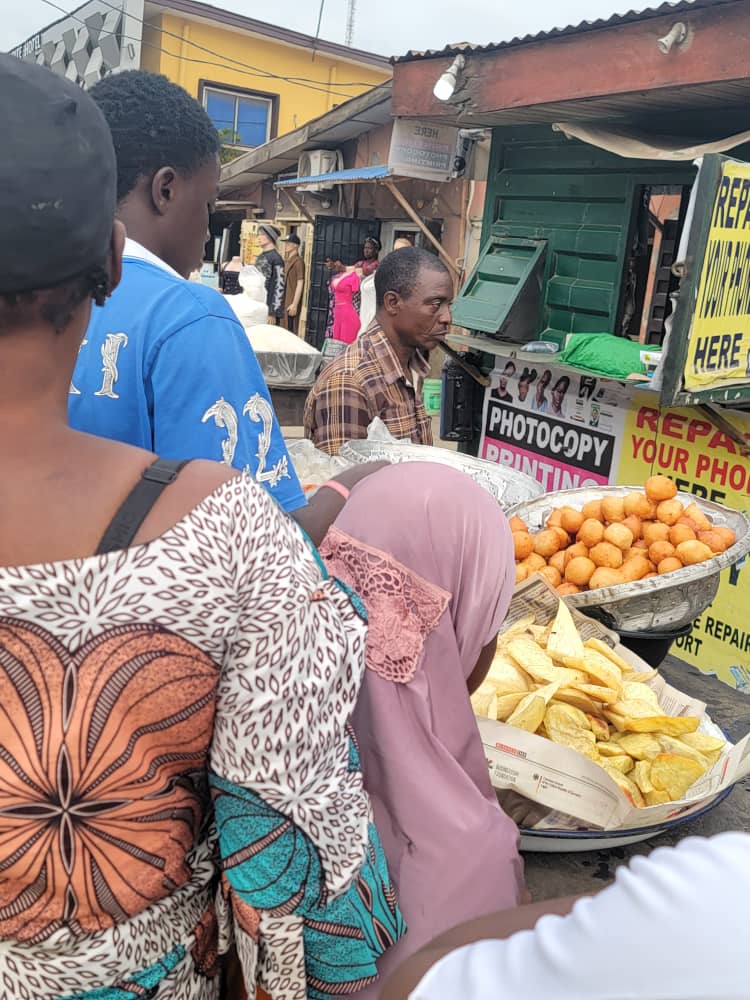
In the early hours of dawn, when the neighbourhood is still wrapped in sleep and the streets remain draped in silence, a different kind of alarm is set off in homes like those of Mama Ajoke in Akure, Hajia Fatima in Ankpa, or Mama Chidinma in Owerri.
Before the world wakes, these women are already awake, wrapped in their old wrappers, sleeves rolled high, flames dancing beneath giant frying pans. Their lives are not built on luxury but on labour, the kind that smells of hot oil and burnt fingers.
This is not the tale of a business empire but the fry stands scattered across Nigeria, humble kiosks that line school gates, motor parks, and street corners. These are the “stands of survival” where akara (bean cakes), puff-puff, yam, fish, and sometimes fried plantain become the currency of sustenance and progress.
A Source of Hope, Built on Fire and Sweat
For decades, thousands of Nigerian women, particularly from low-income backgrounds, have sustained their families through this small-scale, high-labour trade. For these women, frying isn’t just a means to an end; it is the very heartbeat of their daily existence. According to the National Bureau of Statistics (2022), over 68% of women in Nigeria’s informal sector are engaged in petty trading, with food vending ranking among the top three sources of income.
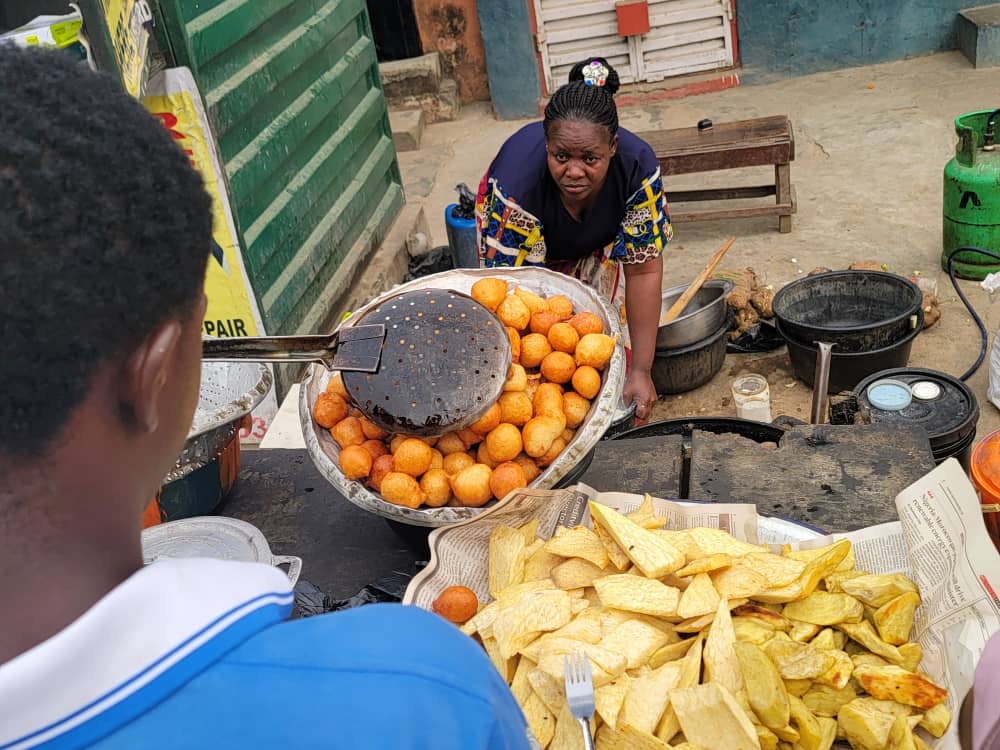
In Igala communities in Kogi State, the story is no different. The frying business, locally known as “iye akara, pai uchu” (frying bean cake and yam), has become both an economic engine and a legacy of motherhood. A 2023 community economic report in Igalamela/Odolu LGA revealed that nearly 1 in every 5 households depends on daily fried goods sold by women to pay for school fees, health care, and basic living.
Women like Mama Eleojo, who began her puff-puff stand in Anyigba before proceeding to Lagos due to her husband’s kind of job, stated that she began her business with just ₦3,000 in 2009, now sponsors two children in university. “I started with a basin, a small pan, and trust in God. Every day I wake up by 3:30 am. My reward is seeing my children wearing suits today,” she says, flipping a ball of puff as the oil crackles.
From Frying Pan to Future
The story of Nigerian professionals raised on “fry stand proceeds” is not a moonlight tale; it is a lived reality. Take, for instance, Blessing Ogwu, a chartered accountant from Dekina, who recounts how her mother’s akara business paid her way through secondary school and university.
“There were times I wanted to hide from friends because my school bag smelled like fried beans, but today, I wear that memory like a badge of honour. My mother, with her weather-beaten hands, fried my way into a profession.” She laughed.
Across the country, similar stories abound. A 2021 UN Women Report on Rural Women and Economic Empowerment highlighted that over 40% of educated Nigerian women from underserved regions were funded through informal female-led enterprises, including roadside food vending.
These fry stands have produced nurses, teachers, journalists, lawyers, engineers, and even entrepreneurs who have scaled the business into catering brands or fast-food outlets.
Heat, Hustle, and Heroism
Behind the smell of hot akara lies the deeper story of invisible labour. These women begin their days earlier than most and go to bed later. They often work without health insurance, social security, or even shade from the sun. Yet, they wake again the next day.
Rainy seasons don’t halt their hustle. They bend under umbrellas or nylon tents, their wrappers soaked, their faces streaked with smoke and sweat. When the economy tightens and food prices rise, as has been the case with inflation hitting 33.95% as of May 2025 (NBS), it is their portions that shrink, not their commitment.
And yet, society barely notices them. The local fry seller is often seen as a fixture rather than a figure, a shadow in the background of school mornings and church events. But perhaps it’s time to revise the narrative.
Celebrating the Fry Stand Legacy
The fry stand is not just a business; it is a movement. A quiet, unacknowledged women-led revolution that has raised generations of professionals. It is the story of resilience told in bean paste and bubbling oil.
For those of us who watched our mothers stretch every cup of flour or bean to cover both breakfast and school fees, we carry this legacy not with shame but with pride. It is a story of how poverty met dignity, and how hot oil met hard dreams.