







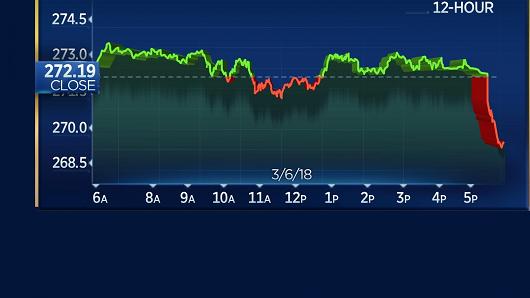
U.S. stocks ended Friday’s trading session on a mixed note, with the S&P 500 posting a marginal gain after fresh data pointed to moderating inflation, while the Nasdaq retreated as pressure mounted on heavyweight technology and communications services companies amid persistent concerns about artificial intelligence-related disruption.
Although Wall Street initially rallied following the release of consumer price figures, sentiment cooled into the close as investors reassessed risks tied to Big Tech valuations and the broader earnings outlook.
Inflation Data Lifts Early Sentiment
Markets opened firmly after government data showed that U.S. consumer prices rose less than analysts had anticipated in January. The softer-than-expected inflation reading strengthened the case for potential monetary easing by the Federal Reserve later this year.
According to CME Group’s FedWatch tool, traders modestly increased the probability of a 25-basis-point interest rate cut in June to 52.3%, up from 48.9% a day earlier. The recalibration reflected growing optimism that inflationary pressures are gradually subsiding.
However, the initial enthusiasm faded as the session progressed.
Tech and Communications Stocks Drag
The S&P 500 managed to hold a fractional gain, but technology and communications services shares weighed heavily on the broader market. Investors remain uneasy about how artificial intelligence competition could reshape profitability across multiple sectors, particularly among mega-cap firms that have driven much of the market’s gains over the past year.
The S&P 500’s technology sector index declined 0.5% by the closing bell, while the communications services segment also finished lower. The weakness in these influential sectors offset strength elsewhere and kept overall market gains muted.
Market participants cited lingering doubts over the scale of capital expenditure required to maintain leadership in AI development, as well as uncertainty about long-term returns from those investments.
Michael James, managing director at Rosenblatt Securities in Los Angeles, said large-cap technology names continue to act as a restraint on broader market momentum.
“Mega-cap tech remains an overhang, and every attempt at a rebound seems to meet resistance,” James noted. “Markets have been shaky for the past couple of weeks, and heading into a three-day holiday weekend, some late-day profit-taking wasn’t surprising.”
U.S. markets will be closed Monday in observance of Presidents Day, a factor that often reduces risk appetite ahead of the extended break.
Major Index Performance
By the close of trading:
- The Dow Jones Industrial Average rose 48.95 points, or 0.10%, to 49,500.93.
- The S&P 500 gained 3.41 points, or 0.05%, finishing at 6,836.17.
- The Nasdaq Composite declined 50.48 points, or 0.22%, settling at 22,546.67.
Despite Friday’s mixed finish, all three major indexes recorded weekly losses. The S&P 500 dropped 1.39% for the week, the Nasdaq fell 2.1%, and the Dow shed 1.23%—marking their steepest weekly declines since November.
Weekly Pullback Reflects Broader AI Anxiety
Equity markets have retreated from recent record highs, with artificial intelligence emerging as a key source of volatility. Concerns about earnings disruption have extended beyond software firms to industries such as insurance and transportation, where automation and AI integration are increasingly reshaping operational models.
Interestingly, the S&P 500 software and services index managed to close 0.9% higher on Friday, suggesting selective strength within the technology ecosystem even as the broader tech sector slipped.
Analysts say the market’s current phase reflects a repricing process as investors attempt to quantify both the risks and opportunities tied to rapid AI adoption.
Outlook
While inflation data has improved incrementally, strategists caution that volatility may persist. Jerome Powell’s term as Federal Reserve Chair is expected to conclude in May, with Kevin Warsh widely viewed as a likely successor. Leadership changes at the central bank could introduce policy uncertainty at a delicate stage of the economic cycle.
For now, investors appear caught between optimism over cooling inflation and apprehension about earnings risks, monetary policy direction, and the evolving impact of artificial intelligence on corporate America.