





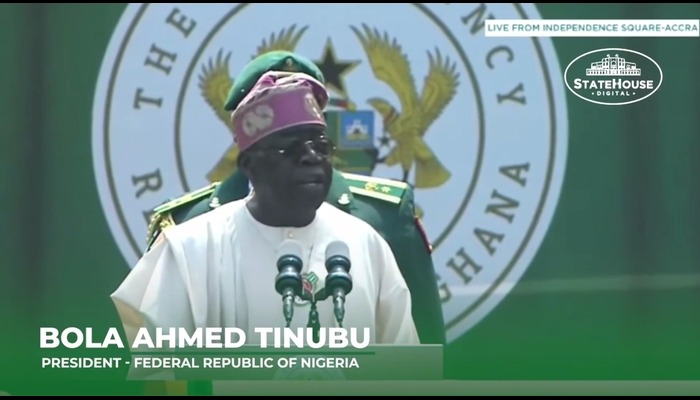
The Senate on Tuesday approved President Bola Tinubu’s request to deploy Nigerian troops to the Republic of Benin, following an attempted coup in the neighbouring country that has heightened regional security concerns.
The approval came on the same day the Economic Community of West African States (ECOWAS) raised fresh alarm over a resurgence of military takeovers and democratic backsliding across the sub-region. The concerns were voiced at the 55th Session of the Mediation and Security Council at the ministerial level, held in Abuja.
Benin Republic plunged into crisis on Sunday when members of the Military Committee for Refoundation seized the state broadcaster in Cotonou and declared President Patrice Talon removed from office.
The mutineers, led by Lt. Col. Pascal Tigri, claimed control of government institutions before loyalist forces—supported by a rapid deployment of Nigerian troops—restored order hours later.
The Presidency later described Nigeria’s swift intervention as evidence of President Tinubu’s commitment to safeguarding constitutional order in West Africa and preventing a further collapse of democracy in the region.
Senate President Godswill Akpabio read Tinubu’s request during plenary, urging lawmakers to endorse the mission aimed at “restoring governance” in Benin. The Senate granted immediate approval, though not without dissenting voices.
Deputy Senate President Jibrin Barau applauded the President’s action, calling Tinubu “a true democrat.”
But former Bayelsa State governor, Senator Seriake Dickson, objected that the matter should have been debated openly.
Akpabio quickly ruled him out of order, insisting that the chamber had already given unanimous consent and that “the President is not going to war, but protecting Nigeria’s borders.”
Senators Adams Oshiomhole and Opeyemi Bamidele reinforced the position, arguing that Tinubu acted within the law and in the interest of regional security.
Dickson later clarified he supported the intervention but urged ECOWAS leaders to address governance failures that fuel coups across the region.
ECOWAS: Region in a State of Emergency
Earlier at the ECOWAS ministerial meeting, the President of the ECOWAS Commission, Dr Omar Touray, delivered a stark assessment of West Africa’s political landscape, noting that the region now faces an “average of high risk” of instability.
Touray listed the key triggers, including:
Persistent military interventions in member states
Rising electoral exclusion and constitutional violations
Escalating terrorist activities and cross-border criminality
Intense geopolitical pressure undermining regional cohesion
“The community is in a state of emergency,” he warned, adding that recent events in Guinea-Bissau and Benin underscore the fragility of democratic institutions.
Touray also cited worsening humanitarian conditions, referencing UNHCR data showing 7.6 million people displaced across West Africa, including over 6.5 million internally displaced persons, mostly in Nigeria, Burkina Faso, Niger and Mali.
He urged member states to uphold constitutional norms and strengthen collective security, praising President Tinubu’s leadership during the Benin crisis.
Sierra Leone’s Foreign Affairs Minister and Chair of the ECOWAS Council of Ministers, Timothy Kabba, stressed that the region must move beyond declarations and take concrete steps to reverse democratic decline.
“The attempted coup in Benin and the crisis in Guinea-Bissau are sobering reminders of our vulnerability,” he said. “Our people expect seriousness, unity, and results.”
A Region on Edge
West Africa is grappling with an unprecedented wave of political instability. Mali, Niger and Burkina Faso remain under military rule, while Guinea-Bissau recently joined the list. The foiled coup in Benin adds to growing fears that the region may be sliding into a new era of political volatility.
ECOWAS Heads of State are expected to meet in the coming days to consider recommendations from the ministerial session, including strengthened security cooperation, deeper diplomatic engagement, and firmer measures to deter military adventurism.