





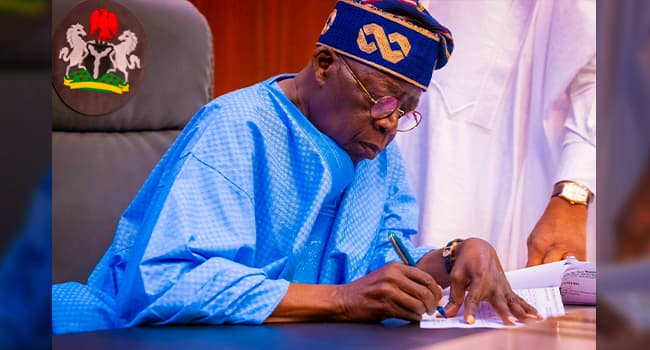
The North has reopened the debate on Nigeria’s unwritten power rotation arrangement, with political leaders, traditional rulers, and civil society organisations gathering in Kaduna to assess President Bola Ahmed Tinubu’s two years in office.
The two-day summit, organised by the Sir Ahmadu Bello Memorial Foundation at the historic Arewa House, had stakeholders from the 19 northern states and the Federal Capital Territory in attendance. The conference was themed “Assessing Electoral Promises: Fostering Government-Citizen Engagement for National Unity.”
Participants critically reviewed the performance of the Tinubu administration under the “Renewed Hope” agenda, with many voicing concerns over unmet expectations in the areas of security, youth employment, education, and infrastructure development in the North.
The event also served as a platform for renewed agitation over the zoning of the presidency, as some northern leaders insisted that the principle of equity and federal character should guide future transitions of power.
Speaking on behalf of President Tinubu, the Secretary to the Government of the Federation (SGF), Senator George Akume, called for patience, stating that the North’s turn to produce the president will come, but not in 2027.
“Based on the zoning arrangement which has been in place since 1999, it is not the North’s turn to produce the president until 2031,” Akume said.
Akume added that the administration remained committed to delivering on its campaign promises and urged northern leaders to sustain dialogue and partnership with the federal government.
Also present at the event was the National Security Adviser, Nuhu Ribadu, who appealed for continued collaboration to tackle the security challenges in the region.
In his remarks, Dr. Umar Ardo, a former presidential candidate, criticized the Tinubu administration for what he described as a slow and selective approach to governance, which he said had failed to bridge regional inequalities.
Other speakers, including youth leaders and academics, challenged the federal government to urgently address the concerns of the North, warning that the region cannot afford to be marginalised after giving significant support during the 2023 general election.
The outcome of the gathering is expected to shape the region’s political direction ahead of the 2027 polls, with growing calls for a clearer position on zoning and power-sharing agreements within the ruling All Progressives Congress (APC).
While the presidency maintains that the zoning arrangement should see the South hold power until 2031, the evolving political mood in the North suggests the region may push for renegotiation ahead of the next election cycle.