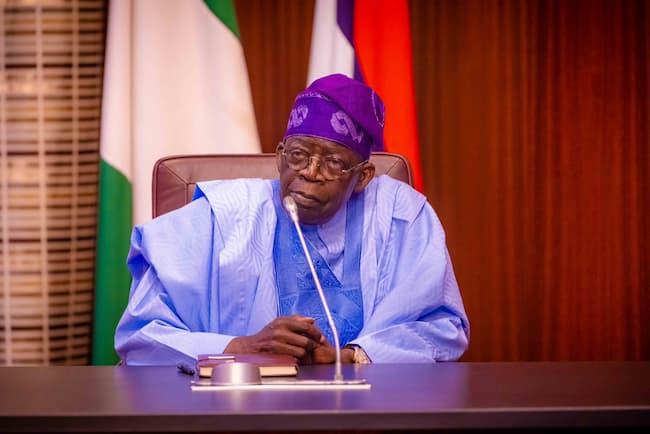
President Bola Tinubu, yesterday, directed a swift reassessment of the N8,000 cash transfer meant for the vulnerable 12 million Nigerian households, intended to soften the effect of the fuel subsidy removal, following laments and outcry by many Nigerians about the cash policy.
Bola Tinubu also ordered a swift unveiling of the entire palliative package to Nigerians, while grains and fertilisers were to be made available to 50 million farmers and households in all the 36 states of the federation and the Federal Capital Territory (FCT), Abuja.
Special Adviser to the President on Special Duties, Communications and Strategy, Mr Dele Alake, revealed the position of the president, in a press statement titled, “Review of N8,000 Cash Transfer.”
Alake noted that much as the cash programme was not the only item in the government relief package, as a listening leader, who had vowed to always put Nigerians at the heart of his policy and programme, Tinubu had given new directives.
These, Alake said, included, “That the N8, 000 conditional cash transfer programme envisaged to bring succour to most vulnerable households be reviewed immediately. This is in deference to the views expressed by Nigerians against it.
“That the whole gamut of palliative package of government be unveiled to Nigerians. Immediate release of fertilisers and grains to approximately 50 million farmers and households, respectively, in all the 36 states and the FCT.
“The president further assures Nigerians that the N500 billion approved by parliament to cushion the pain occasioned by the end of subsidy regime will be judiciously utilised. The beneficiaries of the reliefs shall be Nigerians, irrespective of their ethnic, religious or political affiliation.”
Alake also stated, “President Bola Tinubu has promised to always prioritise the wellbeing of Nigerians and he is irrevocably committed to the vow. A number of decisions taken so far by this administration have buttressed this stance.
“You will agree with me that it has become part of the culture of President Bola Ahmed Tinubu administration to constantly dialogue with Nigerians, who voted him into office. The president covenanted with Nigerians that their welfare and security will be topmost in the Renewed Hope Agenda of his government.
“In the last few days, the conventional and new media platforms have become awash with stories of the government intending to embark on conditional cash transfer to vulnerable households mostly affected by the painful but necessary decision to remove subsidy from petrol.
“The story has been widely reported that the federal government is proposing to give 12 million households from the poorest of the poor N8, 000 monthly for a period of six months as government palliative to reduce the discomfort being experienced by Nigerians consequent upon subsidy removal.
“A lot of ill-informed imputations have been read into the programme by not a few naysayers. The administration believes in the maxim that when there is prohibition, there must be provision. Since subsidy, the hydra-headed monster threatening to kill the economy, has been stopped, government has emplaced a broad spectrum of reliefs to bring help to Nigerians.
“You will recall that the president took a similar decision after listening to complaints from the business community/stakeholders about burdensome taxes, particularly multiplicity of taxes they are made to experience. This warranted the signing of four (4) Executive Orders cancelling some classes of taxes, while suspending the implementation dates of others.
“In addition, the president has also set up a Tax Reform/Fiscal Policy Committee to bring up recommendations that will engender a wholesome fiscal environment for the country and remove anti-business barriers.
“I wish to assure Nigerians that President Tinubu will continue to be a listening leader whose ears will not be dull to the views expressed by the citizenry. The president believes government exists to cater for the interest of the people and he has demonstrated this so clearly.”
The Nigeria Customs Service (NCS), Kwara State Command has said that it raked a total sum of N6.2 billion as revenue between April and June 2023.
Speaking with journalists in Ilorin on activities of the command in the second quarter of 2023, the Customs Area Controller, the state command, Mr. Kehinde Ilesanmi, said that, “the money represents 9.14 per cent of the revenue increase when compared to preceding year 2022.
“The Command has at the end of the second quarter 2023, generated the sum of N 6, 246, 485,827.97.
He added that the command under his watch between January and June this year has collected and remitted the sum of N9, 813,483,412.09 to federation account.
“This amount is above what was collected from (January-June, 2022) with the sum of N5,762,552,633.87,” he stated.
Ilesanmi stated that the results of the command’s anti-smuggling activities coupled with its renewed drive in utilization of cutting edge strategies had led to 56 seizures of different items with Duty Paid Value (DPV) N48,822,400.00.
He listed items seized during the period under review to include; nine units of used vehicles of different types, 813 bags of foreign parboiled rice, 24,950 litres of petroleum product in 998 Jerry cans and 14 kegs of vegetable oil of 25 litres.
“The seizures were successfully accomplished as a result of the renewed determination of the Comptroller-General of Customs, Bashir Adewale Adeniyi, to rid the country of all forms of illegal importation, “Ilesanmi said.
Leadway Assurance Company Limited, has led a consortium of insurance firms including Sanlam Insurance, Mutual Benefits and LASACO, to disburse the sum of N535 million as Group Life Insurance claims to 68 beneficiary members of the Nigerian Police Force (NPF).
The company presented the claims Cheques in a ceremony at the Force’s Headquarters in Abuja.
The firms explained that the claims payment validates the benefits of procuring insurance policies for Nigerians, especially those whose noble profession consistently putso them in harm’s way.
Commenting at the ceremony that heralded the distribution of the claims to 68 beneficiary families of the deceased officers and those injured or rendered disabled in the line of duty, the Acting Inspector General of Police, Olukayode Egbetokun, reiterated his belief that human life is valuable and would hence prioritise the wellbeing of all officers and men of the Force.
Also speaking, the Managing Director, Leadway Assurance, Mr. Tunde Hassan-Odukale said, “We extend our deepest condolences to the families of the departed officers who made the ultimate sacrifice in the service of our nation. As an organisation, we are fully committed to fulfilling our promise of providing financial security to our policyholders. This prompt claim payout to our heroes further demonstrates the benefits of insurance and our unwavering dedication to supporting the families left behind”.
“This consortium is proud to be at the vanguard of protecting the financial wellbeing of the personnel of the Force and their families. We believe in the importance of honouring our obligations promptly and stand as beacons of trust for the insurance industry as an assured partner in safeguarding the wealth and wellbeing of Nigerians”.
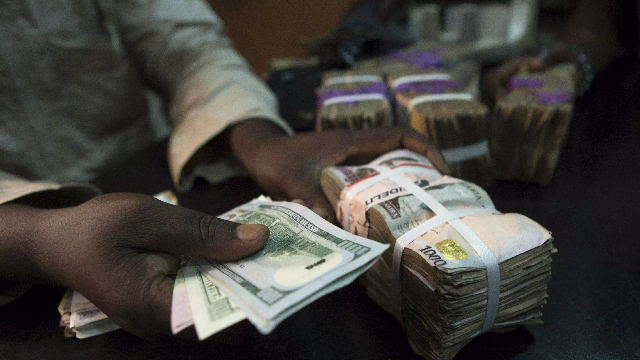
According to the data at the FMDQ Security Exchange where forex is traded officially, the dollar to naira exchange rate stood at (undisclosed).
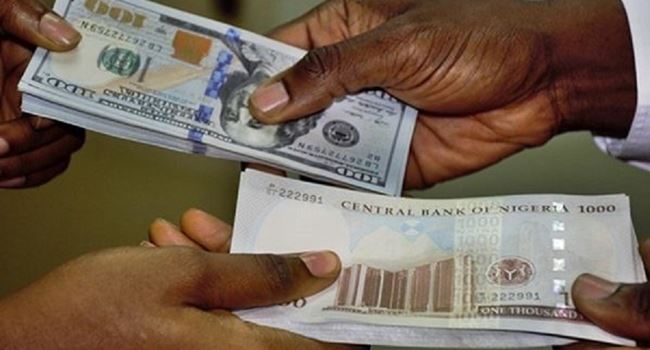
This would mean that the Nigerian currency dropped in value against the United States dollar, as the foreign exchange (forex) trading closed at ₦742.93 per $1 on Tuesday, July 18.
How much is the dollarto naira at the black market today?
Going by sources at the Bureau De Change (BDC) in Lagos, the dollar to naira last exchanged ₦825 in the black market in the state.
It is, however, pertinent to note that the Central Bank of Nigeria (CBN) does not recognise the parallel market (black market), as it has directed individuals who want to engage in forex to approach their respective banks.
The Federal High Court sitting in Lagos has ordered Ecobank Nigeria to pay Honeywell Flour Mills N72.2bn in damages.
The ruling, delivered on Tuesday by Justice Mohammed Liman, brought an end to an aspect of the longstanding legal battle between the flour milling company and the bank.
The legal dispute originated from a series of allegations and counterclaims between Honeywell Flour Mills and Ecobank.
The protracted legal battle kicked off in November 2015 when Ecobank obtained ex-parte orders from the Federal High Court to freeze Honeywell Flour Mills’ assets, including all its bank accounts.
This almost stopped Honeywell Flour Mills’ business as they were unable to fulfill their obligations to stakeholders.
They were unable to pay suppliers, process Letters of Credit, and collect payment from distributors, thus endangering the livelihood of over 2,000 employees and causing significant reputational and operational damage.
After weeks of struggling to run a business without access to their bank accounts, Honeywell Flour Mills applied for discharge of the orders, with the court varying the asset freezing ex-parte orders and allowing the company limited access to its accounts.
In March 2016, a Court of Appeal overruled the ex-parte orders to restore Honeywell Flour Mills’ right to operate its accounts without any barrier, stating that Ecobank’s application to freeze honeywell’s assets should not have been allowed to stand.
In an appeal against the judgment, Ecobank asked the Supreme Court to overturn the Court of Appeal decision.
The highest judicial authority, however, was established in July 2018, and upheld the appellate court’s decision that an ex-parte injunction was not permitted to be filed in a winding-up petition.
After the Supreme Court upheld the Court of Appeal’s judgment, Honeywell Flour Mills demanded Ecobank fulfilled its undertaking to compensate the company for the loss suffered due to the ex-parte order, being baseless. The company sought damages in excess of N72bn against Ecobank.
In his arguments, Honeywell Flour Mills’ lead counsel, Bode Olanipekun, argued that the Supreme Court determined that the ex parte orders obtained by the bank against the plaintiff were improper and once a court makes a finding is made that an application is improper then that application is frivolous.
Ecobank’s representative, Kunle Ogunba, argued that in its undertaking, it gave a condition that if HFMP suffers any damage, it should send a notification to the registrar of the court, who will then inform the bank.
That condition, according to the bank, was not carried out and so, HFMP is not entitled to damages.
After careful examination of the evidence and after deliberation, the court reached a decision, ultimately favouring Honeywell Flour Mills and granting all four reliefs sought, totalling N72.2bn.
Access Holdings, a leading African finance institution committed to making a difference, has once again demonstrated its dedication to ensuring children have the chance to access quality education.
Through its recent Polo Day, held at the esteemed Guards Polo Club in Windsor, United Kingdom, the group secured pledges for the construction of 100 classroom blocks in Nigeria.
The classrooms will go a long way in ensuring countless underprivileged children will have access to a safe and nurturing learning environment, ultimately inspiring them to dream, learn and become more.
In his remarks at the event, the Group Managing Director of Access Holdings, Herbert Wigwe, highlighted the significant milestones made in line with the organisation’s objectives.
“Today, we stand on the shoulders of the remarkable achievements from previous editions. Each one, a testament to our commitment to making a tangible difference in the lives of children in need of education and optimism. Together, we have made good progress in ensuring children are given a fair chance at a brighter future through quality education.
“Our collective and continuing support of free and equitable education for children reflects a view of our role as change agents that can help institute socio-economic development through responsible business practice and social initiatives. As such, we will continue to seek out innovative ways to garner resources and invest in the future of our society. We are part of the community and we support its wellbeing,” Wigwe stated.
Since the polo fundraising initiative was launched in partnership with Fifth Chukker and UNICEF, Access Holdings, through its flagship subsidiary, Access Bank Plc has seen to the refurbishment of several schools in Kaduna and has put over 12,000 children through continuous education. At the same time, 60 classrooms and a computer literacy building have been commissioned.
The communities surrounding the schools are supported with boreholes for water, while households have been empowered with equipment and training to secure employment, stimulating economic and social development.
The completion of the new set of classroom blocks will represent a significant step in the organisation’s goal of attaining a student-to-class ratio of 35-40 students per class in line with the national target.
Restating plans to empower even more communities, the Managing Director, Access Bank Plc, Roosevelt Ogbonna emphasised that, “The Group’s true victory does not lie solely in the goals scored during the tournament, but in the lasting impact we can create beyond these moments.”
“We are proud to be a driving force in the pursuit of access to education and look forward to creating a world where every child has the opportunity to thrive,” he concluded.
The event brought together distinguished guests and personalities from around the world. Among the notable attendees were the Executive Governor of Lagos State, Babajide Sanwoolu; 14th Emir of Kano, Khalifa Muhammadu Sanusi II, CON; 21st Olu of Warri, His Majesty, Ogiame Atuwase III; Chairman, Coronation Capital, Aigboje Aig-Imoukhuede; Chairman, Access Bank Plc, Paul Usoro (SAN); former Chairman of Access Bank Plc, Ajoritsedere Awosika, and more.
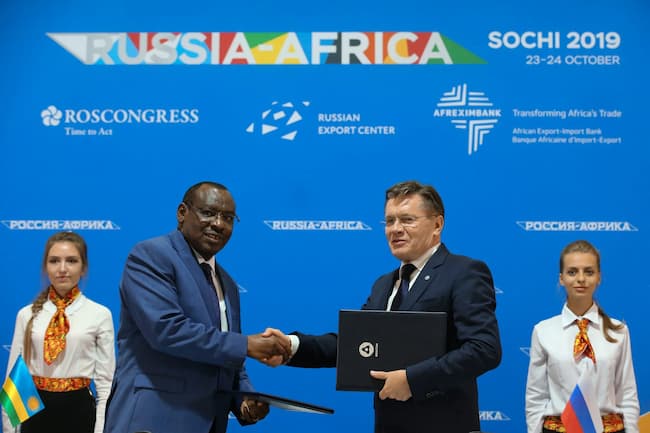
As part of the business programme of the Second Russia–Africa Summit and Russia–Africa Economic and Humanitarian Forum, representatives from the relevant Russian ministries, Russian and African business leaders, and international relations experts will discuss the challenges facing Russia and African countries in an era of global change, and will talk about the most pressing issues and ways of resolving them to encourage the development of Russian–African relations in the economic, cultural and humanitarian spheres.
The Forum’s business programme consists of four large topic areas covering all spheres of cooperation between Russia and the African continent: The New Global Economy, Integrated Security and Sovereign Development, Cooperation in Science and Technology, The Humanitarian and Social Sphere: Working Together for a New Quality of Life.
“The Second Russia–Africa Summit and Russia–Africa Economic and Humanitarian Forum is set to become a unique platform for direct dialogue between business, government, and representatives of the creative and cultural communities of Russia and Africa. I am confident that in the foreseeable future, all the Forum events will lead to a strengthening of the ties between our regions and to effective cooperation,” said Anton Kobyakov, Advisor to the President of the Russian Federation, Executive Secretary of the Organizing Committee for Russia–Africa Events.
One of the main events of The New Global Economy block will be a panel discussion: Doing Business in Africa: Risks, Market Conditions, Opportunities. The speakers will tackle the issues of expanding business cooperation between Russia and African countries, and will talk about export potential in the face of the new challenges, as well as the programmes and projects currently underway in Africa.
Taking part in the discussion will be Mikhail Aronson, Deputy General Director, Zyfra, Georgy Smirnov, General Director, Nordgold Management, and others. The session will be moderated by Alexander Shokhin, President of the Russian Union of Industrialists and Entrepreneurs.
The key event of the Integrated Security and Sovereign Development block will be a panel discussion: Russia and Africa: Partnership for Food Sovereignty. Africa is known to be the world’s most food-insecure region. How can Russia help Africa develop agricultural infrastructure?
How can uninterrupted supplies of Russian mineral fertilizers and agricultural machinery be maintained, and how can the political risks involved in paying for their import be eliminated? These questions will be answered by speakers at the Russia and Africa: Partnership for Food Sovereignty panel discussion.
Taking part in the discussion will be Andrey Guryev, President, Russian Association of Fertilizer Producers (RAFP), Konstantin Babkin, President of the New Commonwealth Industrial Union, and others. The discussion will be moderated by Oleg Ozerov, Ambassador at Large, Ministry of Foreign Affairs of the Russian Federation.
The problems of transitioning to fully-fledged sovereign development will be discussed at a panel discussion entitled New World Order: From the Legacy of Colonialism to Sovereignty and Development, forming part of The Humanitarian and Social Sphere: Working Together for a New Quality of Life block.
The discussion will be moderated by Irina Abramova, Director of the Russian Academy of Sciences’ Institute for African Studies, and taking part will be Mikhail Lipkin, Director of the Russia Academy of Sciences’ Institute of World History, Rasigan Maharajh, Chief Director, Institute for Economic Research on Innovation, Tshwane University of Technology, and others.
The potential for cooperation between Russia and African countries in the field of advanced technological solutions will be unlocked by speakers at a session entitled Cutting-Edge Technologies for Africa’s Sustainable Development, to be held as part of the Cooperation in Science and Technology block. The panel discussion will be moderated by Andrey Maslov, Director of the HSE Centre for African Studies. Taking part in the discussion will be Pavel Sorokin, First Deputy Minister of Energy of the Russian Federation, Anton Butmanov, Director for Sustainable Development, EN+ Group, Sergey Machekhin, Deputy General Director, Project Engineering and International Cooperation, RusHydro, and others.
Other events being held at the venues of the Russia–Africa Economic and Humanitarian Forum include the Media Forum, Meeting of University Rectors, Roundtable attended by Russian and African Supreme Audit Institutions, Youth Programme events and much more.
As part of the business programme of the Second Russia–Africa Summit and Russia–Africa Economic and Humanitarian Forum, representatives from the relevant Russian ministries, Russian and African business leaders, and international relations experts will discuss the challenges facing Russia and African countries in an era of global change, and will talk about the most pressing issues and ways of resolving them to encourage the development of Russian–African relations in the economic, cultural and humanitarian spheres.
The Forum’s business programme consists of four large topic areas covering all spheres of cooperation between Russia and the African continent: The New Global Economy, Integrated Security and Sovereign Development, Cooperation in Science and Technology, The Humanitarian and Social Sphere: Working Together for a New Quality of Life.
“The Second Russia–Africa Summit and Russia–Africa Economic and Humanitarian Forum is set to become a unique platform for direct dialogue between business, government, and representatives of the creative and cultural communities of Russia and Africa. I am confident that in the foreseeable future, all the Forum events will lead to a strengthening of the ties between our regions and to effective cooperation,” said Anton Kobyakov, Advisor to the President of the Russian Federation, Executive Secretary of the Organizing Committee for Russia–Africa Events.
One of the main events of The New Global Economy block will be a panel discussion: Doing Business in Africa: Risks, Market Conditions, Opportunities. The speakers will tackle the issues of expanding business cooperation between Russia and African countries, and will talk about export potential in the face of the new challenges, as well as the programmes and projects currently underway in Africa. Taking part in the discussion will be Mikhail Aronson, Deputy General Director, Zyfra, Georgy Smirnov, General Director, Nordgold Management, and others. The session will be moderated by Alexander Shokhin, President of the Russian Union of Industrialists and Entrepreneurs.
The key event of the Integrated Security and Sovereign Development block will be a panel discussion: Russia and Africa: Partnership for Food Sovereignty. Africa is known to be the world’s most food-insecure region. How can Russia help Africa develop agricultural infrastructure?
How can uninterrupted supplies of Russian mineral fertilizers and agricultural machinery be maintained, and how can the political risks involved in paying for their import be eliminated? These questions will be answered by speakers at the Russia and Africa: Partnership for Food Sovereignty panel discussion. Taking part in the discussion will be Andrey Guryev, President, Russian Association of Fertilizer Producers (RAFP), Konstantin Babkin, President of the New Commonwealth Industrial Union, and others. The discussion will be moderated by Oleg Ozerov, Ambassador at Large, Ministry of Foreign Affairs of the Russian Federation.
The problems of transitioning to fully-fledged sovereign development will be discussed at a panel discussion entitled New World Order: From the Legacy of Colonialism to Sovereignty and Development, forming part of The Humanitarian and Social Sphere: Working Together for a New Quality of Life block. The discussion will be moderated by Irina Abramova, Director of the Russian Academy of Sciences’ Institute for African Studies, and taking part will be Mikhail Lipkin, Director of the Russia Academy of Sciences’ Institute of World History, Rasigan Maharajh, Chief Director, Institute for Economic Research on Innovation, Tshwane University of Technology, and others.
The potential for cooperation between Russia and African countries in the field of advanced technological solutions will be unlocked by speakers at a session entitled Cutting-Edge Technologies for Africa’s Sustainable Development, to be held as part of the Cooperation in Science and Technology block.
The panel discussion will be moderated by Andrey Maslov, Director of the HSE Centre for African Studies. Taking part in the discussion will be Pavel Sorokin, First Deputy Minister of Energy of the Russian Federation, Anton Butmanov, Director for Sustainable Development, EN+ Group, Sergey Machekhin, Deputy General Director, Project Engineering and International Cooperation, RusHydro, and others.
Other events being held at the venues of the Russia–Africa Economic and Humanitarian Forum include the Media Forum, Meeting of University Rectors, Roundtable attended by Russian and African Supreme Audit Institutions, Youth Programme events and much more.
Over 12,000 applicants, including people with disability, have applied for the recently advertised teaching jobs in public secondary schools in Ekiti State.
The Permanent Secretary, Ekiti State Teaching Service Commission, Mr Michael Omolayo, who expressed satisfaction with the qualifying examination for the recruitment, revealed that 500 successful candidates would be hired by the government.
Omolayo said in Ado Ekiti on Tuesday that “the qualifying examination would be followed by two other stages of oral interview and micro teaching for successful candidates for the purpose of promoting merit and ability over mediocrity.”
He said, “The commission is poised to engage the best hands for the jobs among the teeming unemployed graduates.
“Teachers who are prepared to offer their best for the development of education in Ekiti State would be engaged for various subjects in the sciences, commercial/vocational, arts and social sciences at the conclusion of the recruitment processes.”
Omolayo also expressed gratitude to Governor Biodun Oyebanji, “for granting approval for the appointment of 500 fresh teachers to fill the consequential vacancies in the state public secondary schools.”
He described the qualifying examination, which held at the Ekiti State University last Saturday, as a great success, saying the exam was conducted in a free, fair and peaceful atmosphere.
The Federal Government on tuesday, stated that the automobile industry in Nigeria generates about 10 million tyres annually which are used by vehicles across the country.
It however, stated that the sector lacked environmentally friendly management traceability data on how these tyres were managed after being used and disposed.
The government disclosed this through the National Environmental Standards and Regulations Enforcement Agency (NESREA) at a press briefing in Abuja, on the operationalisation of Used Tyre Producers Responsibility Organisation of Nigeria.
In his address at the briefing, the Director-General, NESREA, Prof Aliyu Jauro, said that tyres, with their intricate structure, played an indispensable role in the automotive industry.
He said, “Without them, the production of motor vehicles, both in assembly and manufacturing, would remain incomplete. However, it is important to acknowledge that, like everything else, tyres have a lifespan and must be properly managed when they reach their end.”
According to him, it was important to ensure that the tyres were not treated in a manner that endangers humans and the environment.
The NESREA boss stated, “For instance, when tyres are stockpiled, they become breeding grounds for malaria-causing mosquitoes as they collect water, and when disposed of through open burning, it releases toxic emissions.
“Alarming statistics reveal that a staggering one billion end-of-life tyres are generated globally, with approximately four billion currently occupying landfills and stockpiles worldwide.
“In Nigeria alone, the automobile sector generates around 10 million tyres each year without environmentally friendly management traceability data.”
Jauro said UTPRON was a registered producer responsibility organisation in Nigeria that aimed to improve the management of end-of-life tyres for the sustainable development of the environment.
On his part, the Chairman, UTPRON, Billy Nwoye, said the improper disposal of used tyres was having devastating consequences across the country.
Nwoye said, “These discarded tyres pose a significant threat to our environment, public health, and safety. Improper disposal methods, such as burning or dumping tyres in open spaces, release toxic fumes and chemicals into the air, water, and soil, leading to severe environmental degradation.”
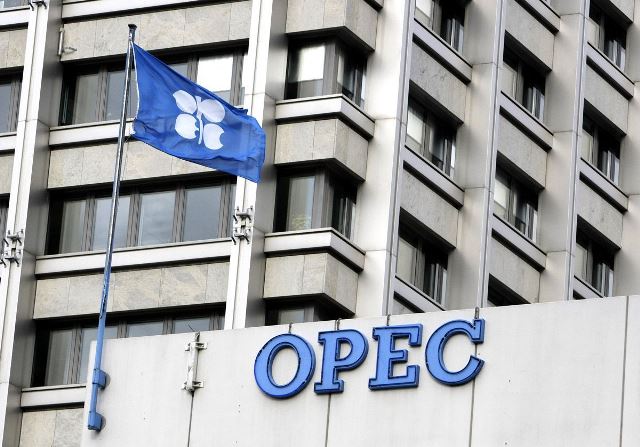
The Organisation of Petroleum Exporting Countries (OPEC), has recorded its highest petrol export revenue in almost a decade last year. This was as Russia’s war on Ukraine bolstered crude prices and key members ramped up production.
The 13 nations of OPEC realised $873.6 billion in 2022, up 54 per cent from the previous year, according to a report from the group’s Statistical Bulletin. It was their best year since 2014, when the US shale boom ended a period of historically high oil prices.
Crude oil soared last year as energy flows from Russia, which joined with the cartel in 2016 in a wider network known as OPEC+, were disrupted by international backlash against its military aggression. Brent futures averaged about $99 a barrel, the highest since 2014.
OPEC nations such as Saudi Arabia and the UAE opened the taps to satisfy the post-pandemic recovery in fuel demand. The combination of surging prices and increased output pushed up earnings for the entire group, Bloomberg reported.
The basket of crude grades typically sold by OPEC nations averaged just over $100 a barrel in 2022, while Bloomberg estimates showed that crude production from its 13 states was roughly 29.2 million barrels a day. The figures for petroleum revenue also include sales of refined products.
OPEC’s earnings peaked at roughly $1.2 trillion in 2012, just as the use of hydraulic fracturing — also known as fracking — was unlocking a gusher of shale-oil in American states from Texas to North Dakota. The ensuing market crash spurred the Saudis and Russia, once fierce rivals, to form the OPEC+ coalition in 2016.
The International Gas Union (IGU) has said that Nigeria’s Liquefied Natural Gas (LNG) export decreased by 1.8MT in 2022 on the back of force majeure declared as a result of the massive flooding during the period.
However, it did not stop Nigeria from emerging as the seventh global LNG exporter in 2022, according to the 14th annual edition of the IGU World LNG report released by the organisation.
In the list of the top 20 global LNG exporters for 2022, Australia ranked first, exporting 80.9 metric tonnes (MT) during the year, with the United States following closely in second place with 80.5 metric tonnes, while Qatar claimed the third spot with exports of 80.1 metric tonnes.
In the fourth position was Russia, exporting 33 MT in 2022, while Malaysia ranked fifth, exporting 27.3 MT even as Indonesia occupied sixth place with export of 15.7 MT, while Nigeria stood in seventh place with export of 14.7 MT.
Others included Oman in eighth place with LNG export of 11 MT, and Algeria in ninth place with 10.5 MT. Trinidad and Tobago was in the 10th place with 8.8 MT.
The report stated that a total of 19.9 MTPA of liquefaction capacity was added globally in 2022, of which 15 MTPA was from the US, 3.4 MTPA from Mozambique and 1.5 MTPA from Russia.
Mozambique also exported its first LNG shipment from its Coral South FLNG project in November 2022, Australia remained the world’s largest LNG exporter in 2022, exporting 80.9 MT, an annual increase of 1.9 MT, supported by reduced planned maintenance.
The US overtook Qatar to become the world’s second largest LNG exporter in 2022 despite Freeport LNG in Texas being taken offline following a fire in June 2022 which dented production capacity by 15.3 MTPA.
The document added that global LNG trade reached a new record of 401.5MT in 2022, up by 6.8 per cent as against 4.5 per cent in 2021, connecting 20 exporting markets with 462 importing markets.
Apparently , the 25.4 MT increase was driven by a surge in LNG demand in Europe to offset dropping pipeline flows from Russia.
In all, the top three exporters were together responsible for 60 per cent of global LNG output in 2022, the report noted.
“Of the 20 LNG exporting markets, six reduced exports last year. Large reductions in LNG exports were observed in Nigeria (-1.8 MT) due to low feedstock and force majeure being declared following extreme flooding,” it stated.
In her remarks, the IGU President Li Yalan, noted that spiking LNG demand from Europe and a lack of growth in global LNG supplies resulted in soaring gas prices amidst a tight market.
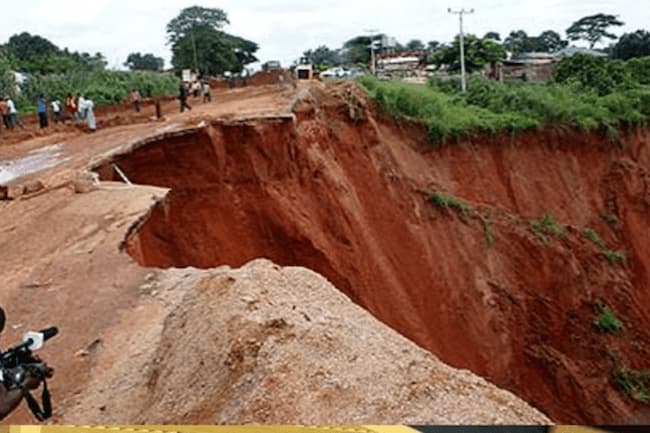
The Senate has urged for rapid collaboration between the Federal Ministry of Environment, the Ecological Fund Office, and the Federal Ministry of Works and Housing to combat erosion destruction in Edo Central Senatorial District.
The Senate has also called on the Federal Roads Maintenance Agency, FERMA, and the National Emergency Management Agency (NEMA) to collaborate and carry out emergency works on Ekpoma (Uhiele, Ujoelen, Ukpenu, Borehole Road & Emuhi), Irrua (Uwesan and Ikekato), Ewu (Eguare and Uzogholo), Uromi (Efandion, Eguare & Uzegwa), Udo and Illushi.
The Upper Chamber has directed the Committees on Environment, Ecology, Works, Special Duties, FERMA (when formed), and Legislative Compliance to work with the Federal Ministry of Environment, Federal Ministry of Works and Housing, NEMA, and the Ecological Fund Office to develop a long-term work plan to stop the devastation; and to work with FERMA to keep the expressways and other roads in the area from deteriorating further.
The Senate has recommended for the establishment of NEMA stations in Edo central to help people in the event of an emergency that may result in the loss of life or property.
The Senate passed resolutions on Tuesday in response to a motion headed “Urgent Need for Erosion Control in Edo Central Senatorial District to Save Lives and Property.”
Senator Monday Okpebholo, APC, Edo Central, sponsored the motion.
Senator Okpebholo stated in his presentation that the Senate “notes that the peculiar nature of the topography of Edo central senatorial district has put many communities under the constant threat of erosion devastation, resulting in massive gully erosions, flooding, and road devastations, which is one major reason why most roads quickly fail, leading in communities and homes being damaged and abandoned.
“Also notes that the Okene-Auchi-Benin expressway, a major road infrastructure in Nigeria began to fail at the Ekpoma axis owing to several gully erosions.
“The Ewu-Uromi-Agbor Road corridor has also experienced similar fate in Uromi axis. Nigerians in Irrua, Ekpoma, Uromi, Ewu and other communities have fled their homes or got their access roads damaged owing to the erosion problems.
“In June, two persons died after being swept away from their homes in Ujoelen, Ekpoma. A school girl died two years ago in Efandion, Uromi, on her way to school due to the uncontrollable flooding. It is difficult to construct roads to Udo community because of the wild erosion gullies. This trend is all over the area.”
The Senate according to Okpebholo is “worried that infrastructure like roads and electricity will be grievously affected by the devastation of gully erosion if the situation is not arrested, as government institutions like schools and hospitals will also be damaged, and more Nigerians may lose their homes as is already being experienced.”
The senate is “also worried that ongoing highway road projects in Edo central face the risk of being damaged even before they are completed, as a result of which the country may just be losing hundreds of millions of naira because of the natural disaster.
“The cost of interventions in erosion disaster is too weighty for local and state governments to bear.”
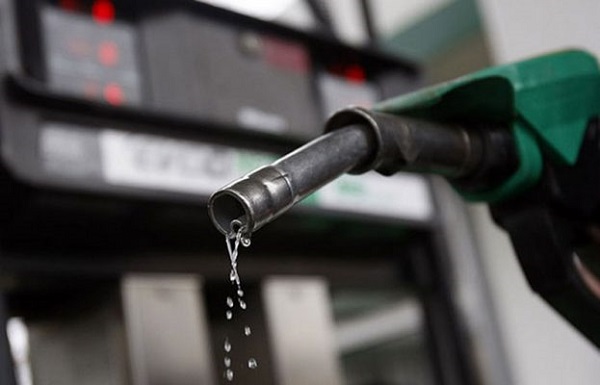
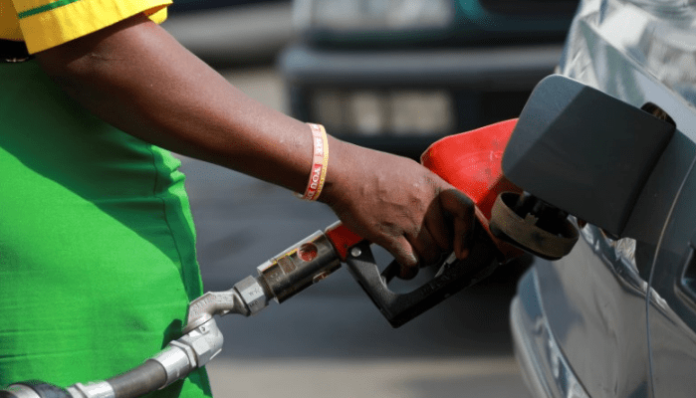
Mele Kyari, Group Chief Executive Officer of Nigerian National Petroleum Company Limited, has blamed the hike in petrol pump prices in Nigeria on market factors.
This comes on the heels of a recent price hike from N540 to N617 per litre, which he attributes to the characteristics of a market-regulated pricing scheme.
“They are just prices depending on market realities,” Kyari told media following a closed-door meeting with Vice President Kashim Shettima at the State House in Abuja. This is what it means to ensure that the market governs itself. Prices will sometimes rise and sometimes fall.”
He did, however, refute the assumption that the price hike is due to a shortage of gasoline supplies.
“No, there is no supply issue. It is not a supply issue.
“When you go to the market, you buy the product, you come to the market and sell it at its prevailing market price. It has nothing to do with supply. We don’t have supply issues.
“We have a robust supply. We’ve had over 32 days of supply in the country. That’s not a problem,” he explained.
His comments came after several NNPCL-operated stations increased the petrol pump price from N537/litre to N617/litre in Abuja.
On his part, the CEO of the Nigerian Midstream and Downstream Petroleum Regulatory Authority, Farouk Ahmed, attributed the price hike to global crude oil prices increase.
He also mentioned that changes in freight costs and other miscellaneous expenses that importers encounter during distribution contribute to price changes.
Ahmed said, “Basically, what we’re seeing is the effect of market forces. You can see that crude oil prices have been on the rise. Just a week ago, crude oil prices hovered around $70 per barrel, but now it’s surpassed $80 per barrel. So naturally, these prices also influence the cost of the product.”
Tuesday’s development was confirmed by independent oil marketers, who noted that price changes by NNPCL typically indicate a rise in the pump price of petrol, given that NNPCL remains the primary petrol importer in Nigeria.
“This is because NNPCL is still the major importer of petrol into Nigeria currently, though other marketers are gradually importing the commodity.
“The price this (Tuesday) morning at some NNPCL stations is N617/litre,” the Secretary of the Independent Petroleum Marketers Association of Nigeria, Abuja-Suleja, Mohammed Shuaibu stated.
In his inaugural address on May 29, President Bola Tinubu announced the discontinuance of subsidy on petrol, a development which led to a jump in the price of the commodity from N198/litre to over N500/litre on May 30, 2023.
Nigerians consume 46.38 million litres now on a daily basis, representing a 28 per cent drop from the 65 million litres daily consumption recorded before the removal of subsidy.
“In January, it was 62 million per litre; February, 62 million per litre; March, 71.4 million per litre; April, 67.7 million per litre; May 66.6 million per litre; June, 49. 5 million per litre and July, 46.3 million per litres,” the Chief Executive Officer, CEO, of the Nigerian Midstream and Downstream Petroleum Regulatory Authority, NMDPRA, Farouk Ahmed, was quoted as saying.
The NMDPRA boss said that the essence of the meeting was to review the downstream sector after the subsidy removal and also to thank marketers who had taken the offer to import petrol. On petrol importation, Farouk said that over 56 companies applied for import licenses to bring in petrol, while only 10 made a commitment to import.
He said that currently three marketers, namely Emadeb Energy, A.Y Shafa and Prudent Energy had imported petrol into the country. He added that others, like 11 Plc, are also indicating interest to import petrol in August and September, respectively.
“The era of subsidy payment is gone, we encourage all marketers who are interested in importing petrol to apply for license.
“The meeting is to encourage marketers to import so that there will be availability of petrol at every nooks and crannies of the nation.
“The marketers have the choice to fix their price because it is a free market where there will be competition.
“It is no longer Nigeria National Petroleum Corporation Limited (NNPCL) dominating the market, there will be other players to compete with NNPCL.
“We do not want any dominant player in the market, that was why we liberalised the market for everybody to play, ” Farouk emphasised.
Farouk said that the authority was working with the Federal Competition and Consumer Protection Commission (FCCPC), to checkmate marketers from taking unduly advantage of the consumers.
He said that the NMDPRA would ensure consumer protection at every station, adding that the quality of products imported would be focused upon, to avoid substandard petrol.
“We will ensure safety, consumer protection and standard in ensuring quality control within marketers.
In attendance managing directors of all downstream sector operators, delegation of the Major Oil Marketers Association of Nigeria (MOMAN) and Depots Owners Association of Nigeria (DAPPMAN), among others.
The President of the Maize Association of Nigeria (MAAN), Dr. Bello Abubakar Annoor has announced the association’s plans by the association to create one million jobs through regional agricultural commodity exchange.
He stated this yesterday during the flagging-off of the 2023 wet season farming by the association under its Private Partnership Programme (PPP) in Katsina.
Annoor said: “We are dedicated and determined to partner with various business associates and agreed to come up with this Private Partnership Programme (PPP) business model which we flagged off today (Monday).
“Our business model anchored on the PPP model entails, among other things, to ensure the creation of one million jobs through the regional agricultural commodity exchange.”
He said MAAN in collaboration with other associations designed a sustainable private public sector business driving model to ensure food security, employment creation and provision of raw materials to industries.
Annoor added that the association was committed to ensuring the full benefits of commodity exchange, warehousing, products processing and marketing were fully exploited to the benefit of Nigerians.
The MAAN president, however, reminded Nigerians that the maize production in the country has increased from eight million metric tons in 2015 to 20 million metric tons in 2020.
Annoor averred that the association employed 360 youths as tractor operators, while its membership had risen from 120,000 million to five million members within five years.
In his remarks, the state Governor, Dikko Umaru Radda, represented by his Deputy, Hon. Faruq Lawal Jobe, described agriculture as the major way of employment creation and economic revitalisation.
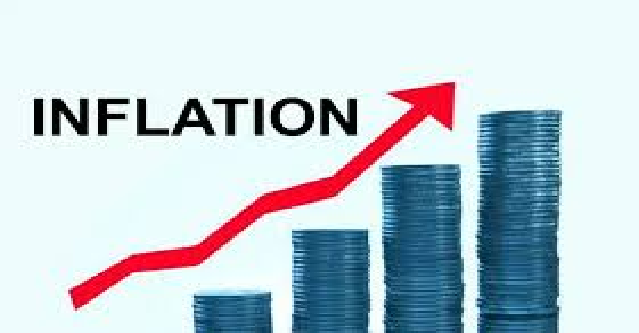
Nigeria’s headline inflation rate rose for the sixth consecutive time to 22.79 per cent in June 2023, the data released on Monday by the National Bureau of Statistics revealed.
The inflation rate in Africa’s biggest economy rose to a new 17-year high of 22.79 per cent in June 2023 from 22.41 per cent in the previous month.
The NBS report read, “In June 2023, the headline inflation rate rose to 22.79 per cent relative to May 2023 headline inflation rate, which was 22.41 per cent.
Looking at the movement, the June 2023 headline inflation rate showed an increase of 0.38 percentage points when compared to May 2023 headline inflation rate.
“On a year-on-year basis, the headline inflation rate was 4.19 percentage points higher compared to the rate recorded in June 2022, which was 18.60 per cent.
“This shows that the headline inflation rate (year-on-year basis) increased in June 2023 when compared to the same month in the preceding year (i.e., June 2022).”
It stated that food and non-alcoholic beverages (11.81 per cent) led the list of items that contributed to the rising inflation figure.
Economists had, however, said inflation needed to be tackled holistically.
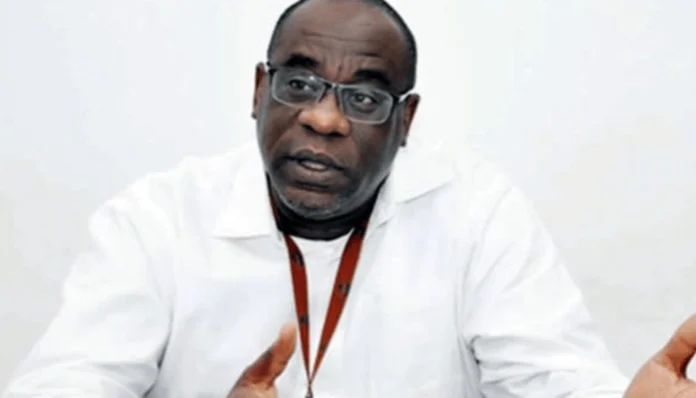
A former President and Chairman of Council, Institute of Chartered Institute of Bankers of Nigeria, Prof Segun Ajibola, said Nigeria’s surging inflation needed to be curbed holistically.
Ajibola, who is also a professor of economics at Babcock University, said, “The fundamental problems are still with us. We have to face the issues squarely to address the problem of inflation.
“It requires a holistic approach. So many things have to be harmonised and so many things have to be tackled. Especially things that push costs of production and those that affect agriculture.”
Expressing optimism in the new administration to fight inflation, Ajibola said, “I believe things will be better going by the little we have seen. More expertise and more strategic policies will be initiated.”
Partner and Chief Economist at KPMG Nigeria, Dr Yemi Kale, recently said the net benefits of the subsidy removal were positive, but noted that there would be disruptions arising from a direct increase in energy prices, inflation rate, and transportation fares.
He said, “This disruption has an indirect impact on the increase in food prices and consumer demand. This is so because their purchasing power is weakened; consumer demand also shrinks unless the government provides some kind of relief to cushion the effect.
“In addition, households would begin to cut their expenditures, leading to businesses recording decreases in demand amid rising costs of operation increases. This is particularly going to affect the Micro-Small and Medium-sized Enterprises, and this would eventually birth lay-offs, hence increasing unemployment rate and insecurities.”
KPMG Nigeria said the removal of fuel subsidies in Nigeria could lead to a significant rise in the country’s inflation rate, potentially reaching 30 per cent in June 2023.
A report by KPMG said the removal, whether implemented entirely or partially, would cause a temporary inflationary surge.
The NBS, on its Twitter page, noted that the impact of the fuel subsidy removal and unification of exchange rates had yet to reflect on the country’s headline inflation, which justified the marginal increase.
“The June Consumer Price Index numbers may not fully capture the impact of the fuel subsidy removal and the unification of the exchange rate.
“This is because the data collection for computing the rate for the reference month typically stops around the middle of the month, meaning that the June numbers only reflect approximately two weeks of the policy impact on consumer prices.
“The full effect of the policy as relates to prices can, therefore, not be reflected in June only, but also in subsequent months, based on actual prices collected in market outlets across the country.”
The Nigeria Customs Service (NCS), Kwara State Command has said that it raked in a total sum of N6.2 billion as revenue between April and June 2023.
The Customs Area Controller, the state command, Mr. Kehinde Ilesanmi, said that, “the money represents 9.14 per cent of the revenue increase when compared to preceding year 2022.
“The Command has at the end of the second quarter 2023, generated the sum of N 6, 246, 485,827.97.
He added that the command under his watch between January and June this year has collected and remitted the sum of N9, 813,483,412.09 to federation account.
“This amount is above what was collected from (January-June, 2022) with the sum of N5,762,552,633.87,” he stated.
Ilesanmi said that the results of the command’s anti-smuggling activities coupled with its renewed drive in utilization of cutting edge strategies had led to 56 seizures of different items with Duty Paid Value (DPV) N48,822,400.00.
He listed items seized during the period under review to include; nine units of used vehicles of different types, 813 bags of foreign parboiled rice, 24,950 litres of petroleum product in 998 Jerry cans and 14 kegs of vegetable oil of 25 litres.
“The seizures were successfully accomplished as a result of the renewed determination of the Comptroller-General of Customs, Bashir Adewale Adeniyi, to rid the country of all forms of illegal importation, “Ilesanmi said.
The Nigerian naira (NGN) strengthened against the leading trade currency, the US dollar (USD), on Monday, reaching N795.28 at the investors’ and exporters’ FX window. The supply level was sufficient to cover the whole amount registered by market participants for imports.
When compared to N803.90 converted to the dollar on July 14, the rate provided by FMDQ Exchange at the start of the week corresponds to a daily currency appreciation of 1.07 percent.
On Monday, the open indicative rate was N782.79 to one dollar, according to foreign market statistics. Traders stated the highest spot exchange rate recorded throughout the day’s trade was N832 to the US dollar before it ended at N795.28.
During the day’s trade, the Naira fell as low as N699.50 per greenback. On Monday, 34.55 million dollars were transacted in the investors and exporters window. The parallel market, on the other hand, saw more devaluation, with the Naira sliding 1.27% to N825 from N815.
Nigeria’s foreign currency reserves have fallen to $34 billion, representing six months of imports as the market continues to seek a market clearing rate. In the foreign exchange market.
MarketForces Africa asked investment banking specialists what would happen if the move to float the local currency failed to attract sufficient foreign currency inflows to put the naira on a stable footing.
For now, responses remain scanty as Broadstreet analysts continue to gauge market temperature. Nigeria lacks the industrial capability to produce goods that can compete effectively in international markets.
Due to the exchange rate advantage foreign currencies enjoy, analysts predict that remittance will spike as Nigerians in the diaspora send money home.
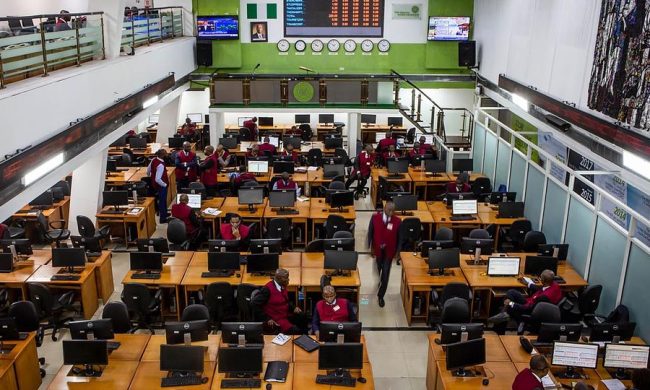
Following a week of losses, the Nigerian Exchange (NGX) gained more than N203 billion. The bulls returned to the local market, breaking the bears’ hold on key performance measures.
The Nigerian Exchange All-Share index increased by +0.60% on Monday. In addition, the year-to-date gain on the local market increased to 22.81% as a result of strong price movement on the local bourse. The market index, or All-Share Index, gained 373.62 basis points, or +0.60%, to end at 62,943.35 points.
Market activity improved, with total volume and total value traded for the day increasing by +18.24% and +56.66%, respectively. Atlass Portfolios Limited market traders informed investors through email that about 710.02 million units priced at $13,829.29 million were transacted in 8,979 deals.
STERLING was the most traded stock by volume, accounting for 9.30% of total transaction activity. The tier 2 financial institution was followed on the volume chart by TRANSCORP (8.77%), UNITYBNK (8.41%), ACCESSCORP (7.20%), and UNIVINSURE (7.02%).
DANGCEM was the most traded stock in terms of value, accounting for 54.25% of all transactions on the exchange. DAARCOMM, FIDELITYBK, and UNILEVER led the advancers’ chart with price increases of more than 10% apiece.
STERLINGNG (9.97%), JOHNHOLT (+9.94%), GOLDBREW (+9.90%), WEMABANK (+9.88%), and thirty-four other stocks trailed these. According to market statistics, 27 stocks fell in value. PZ, UBN, and VERITASKAP were the biggest losers, with price declines of -10.00% apiece.
FTNCOCOA (-9.93%), ETERNA (-9.89%), ABBEYBDS (-9.87%), NNFM (-9.78%), and JAPAULGOLD (-9.09%) also dipped in price. On Monday, the market breadth closed positive, recording 41 gainers and 27 losers. Despite the rebound, the market sector performance closed negative.
Three of the five major market sectors were down, led by the Industrial sector (-0.69%), followed by the Consumer goods sector (-0.66%), and the Oil & Gas sector (-0.62%), while the Banking and Insurance sectors were up by +7.57% and +0.37% respectively. Overall, market capitalisation rose by ₦203.44 billion, representing a rise of +0.60%, to close at ₦34,273.28 trillion from ₦34,069.84 trillion last Friday.