






Home Blog Page 557

Marketers Urge Nigerians To Demand Accountability From Government On Subsidy Removal

Falana Criticizes NNPC For Increasing Fuel Price

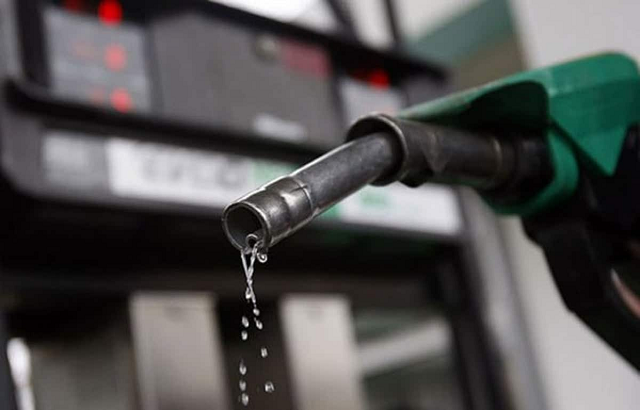
The Independent Petroleum Marketers Association of Nigeria (IPMAN) has said petrol subsidy removal would allow the Federal Government to save money.

The National Operations Controller of the association, Mike Osatuyi, said this while speaking on the after-effect of fuel subsidy removal on TVC in Lagos recently.

According to him, the excess revenue made as a result of the unified foreign exchange was now in the federal account.

“Subsidy removal will attract more money for the government.

“The foreign exchange rates have been unified and the subsidy payment that was usually paid on a monthly basis now goes to the government purse, “he said.

He advised Nigerians to hold the government accountable for the proceeds from subsidy removal and foreign exchange rate.

Osatuyi said with over N2tn shared by the three tiers of government, “It is time Nigerians begin to demand more accountability from government, both at the state and local government levels”.

“Nigerians should hold the government accountable for the money received from FAAC,” he said.

He added that the N2tn shared was higher than previous money being shared to the tiers of government, adding that the government ought to do more for its citizens.

He noted that the money that would have been squandered away in a month via fuel subsidy would now go into the money box of the government to improve the living conditions of Nigerians.

“What this means is that there will now be more money available for the government to embark on infrastructure development.

“The government at all levels will become more solvent, be in a stronger financial position to easily pay the new minimum wage, and fund development in critical sectors, especially in education, healthcare, and public transportation.

“Going forward, Nigerians should begin to focus attention on their states and local governments to demand more accountability and transparency in the use of public funds,” he said.

According to him, the highest amount the three tiers of government had shared N800b and not as high as N2tn.

“In another two to four months, when all loopholes have been blocked, sharing formula can go as high as N3tn and above. The problem is that would the government use the money well to cushion the effect of suffering?

“If states use the money on infrastructure for the development of Nigerians and we are paying more on petrol, it will be better. I hope and pray that government uses the money judiciously and transparently to the development of Nigeria and Nigerians,” he said.
Federal Universities Remain Tuition Free – FG

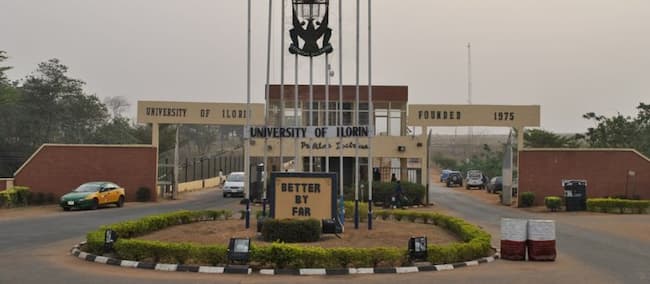
University Of Ilorin Announces Its Phased Reopening

The Federal Government has called out social media allegations earlier this week that claimed the Federal Government has raised tuition prices at federal colleges across the country as false.

This was said on Wednesday in Abuja by Mr Dele Alake, Presidential Adviser on Special Duties, Communications, and Strategy.

‘’We are aware that some universities have in recent weeks announced increases in the amount payable by students on sundry charges.

‘’However, the fact remains and we have confirmed that these are discretionary charges by each university for hostel accommodation, registration, laboratory and other charges. They are not tuition fees,’’ he said.

Alake said that the authorities of these universities have made it clear by explaining the rationale behind these new fees.

‘’For the avoidance of doubts, federal universities in Nigeria remain tuition-free.

‘’President Bola Ahmed Tinubu remains committed to his promise of ensuring that every Nigerian, regardless of the economic situation of their parents, have access to quality tertiary education.’’

He said that the Federal Government would continue to strengthen other mechanisms to support indigent student.

‘’The Students’ Loans Scheme, under the Student Loans Bill, signed into law by President Tinubu last month, will go into implementation ahead of the next academic session in September.

‘’Parts of the government’s plans to make sure all diligent students complete their education on time, notwithstanding their parents’ financial situation, include work-study, merit-based scholarships and grants,’’ he added.

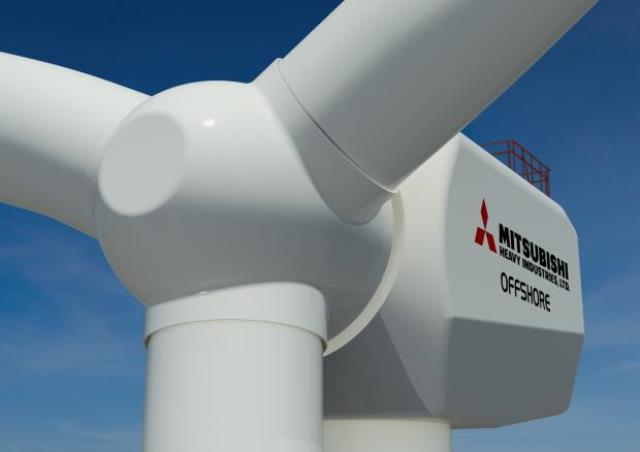
N57bn Parts Stolen From Adeleke University Turbines

Mitsubishi

According to Deji Adeleke, thieves have reportedly hauled away vital equipment from power turbines worth about N57bn ($72m) at N792/$1, which were meant for the construction of a 1,250 megawatts plant in Ajebandele village, Ondo State.

While addressing the 9th set of graduates of the Adeleke University, Ede, Osun State, on Tuesday, the Pro-Chancellor of the institution, Dr Deji Adeleke, said the looters invaded the power plant site to steal components of the turbine, which cost about N56bn ($72m), adding that this might lead to a delay in delivering the project in record time.

Adeleke, one of the leading industrialists in Nigeria, commenced the project a few years ago to complement the existing 4,000MW being generated by the 26 plants in-country. The plant is estimated to cost a total of N1.6tn ($2bn).

“I am building a 1,250MW power plant. Nigeria has about 5,000MW, adding mine to it is a lot. The cost is $2bn. We started it in a village in Ondo state. We brought in turbines that cost about $72m.

“The construction of the project engaged over 1,000 people and at a minimum 200 to 300 people will come from that village, that is for direct employment not to talk of indirect employment. The few securities that we engaged are to protect our engineers so that they will not be kidnapped, so we need young men from that village to help us guide the power plant,” he said in his speech titled, ‘Change Begins with You.’

Adeleke noted that last month, it was discovered that some of the turbines had been broken into, and some of the components built with copper had been looted.

“Those components were yanked off in each of those turbines. These are heavy items that will require at least 10 people to lift a single one. This means somebody would have brought in a truck at night to carry those things away.

“The project will be delayed for another year to get those things they looted back. This is going to cost us a minimum of $5m to replace. So can we blame our leaders for that? These are young people in their twenties that we employed. We have to sack them out of the plant and bring in security from top agencies in Nigeria to man and take over the whole plant. I am sure that those things they looted, they won’t sell it for N5m,” he said.

NNPCL: 162 Illegal Pipelines And Refineries Discovered In Niger Delta

EU Seeks Stronger Partnership With NNPC

The Nigerian National Petroleum Company Limited (NNPCL) has said it discovered 162 illegal pipeline connections and illegal refineries in the Niger Delta, especially in Bayelsa last week.

In a documentary by the oil company shared via its social media ‘X’ handle on Wednesday, NNPCL said 93 illegal pipeline connections and 69 illegal refineries were discovered from Aboa and Gbokoda between July 15 and 21, and had since been destroyed.

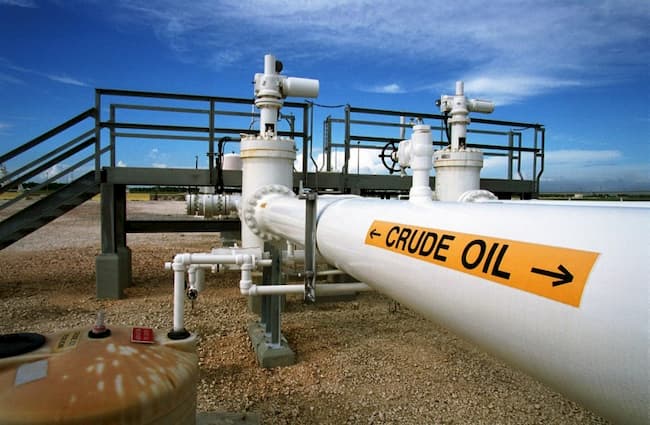
It noted this as part of its fight against crude oil theft in the country.

“War on crude oil theft: 93 illegal pipeline connections discovered and 69 illegal refineries destroyed in the Niger Delta in the past week,” the company wrote.

In the video documentary, the company explained that large-scale crude oil theft was currently ongoing in the Niger Delta, adding that repairs were ongoing.

According to NNPCL, the illegalities were discovered using its maritime intelligence system.

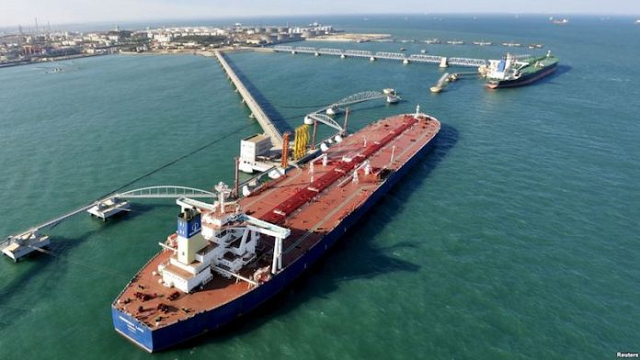
“30 wooden boats used in carrying stolen crude oil were confiscated in the past week, with some in Gbokodo, and five cases of oil spill recorded in the deep blue waters,” it said.

The company said it would not relent in its fight against crude oil theft in the country.

It was reported how a militant group, a self-acclaimed Niger Delta militant group, Creek Reform Warriors threatened to resume attacks on major oil facilities in the region.

In a statement, the group particularly threatened to attack facilities operated by the Shell Petroleum Development Company of Nigeria Limited, over alleged unjust sacking of some workers in Forcados terminal.

Leader of the group, General Igbokuro Tinowei had demanded reinstatement of all workers from Ogulagha and Odimodi communities, who according to him, were sacked unjustly by SPDC in 2019.

He claimed that the IOC had promised to recall the sacked workers immediately after the COVID-19 pandemic, but serially defaulted; while warning the management of SPDC to reinstate the said workers within two weeks or face dire consequences of brutal attacks.

Amidst the uproar, the NNPCL said the Federal Government would renegotiate the country’s production quota in the ongoing OPEC+ cuts by November.

Crude Oil Sells For $84 Per Barrel

Crude Oil Price Soars Past $70

Crude oil, rose to a high of $84/barrel on Wednesday, there are fuelling theories that Nigeria might witness another increase in the pump price of Premium Motor Spirit (PMS), popularly called petrol, in the coming weeks.

Crude oil, which is a major determining factor for refined petroleum products’ prices, lingered between $75 and $78/barrel for over a month, but reached its highest price on Wednesday, after witnessing similar highs since last week.

According to oil marketers on Wednesday, the rise in crude oil price coupled with the increase in exchange rates would warrant further increase in petrol price, the Nigerian National Petroleum Company Limited (NNPC) maintained its position on selling Premium Motor Spirit (PMS) at the market price.

Although other oil marketers have commenced the importation of petrol into Nigeria, The Nigerian National Petroleum Company Limited (NNPC) is still the major importer of the product, being the supplier of last resort.

Nigeria’s Petrol Import From Russia Hits 3.8m Litres

Nigeria's Petrol Import From Russia Hits 3.8m Litres

Nigeria imported a total of 3.8 million litres (24,000 barrels) of petrol from Russia so far this year, representing an 84% increase from 558,300 litres (3,700 barrels) in the corresponding period of 2022. This is according to data obtained from Argus West Africa Oil on Nigeria’s gasoline.

Russia has been exploring other markets after the European Union, UK and the United States placed embargoes on its oil because of the invasion of Ukraine.

A separate report by S&P Global said, “While shipments to European countries, like France and Belgium, have cratered in recent months, shipments to African countries—particularly northerly ones—have skyrocketed, particularly after the EU embargo on product imports came into force,” it said.

While EU countries, US and others have openly condemned Russia’s invasion of Ukraine, African countries have refused to condemn Vladimir Putin’s full-scale invasion of Ukraine.

The Organisation of Petroleum Exporting Countries (OPEC) of which Nigeria is a strong member, has maintained oil trade and alliances with Russia, a non-OPEC member, which has been a strong party to the Declaration of Cooperation oil cuts since 2014/2015.

According to Argus, while Nigeria has imported around 265,000 b/d of petrol from 2016 – July 2023, with approximately 228,000b/d imported from Europe, the country’s imports from Russia have spiked to 24,000 b/d in 2023, compared with 3,700 b/d last year.

S&P Global said Russia’s refined product exports to Africa had jumped since the invasion of Ukraine, increasing 14-fold in just over a year.

“By March 2023, imports from African countries such as Nigeria, Tunisia, and Libya jumped sharply to 420,000 b/d,” it stated.

In the first quarter of 2022, Tunisia imported just 2,700 b/d of Russian products, but that rose to 66,300 b/d in Q1 of this year, according to S&P Global Commodities at Sea data, while Nigeria saw imports rise almost five-fold year-on-year to 57,400 b/d in Q1 2023.

“Nigeria is not one of the countries that sanctioned Russia. So, as a policy, Nigeria does not belong to any alliance. So, it is not out of place for Nigeria to patronise Russia. Besides, Russian petrol is being discounted. So, Nigeria is taking advantage of that, just as China and India are also doing the same.

“Diplomatic foreign policies are driven by economic and security interest and not social interest. So, Nigeria is patronising Russia because it supports both its economic and security interests,” the Chief Executive Officer of Cowry Asset Management Ltd, Johsnon Chukwu, was quoted as saying.

Cadbury Declares N14.52b Loss In 2023 Half-year

Cadbury Declares N14.52b Loss In 2023 Half-year

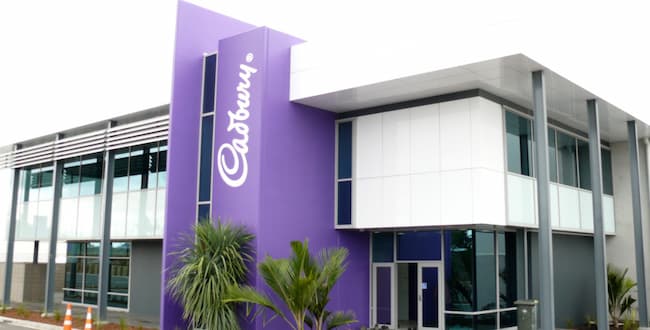
With about N20.77billion foreign exchange losses, Cadbury Nigeria Plc has declared N14.52 billlion loss before tax in half year (H1) ended June 30, 2023 as against N3.35billion profit before tax reported in half year (H1) ended June 30, 2022.

The Fast-Moving Consumer Goods (FMCG) company listed on the Nigerian Exchange Limited (NGX) also declared N14.54 billion loss in H1 2023 from N2.34 billion profit after tax reported in H1 2022.

The company’s decline in profits can be attributable to the write-down the management took due to the impact of the unification of the naira on its loans.

The company carries foreign exchange-related loans with dollar-denominated interest rate components that triggered the losses. The depreciation of the Naira from about N460 against the dollar to about N790 against the dollar triggered the foreign exchange losses in the period under review.

In terms of revenue, Cadbury Nigeria declared N35.61billion revenue in H1 2023, a growth of 27.7 per cent from N27.88billion reported in H1 2022.

Revenue generated in Nigeria stood at N34.89billion in H1 2023, an increase of 29.34per cent from N26.98billion in H1 2022, while export sales closed H1 2023 at N714.49million, a drop of 21 per cent from N2898.9million reported in H1 2022.

Cost of sales stood at N25.38 billion in H1 2023 from N22.02 billion in H1 2022 to position its gross profit at N10.23 billion in H1 2023 from N5.85 billion in H1 2022.

Amid the losses arising from the extraordinary foreign exchange losses, the multinational company posted an operating profit of N6.07 billion, representing a 113.2 per cent increase from N2.85billion in H1 2022.

The company suffered a significant increase in its operating expenses amid a double-digit inflation rate.

Total operating expenses closed H1 2023 at N4.16billion, a growth of 37.4 per cent from N3.03billion reported in H1 2022.

While commenting on 2022 financial year results, Managing Director, Cadbury Nigeria, Mrs. Oyeyimika Adeboye, in a statement said the company continued to push the boundaries to sustain its current growth trajectory in a tough business environment.

Adeboye said. “We will keep finetuning our strategies to manage these challenges, in line with our mission, which is focused on nourishing and delighting our consumers with the right snacks, while remaining committed to our stakeholders and doing what is right for our environment.”

Investors responded at the company’s stock price depreciated by N1.70 or 10 per cent to N15.3 per share.

African Social Impact Summit Partners With MTNF, Others For Second Edition 

The second edition of the African Social Impact Summit (ASIS) by the Sterling One Foundation is set to hold on August 10 and 11 2023. This year, the Foundation will be hosting the second edition with corporate and development partners like the MTN Foundation, British Council, UNDP, and Nigerian Economic Summit Group (NESG), amongst others. This announcement was made on Thursday, July 20, 2023, at a press briefing held at the Sterling Towers in Lagos.

Speaking on ASIS, Chairman, Sterling bank and member board of trustees, Sterling One Foundation, Abubakar Suleiman, said that ASIS was created to bring together organisations in the impact space to provide better value in Africa. He said, “We observed that there are a lot of organisations and individuals who are working in the social impact space, however they were not talking to each other. There were a lot of duplication, inefficiencies and a lot of us were marching blindly because someone else had done the research but we could not access it. At the Sterling One Foundation, we felt if we could convene a summit that will bring people together, get them to listen to one another and get them to sit together once the conversation was done, we could solve this problem, hence the birth of the ASIS.” 

He continued, “Once again, this is for us to say to the rest of the world that there is an opportunity to engage Africa in an organised way, if their interest is to have an impact.  I suspect that once we have the summit, going forward, it will be difficult for anyone to come into Africa with the objective of impact, without coming through the summit to access the right partners, information and research, and effectively get value on every dollar they spend in Africa. That is what success looks like for us.”

United Nations (UN) resident and humanitarian coordinator in Nigeria, Matthias Schmale also highlighted how working on the project as a co-convener will boost the relationship between Africa. He said, “I would say the African Social Impact Summit couldn’t be more timely because development is in trouble. I recall eight  years ago, in 2015, global heads of government came together and agreed to the 2030 Sustainable Development Goals (SDGs). In doing so, they made a collective promise to people in all nations to secure their human rights, wellbeing and their planet.

The combined effect of Covid, climate change and conflict has stalked progress towards the SDG’s. It seems clear to us at the UN that unless we take urgent action, the 2030 agenda will become no more than a broken promise to the world’s most vulnerable people, and that’s where our interest comes in. We truly believe that ASIS is an important event on the road to achieving the SDGs. It is also a preparatory step to the global SDG summit in September.”

Speaking on the partnership on the ASIS project, Odunayo Sanya, Executive Secretary of MTN Foundation, who was represented by the Manager, Sustainability and Impact reporting, MTN Nigeria, Edward Fagbohun, highlighted the importance of  MTN Foundation’s partnership with ASIS. “We are excited to be part of ASIS 2.0. The MTN Foundation has been in existence for 19 years and has invested over N25 billion on impact projects across Nigeria, but recently  one of the things we have been trying to push is partnership, as it speaks to one of the SDG’s. We are excited that the summit will provide a platform for us to also meet people of like minds and see how we can bring more value to the work we do. I’m glad to say we are coming on board and we hope to see great things happen going forward.”

The second edition of ASIS will be hosted as a hybrid event and will feature keynote addresses, panel conversations, exhibitions and a deal room to facilitate partnerships and investments in social impact initiatives across Africa. In addition, the summit will feature workshops for civil society organisations, an Environmental, Social and Governance (ESG) roundtable, different sessions between private sector leaders and other players, and several other side events.

The Future Of Financial Regulations In Nigeria: Driving Compliance And Building Sustainable Financial Systems

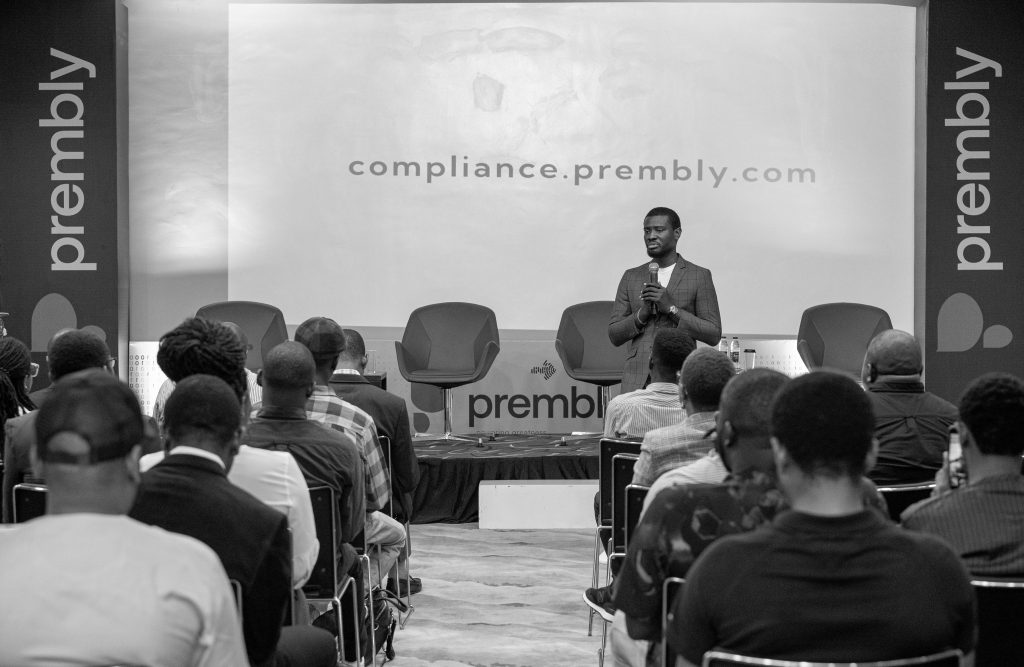
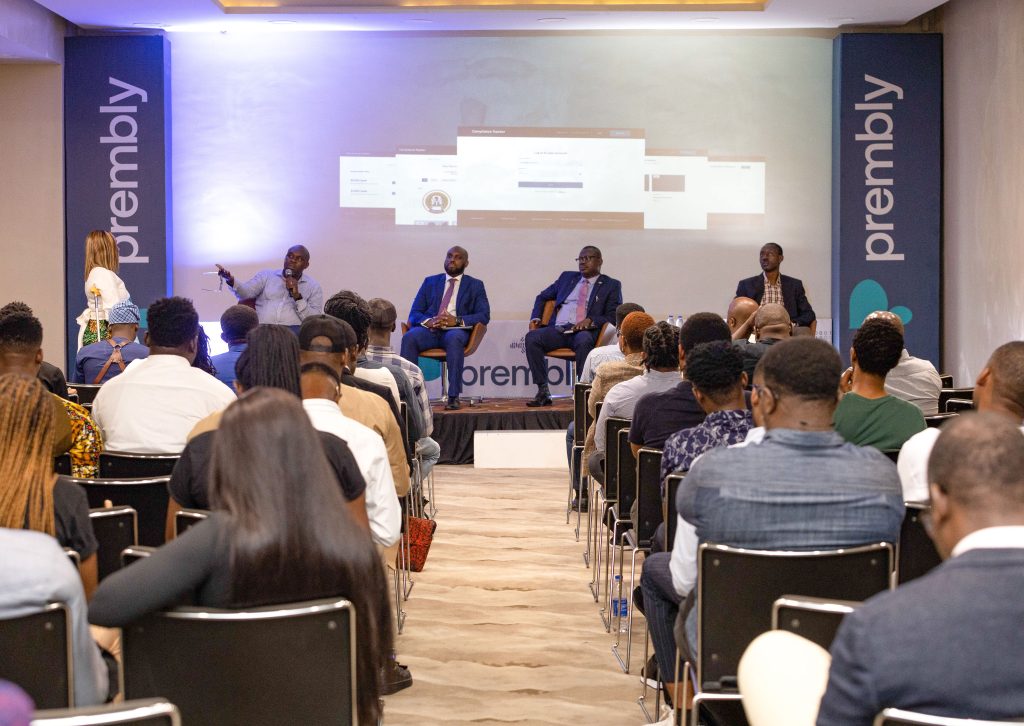
The Prembly event on the future of financial regulations in Nigeria brought together key industry experts, regulators, and representatives from financial institutions to discuss the evolving landscape of regulatory frameworks and the challenges faced in ensuring compliance. The event, hosted by Lanre Ogungbe, CEO of Prembly, aimed to foster transparency and dialogue between regulators and the regulated, encouraging a better understanding of the rationale behind regulations and their impact on the financial services sector.

The discussion focused on the need for innovative approaches to regulation, cybersecurity, and the importance of localizing policies for the Nigerian market. The speakers included Olufemi Shobanjo (NGX), Ayo Adesina (Polaris Bank), Kolade Adebayo (NGX Group), Anthony Aggreh (Capitalfield Financial Management Ltd), and moderated by Adenike Oyetunde-Lawal.

As the financial landscape rapidly changes, regulators must listen to the concerns of the regulated and foster an environment conducive to the ease of doing business. As Olufemi Shobanjo, the Regulation Head of The Nigerian Stock Exchange (NGX), stated, “Innovation has to go ahead of regulation.” Regulations should not be rigid but evolve in response to dynamic market conditions and feedback from the industry, highlighting the importance of coordination and collaboration between regulators and financial institutions.

The discussion delved into the growing importance of cybersecurity as technology advances. While statistics show that 90% of businesses on the continent are vulnerable to attacks and with hackers constantly evolving, Kolade Adebayo, Compliance Manager at Nigerian Exchange Group (NGX Group), stressed the necessity of investing heavily in cybersecurity. Companies must assess their vulnerabilities through ethical hacking and implement robust data encryption measures to identify system gaps and provide insights against cyber threats.

To build sustainable systems, the panelists emphasized the significance of localizing policies and building to the specific needs of the Nigerian market. There’s a need to improve the infrastructure and implement monitoring systems; we need correspondence and uniformity to prioritize protection institutionally, locally, and nationwide. However, the infrastructure isn’t there yet, but engaging with stakeholders in the process is crucial to ensuring that regulations are practical, market-friendly, and meet the needs of the businesses they impact.

Ayo Adesina, Head of KYC and Due Diligence at Polaris Bank, advocated for policies that prioritize substantive engagement and room for feedback. There’s also a space for regulators to look through to see how realistic these regulations are. It is imperative to engage with the regulated and uphold compliance for digital safety, business operations, and outlook globally. For instance, leaving the grey list of the Financial Action Task Force (FATF) latest release in June.

With growing companies across the country, giving utmost importance to data protection is crucial. Startups need to step back and thoroughly assess regulatory and compliance requirements before going live, leaving no room for errors, as commencing from less-than-ideal leads to a continuous chain of issue-solving. There are institutions for running a good compliance practice, and these should be deployed. Additionally, companies, especially in this part of the world, are often hesitant to declare breaches due to the potential reputational damage they may suffer. As a solution, conducting vulnerability assessments at the backend becomes essential in ensuring data security and safeguarding against potential threats.

Moreover, the market tends to reward companies perceived to have robust systems in place, often resulting in their share prices outshining competitors. Femi Shobanjo stressed the importance of compliance in enhancing market reputation and fostering customer loyalty. Building loyalty among customers is directly linked to doing the right things and prioritizing compliance with financial regulations.

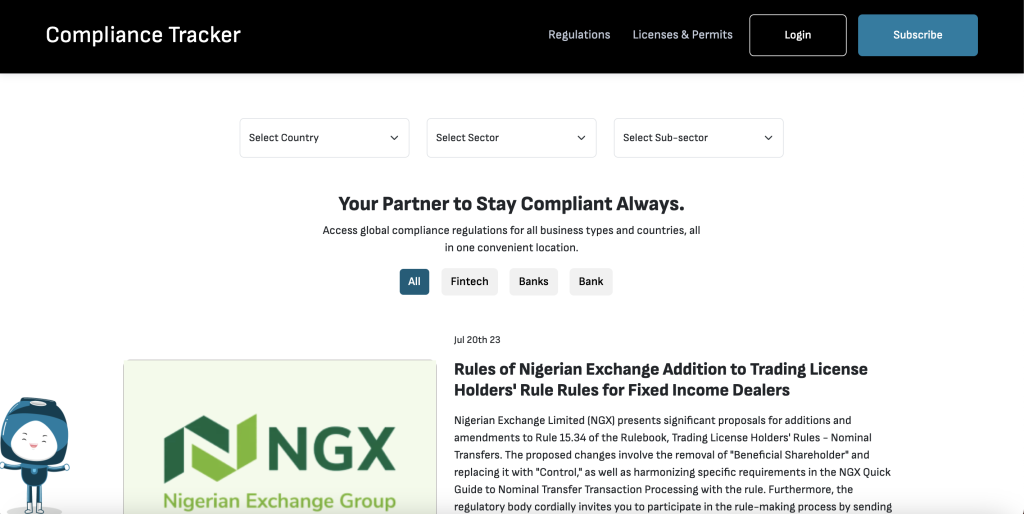
The event concluded with Lanre Ogungbe announcing Prembly’s Compliance Tracker, a groundbreaking tool to ensure global compliance across regulatory bodies. This tracker will enable access to compliance regulations and reports from various countries, providing summaries and empowering users to make informed decisions and stay on top of regulatory requirements.

The tracker has already been launched in Nigeria, featuring reports from prominent regulatory bodies such as NGX, CBN, and EFCC. In the upcoming weeks, the exact implementation is scheduled for Kenya, followed by other countries, as Prembly extends its reach into emerging markets.

Nigeria Trails South Africa And Kenya In Africa’s B2B Payment Revolution – Duplo

A new report from Duplo, a business payment platform for African businesses of all sizes,  has revealed that Nigeria trails South Africa and Kenya in the development of key B2B payment processes across Africa, including the adoption of electronic bank transfers, speed of processing invoices, and payment automation.

According to the Exploring the State of B2B Payments in Africa report, which includes the surveyed opinions of more than 1,200 professionals from Kenya, Nigeria, South Africa, and Ghana, South Africa leads the way in electronic bank transfers, with 49.1 percent choosing it as their preferred way to pay vendors, followed by Nigeria (48.5 percent), Ghana (34 percent) and Kenya (31.9 percent). 

Kenya leads the way in payment automation, with 83.4 percent of Kenyans stating that their payment system was either semi-automated or fully automated, compared to Nigeria (79.9 percent), South Africa (71.69 percent), and Ghana (67.23 percent). When it came to the speed of processing invoices, South Africa has a slender lead, with 39.93 percent stating that it typically takes a day or less to process invoices compared with Nigeria’s 39.74 percent.

Africa’s B2B payment sector represents a significant, yet largely untapped opportunity. This is partly due to the complexity and larger transaction volumes associated with B2B payments. According to the World Bank, the continent’s share of the global B2B payment opportunity stands at $1.5 trillion. However, despite this promising potential, many businesses grapple with considerable payment delays and other issues with their payment processes that negatively impacts their cash flow and slows their growth. In recent years, digital payments solutions have eased many of these challenges but there remains a number of issues to be addressed in the journey of easing the flow of money between businesses in Africa.

For example, security ranked as the most critical feature across the board for respondents when choosing B2B payment software, with 35.89 percent selecting it as the feature they valued the most. Across individual countries, security was also the top feature – Kenya (39.9 percent), Ghana (36 percent), South Africa (35.6 percent), and Nigeria (32.2 percent) – emphasising the importance companies attach to safeguarding their financial data. Functionality and ease of use (17.6 percent), multiple payment options (13.5 percent) and speed (12.9 percent) follow, showing a preference for payment flexibility and quick transactions. Pricing (11.5 percent) and scalability (8.2 percent) are less prioritised, suggesting a focus on functionality and immediate needs.

According to Yele Oyekola, CEO and co-founder of Duplo, “Despite various challenges, the future of B2B payments in Africa is set for dynamic growth and innovation, signalling a new era of opportunities and expansion for the continent’s business ecosystem. The opportunity to automate accounts payable and receivable and transform other aspects of the B2B payments process offers great potential to reduce payment delays, enhance cash flow and drive growth for businesses across the continent. The increased adoption of digital solutions also implies a shift in workplace dynamics and positions finance professionals to add more value to their organisations. We are looking forward to playing a major role in the realisation of these opportunities and the delivery of technology solutions to support growth for businesses in Africa.” 

The ‘SCP’ Of Diphtheria

The 'SCP' Of Diphtheria

Diphtheria is a dangerous bacterial an infection that mainly affects the nose and throat mucous membranes.

The World Health Organization reported that ‘Since the beginning of 2023, there have been 557 confirmed cases of diphtheria in Nigeria, impacting 21 of the 36 states and the Federal Capital Territory.’

The ‘SCP’ of diphtheria stands for the Symptoms, Causes and Prevention.

It is also highly contagious.

Symptoms of diphtheria

  • Throat pain.
  • Weakness or fatigue.
  • Fever.
  • Swollen neck glands.
  • Problems breathing.
  • Difficulty swallowing.
  • Nerve, kidney or heart problems (if the bacteria enters the bloodstream).

Causes of diphtheria

Diphtheria bacteria spread from person to person, usually through respiratory droplets, like from coughing or sneezing. People can also get sick from touching infected open sores or ulcers.

Diphtheria is caused by germs attaching to the respiratory system’s lining. These bacteria produce a poison that harms the cells of your respiratory tract.

Prevention

Diphtheria bacteria travel from person to person, most commonly via respiratory droplets such as coughing or sneezing. Touching infected open sores or ulcers can potentially get people sick.

It can be prevented by avoiding infected people or infected areas. Contact your doctor if you feel sick or have come in contact with an infected person.

You can also contact your doctor if there is a vaccine available in your region.

NGX Market Cap Nears N36trn As Seplat, MTNN And Geregu Rally

Stock Exchange Closes Trading Week With N30bn Gain

On Tuesday, investors on the Nigerian Exchange (NGX) kept the fire burning as market capitalization climbed near N36 trillion. Following a N1.33 trillion gain the previous week, the local market opened the week strongly and continued to increase on the second day. Equities market capitalisation showed a 1.11% increase, settling at N35.932 trillion, leading to a notable rise in investors’ wealth by N393.54 billion.

Highly capitalized firms’ equities saw significant price increases following the Central Bank of Nigeria (CBN) policy committee’s decision to raise the benchmark interest rate to 18.75%.

Investors in Geregu Power Plc, MTN Nigeria,Seplat energy and Unilever raised their stakes. Dangote Sugar, Zenith Bank, UBA, GTCO, and Access Bank Plc are among the others. SEPLAT increased by 9.99%, GEREGU increased by 3.60%, and MTN increased by 5.52%, resulting in a significant upward movement in the market.

UNILEVER (9.72%), ZENITH BANK (0.86%), UBA (0.68%), GTCO (0.52%), ACCESSCORP (0.28%), and 28 other stocks rose as well. As a result of the bargain hunting, the index’s year-to-date return was 28.76%, while monthly returns increased by 8.24%.

The Nigerian Exchange All Share Index ended the trading session with a 1.11% gain, finishing at 65,991.02 points, up from 65,268.28 points at the start of the week.

The overall volume traded fell by 33.4% to 553.52 million units worth NGN7.42 billion and transacted in 8,313 transactions. JAPAULGOLD was the most traded stock in terms of volume, with 72.49 million units moved, while GTCO was the most traded stock in terms of value, with NGN1.70 billion transacted.

On sectors, the Oil & Gas (+3.3%) and Banking (+0.5%) indices recorded gains, while the Industrial Goods (-0.1%) and Insurance (-0.1%) index declined. The Consumer Goods index closed flat.

As measured by market breadth, market sentiment was positive (1.1x), as 32 tickers gained relative to 30 losers. IKEJAHOTEL (+10.0%) and FTNCOCOA (+10.0%) recorded the highest gains of the day, while CONOIL (-10.0%) and LEARNAFRCA (-10.0%) topped the losers’ list.

Bella Shmurda Welcomes First Child Ahead Of Highly Anticipated EP, ‘DND’

Just days before the release of his highly anticipated second project, ‘DND’ (Do Not Disturb), popular Afrobeats street-pop artist, Bella Shmurda, shared the joyful news of the birth of his son. The proud father took to his official Twitter account to share the news with his teeming followers.

Accompanied by a photo of his hand on his son, the musician shared the emotional journey he had experienced leading up to this moment, stating, “A few days before the release of my album last year, I was in a state of emotional and mental turmoil. I had just arrived in the UK for promotional activities when I received the news of losing the child I was expecting.”

Despite the loss, Bella Shmurda expressed his gratitude and optimism for the new chapter in his life, remarking, “…I’m happy and blessed. What’s lost can never be replaced, but I have been given another chance, a new lease on life. I am now a new daddy; DO NOT DISTURB.”

The  announcement of the birth of his child amidst the excitement of his upcoming EP has since garnered an outpouring of congratulatory messages from fans and supporters.

With tracks like ‘Ara (Gen Gen Tin)’, ‘NSV’ featuring Tiwa Savage, and ‘DND’ featuring Lil Kesh already making waves on the charts, Bella Shmurda’s soon to be released body of work boasts an impressive lineup of artists. Additionally, his collaboration with ‘Pheelz’ on  ‘Bankruptcy’ further underscores the project’s promises to deliver exhilarating high-tempo tunes.

Naira To Dollar Black Market Rate Today 27th July 2023

Dollar To Naira Exchange Rate For 8th Dec 2023

What is the Dollar to Naira Exchange rate at the black market also known as the parallel market (Aboki fx)? See the black market Dollar to Naira exchange rate for 27th July below. You can swap your dollar for Naira at these rates.

How much is a dollar to naira today in the black market?

Dollar to naira exchange rate today black market (Aboki dollar rate):

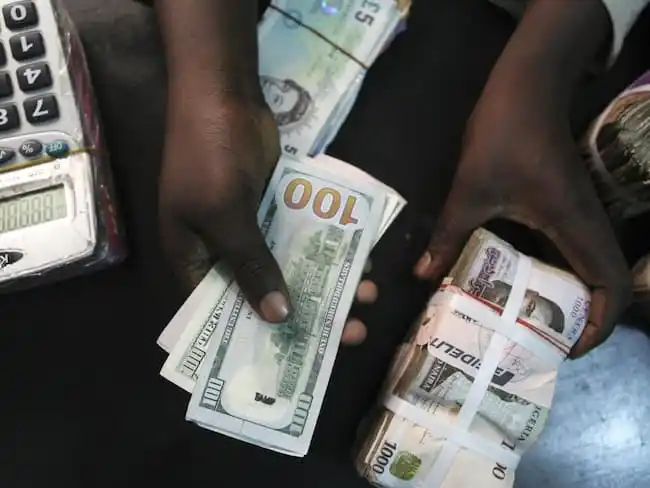
The exchange rate for a dollar to naira at Lagos Parallel Market (Black Market) players buy a dollar for N862 and sell at N870 on Wednesday, 26th July 2023, according to sources at Bureau De Change (BDC).

Please note that the Central Bank of Nigeria (CBN) does not recognize the parallel market (black market), as it has directed individuals who want to engage in Forex to approach their respective banks.

Dollar to Naira Black Market Rate Today

Dollar to Naira (USD to NGN)Black Market Exchange Rate Today
Buying RateN862
Selling RateN870

Please note that the rates you buy or sell forex may be different from what is captured in this article because prices vary.

Foreign exchange rate-influencing factors

Here are a few reasons why the dollar to naira conversion rate is declining.

Speculators: Speculators routinely affect the exchange rate between the naira and the dollar. They accumulate funds in anticipation of a profit, which pushes the value of the naira further lower.

Conditions of Trade: Although Nigeria is currently running a trade deficit, favorable trade terms will raise the value of the naira relative to the dollar. China, India, and the majority of Asian nations are the source of everything.

Government Debt: A country’s level of debt may have an effect on investor confidence and, consequently, the flow of money into the economy. If inflows are substantial, the currency rate will move in the naira’s favor.

Interest Rates: Monitoring interest rates is a further strategy. A rise in the interest rate at which banks lend money would be detrimental to the economy, cause it to contract, and consequently lower the value of the naira.

Rates of inflation: It is common knowledge that inflation has a direct impact on exchange rates on the black market. The naira will gain if the Nigerian economy can be stabilized and inflation is kept under control; however, if the naira keeps falling.

CBN Pledges To Tackle Forex Pressure

CBN Lifts Ban On Aboki FX, 439 Other Accounts

Folashodun Shonubi, acting Governor of the Central Bank of Nigeria, has stated that the bank will address the demand pressure on the country’s currency rate as the naira continues to fall against the dollar. He made the pledge while fielding journalists’ queries during the two-day Monetary Policy Committee meeting, which concluded on Tuesday in Abuja.

On Tuesday, the naira plummeted from 820/$ to 870/$ in one week on the parallel market. Since the country’s currency rates were unified, the naira has continued to fall, despite increased inflation, rising gasoline expenses, and other issues.

Shonubi said, “The market needs to find its level. There is pent-up demand which the market cannot cater to. Once we clear this demand, the volatility will normalise. We have started intervening, and we would continue to intervene until the market gets to our level.”

Announcing the outcome of the MPC meeting, the acting CBN governor said the majority of the members voted to raise the Monetary Policy Rate.

He said, “Six members voted to raise the MPR: Four members by 25 basis points and two members by 50 basis points. Five members voted to hold the MPR constant. All members voted to narrow the asymmetric corridor from +100/-700 to +100/-300 basis points around the MPR.

“In summary, the MPC voted to raise the MPR by 25 basis points, from 18.50 to 18.75 per cent, adjust the asymmetric corridor to +100/-300 basis points around the MPR; retain the CRR at 32.5 per cent and retain the Liquidity Ratio at 30 per cent.”

Following the prognosis for the domestic economy, he stated that members believed the Committee had only two policy options: maintain or raise the policy rate to offset the mild increase in headline inflation.

He said that, in considering the option to hold, the Committee examined the impact of ongoing inflationary pressures on several macroeconomic factors, emphasizing the possible dampening effect on production growth.

He stated that members unanimously agreed that the last set of rate rises had significantly slowed the pace of price increases. He also mentioned that the prospect of gradually raising the policy rate was a viable option.

He went on to say that this was based on the anticipated liquidity infusions into the economy from the recent policy developments and the likely impact on inflation. The acting CBN governor said the Committee remained cautious in arriving at a policy decision as members noted the need to continue to support investment which would ultimately lead to the recovery of output growth.

Earlier, the Director General of Nigeria Employers’ Consultative Association, Mr Wale Oyerinde, said the increased Monetary Policy Rate implied higher borrowing.

He said, “Furthermore, the increased MPR implies higher borrowing rates, which would negatively affect companies and manufacturers that borrow capital for their survival. If unchecked, it could also lead to another form of economic quagmire as higher rates slow down productive activities.”

Also, the Chief Executive Officer of the Centre for the Promotion of Private Enterprise, Muda Yusuf, said the hike was expected.

He said, “The hike in Monetary Policy Rate did not come as a surprise because of the surging inflation and the current pressure on the exchange rate. These are macroeconomic conditions that the CBN would not ignore. There are concerns about the real interest rate, which is currently in negative territory. There are also worries about the signalling effect of the MPC decision.”

He, however, noted that it would hurt investors and that increasing the MPR would likely have no major impact on inflation.

LASG Commends MTN’s Unplugged Training Initiative

LASG Commends MTN's Unplugged Training Initiative

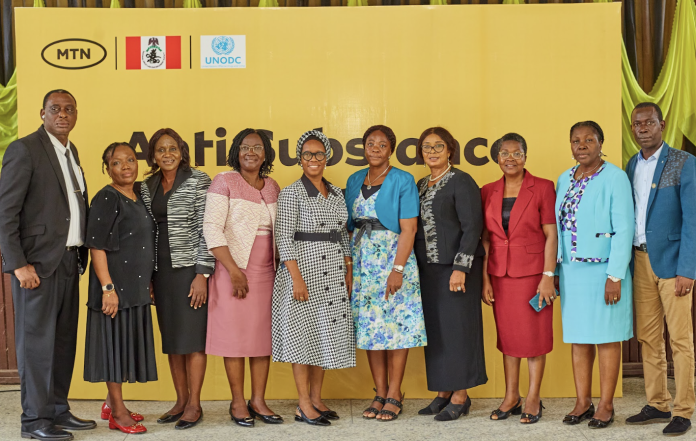
Deputy Director, Ministry of Education Lagos, Ronke Matuluko, has commended MTN Foundation for its Unplugged training program, saying it will go a long way in impacting students in high drug zones in Lagos. 

Speaking at the Unplugged training in Lagos, Matuluko highlighted that the Lagos State Ministry of Education is greatly invested in the welfare of its students.

“The Lagos state Ministry of Education is interested in the welfare of students, and with this program, the teachers are going back to their schools to indoctrinate their students on the dangers of substance abuse, at the same time preventing first-time drug users.

“This will go a long way in impacting students in Lagos state, especially students in high drug zones” she stated. 

Speaking at the training in Lagos, UNODC representative and unplugged trainer, Ruth Owotumi, explained that the Unplugged training for teachers is an anti-substance prevention programme based on comprehensive social influence, that primarily targets young ones as they approach their adolescent years.

She further explained that the training is an evidence-based school program comprising 12 lessons to build life skills in young people, making them more resilient to the use of tobacco, alcohol and other drugs.

The Unplugged Training in partnership with the United Nations Office on Drug and Crimes (UNODC) and the National Drug Law Enforcement Agency (NDLEA), is an anti-substance abuse training program for 180 secondary school teachers across 60 secondary schools in Lagos, Imo, Kaduna, Delta, Gombe and Abuja.

The training is designed to educate secondary school teachers on drugs and drug abuse and provide teachers with proper sensitisation techniques and instruments to work on social influences, and substance prevention among their students. 

According to a 2018 study conducted on substance use among secondary school students in select Nigerian states, it was found that the proportion of respondents who were substance abusers was significantly higher among students who had not received any formal lectures on substance abuse at school, compared to those who had been taught.

Speaking on the initiative, Executive Secretary MTN Foundation, Odunayo Sanya highlighted that the training is an avenue to work with the government in curbing the pandemic of substance abuse in Nigeria.

She stated that “the reality of substance abuse in Nigeria, especially among the youths, is one we must no longer ignore, that is why at the MTN Foundation, we are partnering with the government to fight this pandemic.

“With the unplugged training in partnership with UNODC, we hope to influence secondary school students against the use of substances and make them ambassadors who will champion the anti-substance abuse cause”.

The Unplugged training is part of the activities for the 2023 Anti-Substance Abuse Program (ASAP), an initiative spearheaded by the MTN Foundation since 2019, to deliver interventions that contribute to a significant reduction in the rate of drug abuse among young Nigerians. 

READ ALSO

inDrive Puts Safety First With The Launch Of Its Safety Pact

inDrive Puts Safety First With The Launch Of Its Safety Pact

inDrive, the global mobility and urban services platform, has launched a Safety Pact to empower its users and drive safety in ride-hailing.

With the Safety Pact, inDrive reaffirms its commitment to the safety of all users through dedicated features, while also providing tips and a code of conduct. The company encourages passengers and drivers to opt-in, promoting mutual respect and secure practices for every ride.

inDrive puts safety first by constantly enhancing safety features

Continuously prioritizing safety, inDrive persistently refines its safety measures to ensure the protection of its users. By leveraging ride data, user input, and expert consultations, inDrive identifies prevalent risks, and then creates solutions to mitigate them in the following ways : 

  • In addition to its strict safety-first policy, inDrive has established a Safety Center to further enhance its safety infrastructure. The Safety Center provides drivers with comprehensive training materials and valuable tips, ensuring they are equipped with the knowledge and skills necessary to prioritize safety while operating on the platform. By incorporating this dedicated resource, inDrive promotes a culture of safety and minimizes risks, reassuring passengers and fostering trust in the platform’s services.
  • Always ready to respond to safety incidents, inDrive performs comprehensive investigations whenever such circumstances arise.
  • For immediate emergencies or real-time safety issues during a ride, the platform offers an SOS button, enabling quick alerts by both drivers and passengers to inDrive.
  • To enhance passenger safety, inDrive has introduced a unique feature to its app: a weekly photo verification security check. This provision ensures that only the registered and authorized driver is operating the application.
  • inDrive’s development team is diligently working to detect and prevent potentially harmful orders from being placed on the platform.
  • They have implemented a Liveness Check, a feature that verifies a passenger through basic gestures before an order can be placed.
  • Additionally, inDrive utilizes both machine learning and manual moderation to identify and prevent the re-registration of users who have previously violated the platform’s rules. They also actively work to block obscene content from appearing in the driver’s order feed.

The role of  drivers and passengers in ensuring that every trip is a safe one

The new Safety Pact provides safety tips and sets out a standard of conduct for both drivers and passengers, such as mutual respect and zero tolerance for discrimination. It also clarifies what information a passenger should specify when requesting a trip – for example, whether a child’s car seat is needed, or if they’re traveling with an animal.

Use the power of choice

The Safety Pact also encourages drivers and passengers to use the power of choice provided by the app. Unlike other mobility apps, inDrive gives drivers and passengers the ability to pick their driver or passenger, informed by past ratings and reviews.

inDrive constantly monitors such feedback, and bans problematic users from the app. Similarly,  the company urges users to consider ratings and reviews when choosing a ride, and to always leave their own reviews after completing a trip. Honest feedback helps to keep everyone safe.

With this Safety Pact, inDrive  calls on everyone who uses the app to empower themselves, and join us in making every ride a safe ride.

“Safety is critically important to inDrive. The wellbeing of people who use our app is our first priority. We know that to maximize safety, all three parties – inDrive, passengers and drivers – must play their part, and so our Safety Pact invites all our users to help make every ride a safe one. For our part, we know that effective policies and features go a long way to ensuring safety,” comments Timothy Oladimeji, Business Development Representative at inDrive.

READ ALSO

CBN Lifts Ban On Aboki FX, 439 Other Accounts

CBN Lifts Ban On Aboki FX, 439 Other Accounts

The Central Bank of Nigeria (CBN) has ordered banks to remove a no-debit restriction placed on the bank accounts of 440 individuals and businesses.

A post-no-debit indicates that all debit transactions on the accounts, including ATMs and cheques, have been prohibited yet the accounts can still receive inflows.

The circular, signed on Tuesday by A.M. Barau on behalf of the CBN director of banking supervision, also directed banks to notify affected consumers of the change.

The apex bank provided no explanation for the action.

Bamboo Systems Technology Limited, Escale Oil & Gas Limited, Rise Vest Technologies Limited, Chaka Technologies Limited, AbokiFX Limited, Nairabet International, Northwood Energy Services, and Proport Marine Limited are among the companies on the list.

The circular read, “You are hereby directed to vacate the Post-No-Debit restriction placed on the accounts of the under-listed bank customers at our instance.

“You are also required to inform the concerned customers of the vacation accordingly.”

BizWatch Nigeria recalls that in 2021, the CBN directed banks to freeze the accounts of 18 enterprises, including bureaux de change, construction firms, investment firms, laundering services, and real estate firms.

READ ALSO

Insecurity Will Slowdown Nigeria’s Economy Growth – IMF

IMF Reduces Nigeria's Growth Forecast By 0.3%

Nigeria’s economic development according to the International Monetary Fund (IMF) would slow in 2023 and 2024 due to security concerns in the oil sector.

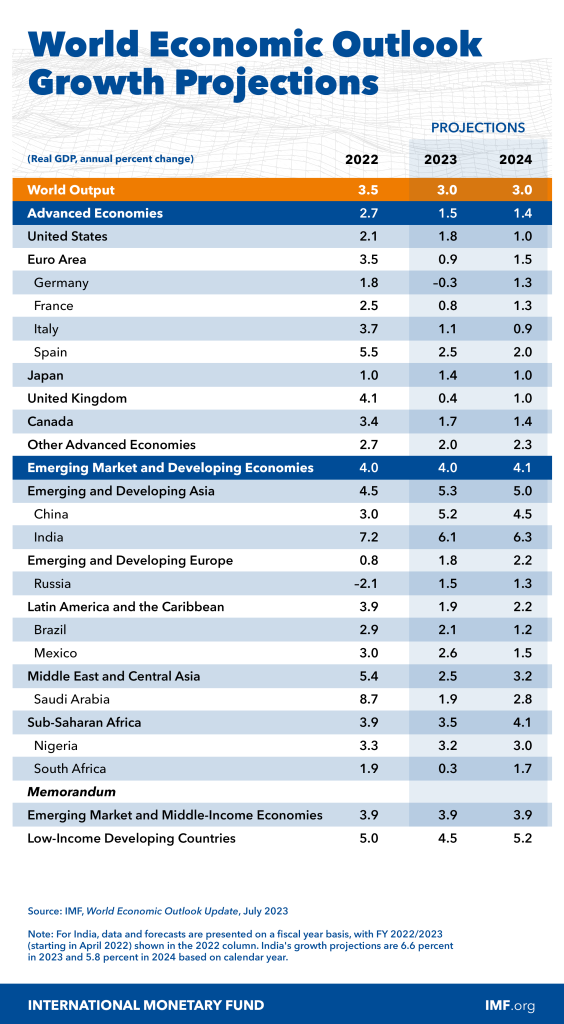
It predicted that Nigeria’s economy will rise by 3.2% in 2023, then fall to 3.0% in 2024.

This was revealed by the IMF in its newest report, ‘World Economic Outlook Update: Near-Term Resilience, Persistent Challenges (July 2023)’.

According to the analysis, Nigeria’s growth rate is lower than that of the Sub-Saharan African region, which is anticipated to increase by 3.5% in 2023 and 4.1% in 2024.

In a statement on the global economy, the IMF predicted that global growth would dip from an estimated 3.5% in 2022 to 3.0% in both 2023 and 2024.

While its prognosis for 2023 was slightly higher than expected in April 2023, it remained weak by historical standards.

This, it said, came as the Central Bank’s policy rate hike to combat inflation continued to weigh on economic growth.

It predicted that sovereign financial problems will extend to a broader range of economies.

It added, “In most economies, the priority remains achieving sustained disinflation while ensuring financial stability. Therefore, central banks should remain focused on restoring price stability and strengthening financial supervision and risk monitoring.

“Should market strains materialise, countries should provide liquidity promptly while mitigating the possibility of moral hazard. They should also build fiscal buffers, with the composition of fiscal adjustment ensuring targeted support for the most vulnerable.

“Improvements to the supply side of the economy would facilitate fiscal consolidation and a smoother decline of inflation toward target levels.”

Osun Poly Riot: Adeleke Urges Protesters To Stay Calm

Osun Poly Riot: Adeleke Urges Protesters To Stay Calm

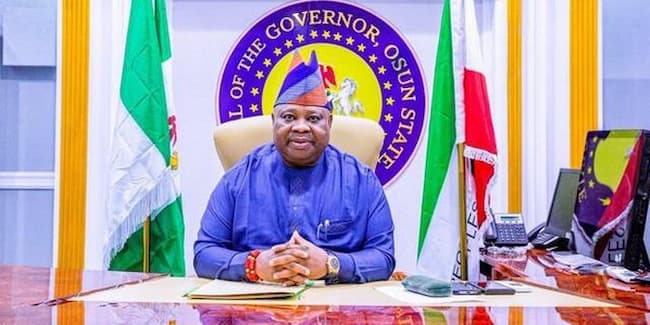
Senator Ademola Adeleke, Governor of Osun State, has urged members of the Academic Staff Union of Polytechnics (ASUP) in the state who are protesting the recent suspension of the Rector, Dr Tajudeen Adewale Adetayo, to remain calm and not allow themselves to be manipulated by the opposition party.

The governor revealed this in a press statement issued by the Commissioner for Information and Public Enlightenment, Oluomo Kolapo Alimi, on Tuesday.

Adeleke assured the union and students of the institution that the situation would be investigated and required steps would be taken. He also encouraged them to avoid the protest that had resulted in the closure of the school gate, disrupting the ongoing examination.

“The OSPOLY Governing Board will soon be put in place to take over the matter and investigate the allegation which led to the suspension and take appropriate action as soon as possible,” Adeleke stated.

“I understand the reason for the protest over the suspension of the Rector, Dr Tajudeen Adewale Adetayo. The step taken by the administration is necessary, but I assure you that full investigation will commence, and every misunderstanding will be cleared.

“I recognize the ASUP and I urge them to stop the protest, and allow the investigation to hold for the matter to be sorted. Please do not allow yourself to be used by the opposition. You are important to the Government and the public. Please stop the protest and allow peace to be restored to the school community.”

READ ALSO
BizWatchNigeria.Ng
Privacy Overview

This website uses cookies so that we can provide you with the best user experience possible. Cookie information is stored in your browser and performs functions such as recognising you when you return to our website and helping our team to understand which sections of the website you find most interesting and useful.