






Home Blog Page 555

FG- Gas Flare Penalty Hits N44.4bn In Six Months

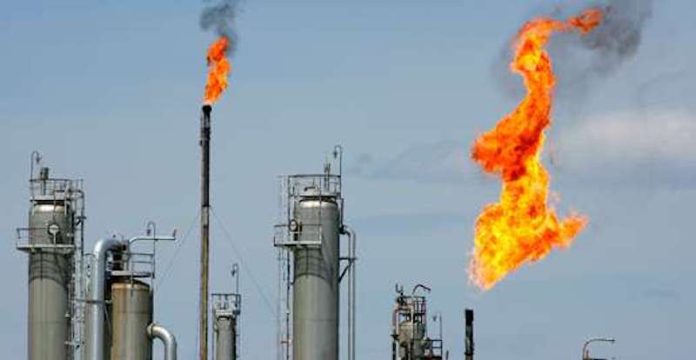
The Federal Government (FG) , on Friday, said the total gas flare penalty collected from oil and gas companies from January 2023 till date is $85.1m, representing N44.4bn at the average exchange rate of N521.2/$ in 2023.

It explained that the flare gas administration should not be viewed as a sustainable revenue stream, as the flare fees were to serve as deterrent to drive the industry to greater compliance towards eliminating gas flaring, and generation of revenue from gas monetisation rather than flare payment.

NUPRC disclosed this in a document released in Abuja by the Nigerian Upstream Petroleum Regulatory Commission, detailing some basic information on gas flare measurement and fines from oil and gas companies operating in Nigeria.

“While efforts are towards flare elimination and not penalty, the commission has collected a total of $85.1m from January 2023 to date from gas flare penalty,” it stated.

The upstream regulator said it had led the effort in ensuring that the Federal Government’s drive to eliminate gas flaring in the country was achieved in a timely manner.

The document stated that, “All companies currently flaring gas are charged gas flare fees in line with the relevant provisions of the law, thus driving down the appetite of oil and gas companies to continue gas flaring, while increasing government take from the sector.

“For the avoidance of doubt, the commission, being the sole regulatory body in Nigeria’s upstream oil and gas industry keeps record of daily, weekly and monthly gas volumes from all oil and gas fields of operation.”

It explained that the disparity often noticed in the figures given by some industry participants was because theirs were from satellite estimates, whereas the ones from the commission were from fiscal grade metering systems, and in a few cases, material balance, with due consideration for gas oil ratios of the produced and associated gas.

On the source of flare gas data, the NUPRC explained that organisations use different technologies and systems to measure flares according to their mandates and capacities.

It explained that “These include the Gas Flare Tracker system, Fiscal Grade Metre, Gas to Oil, and Material Balance which is used to measure what goes to flare. However, not all can be used to measure actual gas flare for the purpose of accounting and fines.

“For instance, while the GFT used by some monitoring agencies might be useful for monitoring emissions in remote areas, or for geo-locating of flare sites, it has some limitations such as cloud covering and atmospheric interference.

“Its accuracy range is to the tune of thousands. Even bush fires and other terrestrial fires are misconstrued by the satellite as gas flares (except where such sites are confirmed by ground truthing), thus making the result inaccurate and unreliable.”

It stressed that it was important to note that the flare payments or any taxes thereof could not rely on uncertain estimates since it was a matter of huge financial commitment.

On the basis for compilation of gas flare penalty, it explained that based on the provisions of the Gas (Prevention of Waste and Pollution) Regulations 2018, the flare penalty was not a flat rate of $2 per thousand standard cubic feet, but a two-tier regime of $2 and $0.5 per thousand scf, depending on the average daily crude oil production.

The commission said on matters like this, the NUPRC was the custodian of authentic data.

It stated that, “Putting out erroneous data from sources which might be construed to have genuine data or from erroneous data sources can mislead stakeholders and undermine the mandate of the commission in the dispensation of its functions.

“As the sole regulatory body in the upstream oil and gas industry, the commission is readily available to provide accurate and bankable data required for any publication and economic analysis.
Dangote Employs Expatriates, 30,000 Nigerians For Refinery

The Management of Dangote Refinery has made a statement against a report published on the platforms of some media organizations that the company employed 11,000 skilled workers from India, while allegedly neglecting youths from Nigeria and other African countries.

Reacting to the publications, the Group’s Chief Branding & Communications Officer, Anthony Chiejina, said the report was written with malicious intent, as it did not reflect the number of skilled Nigerians on site.

He said, the magnitude of the project required a specialized skilled workforce from all over the world, and that while over 30,000 Nigerians were engaged among the skilled workforce, at the peak of construction in the Refinery complex, 6,400 Indians and 3,250 Chinese workers were among the skilled workforces.

He also said Nigerians on the project demonstrated a high level of technical competence as many hidden skills were discovered among them.

Chiejina advised the public to discountenance such malicious and twisted reports, and instead, focus on the potential impact of the project on the overall economy, and well-being of Nigerians.

He said Dangote Group continues to be the blueprint in employment generation.

FG To Partner With Google To Create 1million Digital Jobs

FG To Partner With Google To Create 1million Digital Jobs

President Bola Tinubu has stated that the Federal Government (FG) is eager to assist Google, the worldwide internet giant, in creating one million digital employment in Nigeria.

Tinubu provided the guarantee in Abuja on Friday evening during a visit to his office by Richard Gingras, Google’s vice president of news.

The president informed the visiting Google CEO that Nigeria has innovative and talented young people who are eager to learn.

“I am delighted that Google is willing to collaborate with us.” “You have responded to our call for digital innovation and to assist our youths,” Tinubu was quoted as saying in a statement issued by Dele Alake, special adviser to the president on special duties, communications, and strategy.

“You are supporting our efforts to promote digital economy. We are ready to work with you on your commitment to create 1 million digital jobs in Nigeria.

“We will give you all the support you need to have a beneficial corporate responsibility. We have started our economic reforms, even though tortuous.”

Regarding Google’s promotion of free speech, press freedom, and democracy through its platforms, Tinubu stated that it is in the public interest that free speech and press freedom be protected.

“It is in public interest to continue to defend free press and free speech. We are committed to supporting a free society,” he said.

Gingras, for his part, assured Tinubu that his organization is deeply invested in Nigeria and stands ready to assist the federal government.

He outlined Google’s numerous capabilities, which include artificial intelligence and other digital advancements that are empowering young people to become digital entrepreneurs.

He also stated that Google’s Equiano undersea cable, named for a Nigerian slave abolitionist, will have a big impact on future internet connectivity demands.

He also stated that Google intends to continue its relationship with the Nigerian government in order to help secure the country in the age of disinformation and fake news.

“Google has deep interest in Nigeria. We want to support the government’s efforts to create 1 million digital jobs. We have all the tools and capabilities to make this happen. We will also help to secure Nigeria and we have discussed that with your National Security Adviser,” Gingras said.

“I came to Nigeria to learn. I am going back home very impressed with what I saw. You have very vibrant, creative and talented young people who are embracing innovation.

“We will continue to support your programmes to expand your digital economy.”

READ ALSO

FG Evacuates 205 Nigerians Stranded In Sudan

FG To Partner With Google To Create 1million Digital Jobs

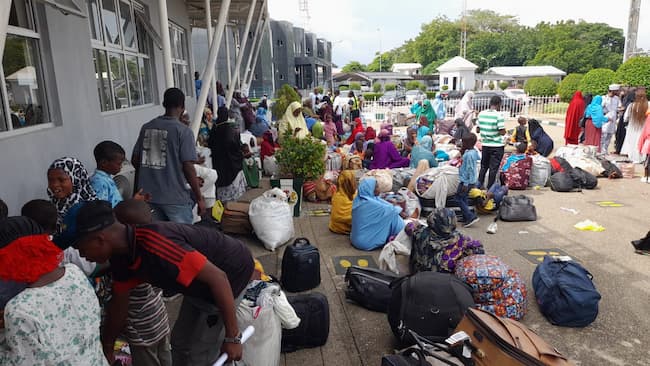
The Federal Government (FG) announced on Friday that 205 Nigerians who were stranded in war-torn Sudan have been evacuated.

Returnees landed at Nnamdi Azikiwe International Airport’s Pilgrims terminal in Abuja.

Officials from the National Emergency Management Agency (NEMA), the Ministry of Foreign Affairs, the National Commission for Refugees, Migrants, and Internally Displaced Persons (IDP), the Nigerians in Diaspora Commission (NIDCOM), and the National Agency for the Prohibition of Trafficking in Persons (NAPTIP) welcomed the returnees onboard the Tarco Airline flight.

There are 160 adults and 45 children among the 205 evacuees.

This is the 17th batch of Sudanese returns, considered to be the final round of evacuations, bringing the total number of returnees from the war-torn country to 2858.

NIDCOM via a statement said, “A total number of 205 Nigeria evacuees from Sudan arrived at Nnamdi Azikiwe International Airport, Pilgrims terminal, Abuja on Friday at exactly 12.15 pm.

“The evacuees which comprised 160 adults and 45 minors and infants were received by Federal Government Officials from NIDCOM, NEMA, REFUGEES COMMISSION, IMMIGRATION, FAAN, and Ministries of Foreign Affairs as well as Environment,” NIDCOM tweeted.

“As usual, they were profiled, fed, and provided transportation for them especially the majority going to Kano, Katsina, Kaduna, and Borno states. To date, a total of 2,865 evacuees have been transported back to Nigeria from the war-torn Sudan.”

READ ALSO

NLC Mobilises CSOs, Affiliates For Aug. 2 Nationwide Protests

NLC Mobilises CSOs, Affiliates For Aug. 2 Nationwide Protests

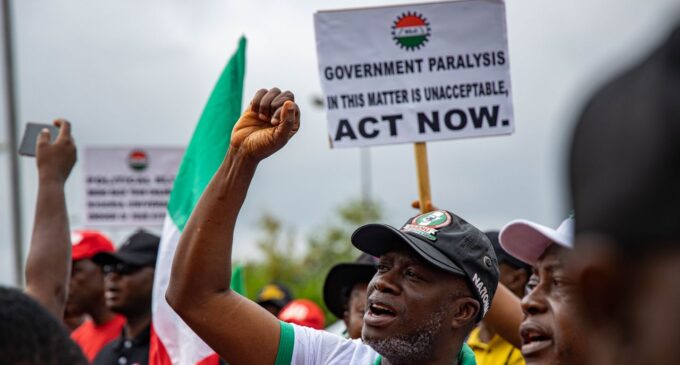
The Nigeria Labour Congress (NLC) has called on civil society organisations (CSOs) and its councils across the states to join in the upcoming nationwide strike to protest the high cost of living in the country.

The federal government had cautioned the labour union against embarking on any strike because of an existing order by the national industrial court.

However, in a communique released at the end of its national executive council (NEC) meeting, the Congress insisted that there must be a reversal of policies by the federal government that have resulted in “mass sufferings and deprivation across the nation”.

The communique was jointly signed by Joe Ajaero, NLC president and Emmanuel Ugboaja, the general secretary.

The labour body said it would be left with no option but to commence an indefinite strike on Wednesday, August 2, if the federal government failed to meet its demands.

According to the communique, NLC has directed that its committees across all states should begin mobilisation for the planned protest.

The NEC’s resolution to embark on the protest, the communique said, was in line with all the decisions of the NLC’s central working committee.

The union had highlighted issues such as the hike in the price of petrol, the immediate inauguration of the presidential steering committee, an increase in public school fees, the release of the eight-month withheld salary of university lecturers and workers and an increase in value-added tax (VAT), among others as bone of contention.

“Consequently direct all affiliates and state councils to begin immediate mobilisation and closely work with associations, individuals and other entities including the ones already on the streets to ensure that the government listens to the people,” the communiqué reads.

NLC further said the “unseriousness of the federal government towards the creation of frameworks to cushion the impact of its hike in the price of premium motor spirit (PMS) or petrol was demonstrated not only in the quality of its representation in the hastily called meeting of yesterday but also in their unpreparedness to deal with the issues as canvassed”.

“The union, therefore, set up strategy committees across all the states urging all affiliates and state councils including the civil society to come out beginning Wednesday, August 2, 2023, across the nation to protest the government’s insensitivity to the plights of Nigerians,” the communique added.

What Government Is Doing To Tackle Anthrax

What Government Is Doing To Tackle Anthrax

Federal Government (FG) announced the first case of anthrax on July, 17, 2023 after the disease was discovered in a farm in Niger State.

BizWatch Nigeria recalls that the Federal Ministry of Agriculture and Rural Development said that “is deeply concerned to announce the confirmation of an anthrax case in Niger State, Nigeria.”

The ministry via a statement also said, “the Office of the Chief Veterinary Officer of Nigeria was notified of animals manifesting symptoms of a suspected case of anthrax in a farm in Suleja, Niger State.”

Anthrax is an infectious disease caused by exposure to Bacillus anthracis bacteria.

The Centers for Disease Control and Prevention (CDC) disclosed that “anthrax occurs naturally in soil and commonly affects domestic and wild animals around the world.”

Hoe does the disease transmit to people? Humans can get sick with anthrax if they come in contact with infected animals or contaminated animal products.

What is the government doing to curb anthrax?

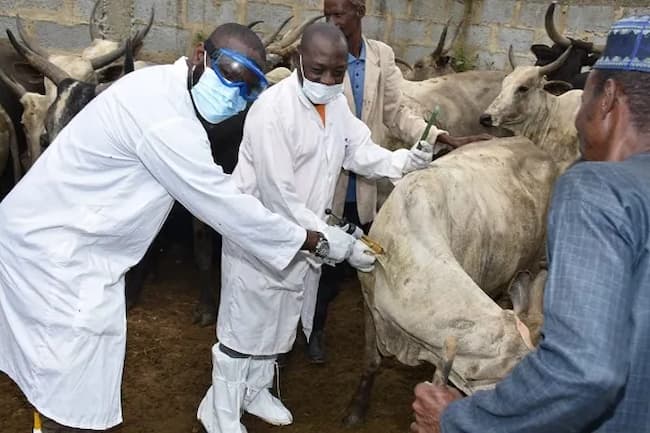
The Plateau State Government after the outbreak of anthrax announced that it would begin vaccination of 4.3 million cattle to curb the spread of disease in the state. The state government has already bought 200,000 doses of vaccines.

To combat the spread of anthrax disease in the capital city, the Federal Capital Territory Administration’s (FCTA) agricultural and rural development bureau has initiated a mass immunization of livestock.

The exercise was begun on July 24, 2023 in Paikon Kore Grazing Reserve, Gwagwalada Area Council, Abuja, by Ishaq Sadeeq, acting secretary of the secretariat.

Sadeeq stated that the mass immunization exercise would last four weeks and would target at least one million livestock across the FCT’s six area councils.

He noted that the step was necessitated by the confirmation of the disease in Niger, one of the states bordering the FCT.

Yobe State Government has also taken a step to curb the spread of anthrax, saying it has purchased one million, five hundred thousand doses of vaccinations to cover the vaccination of the state’s anticipated livestock population of seven million in all 17 Local Government Areas (LGAs).

Governor Mai Mala Buni stated this during the exercise’s flag-off ceremony in Kukareta, a village in Damaturu, the state capital.

He said, “The event provides us with a special opportunity to take urgent and concrete steps to prevent the spread of Anthrax disease from one other part of the country into the state as well as control of desert encroachment.

“According to medical experts, Anthrax is one hell disease that both humans and animals are at risk of contracting. Government has procured one million, five hundred doses of vaccines to cover the vaccination exercise of estimated livestock population of about seven million in all the 17 local governments of the state.”

Why vaccinate animals?

He said that the vaccine became necessary due to the state’s proximity to neighboring countries.

Because Yobe has international cattle lines heading to Central Africa, it is considered that vaccination of livestock will reduce the possibility of an epidemic of the illness in the state.

READ ALSO

‘Nigeria Records $380m Loss To Capital Flight Before Enactment Of Local Content Act’

'Nigeria Records $380m Loss To Capital Flight Before Enactment Of Local Content Act'

The Nigerian Content Development and Monitoring Board (NCDMB) has disclosed that the country lost over $380 billion before the enactment of the Nigerian Oil and Gas Industry Content Development Act in 2010.

Simbi Wabote, executive secretary, NCDMB, spoke at a sensitisation workshop for the Rivers state judiciary in Port Harcourt on Thursday.

The workshop was themed, ‘Philosophy and Imperative of the Nigerian Oil and Gas Industry Content Development Act’.

Wabote, who spoke virtually, explained that local content was not about nationalisation of foreign firms, but about domiciliation and domestication for local value addition.

“Despite Nigeria’s enviable hydrocarbon and human resources, it is disheartening to note that only a small, insignificant proportion of the oil and gas industry value was retained in the country,” he said.

“Prior to the enactment of the Nigerian Oil and Gas Industry Content Development Act of 2010, almost all value-adding activities were done overseas, and this resulted in significant capital flight, which was estimated to be at about $380 billion over a 50-year period.

“This resulted in over two million job losses, as most jobs were also executed by foreigners. Furthermore, less than 5 percent of Nigeria’s yearly oil and gas industry spending was retained in the country.”

He added that local content needs foreigners and foreign direct investments to thrive.

“It is important to note that local content is not about nationalisation; it is about domiciliation and domestication for local value addition,” Wabote said.

“It needs foreigners and foreign direct investments to thrive. Local content is not a corporate social responsibility, it is a business. Local content is a marathon, not a sprint; and local content is not at all cost.

“Local content has no one-size-fits-all approach or solution; local peculiarities are key considerations in implementation. What that means is that local content needs in Nigeria may not be the same in other countries like Qatar, local content obtainable in Nigeria or Qatar depends on the peculiarity of the country.

“As always, our message remains simple: we want partakers in the Nigerian oil and gas industry to produce, process, refine, manufacture, add value, retain value, pay taxes here and create jobs here in Nigeria.”

Police Force Vows To Prosecute Cute Abiola Over Use Of Uniform

Police Force Vows To Prosecute Cute Abiola Over Use Of Uniform

The Nigeria Police Force (NPF) has announced that it will prosecute Abdulgafar Ahmad, alias Cute Abiola, a skit maker.

The Force Public Relations Officer, Olumuyiwa Adejobi, revealed this in a statement on Thursday, saying the move followed the comedian’s two recent kits uploaded on his social media handles on July 20th and 24th.

The police spokeswoman described the comedian’s actions as disdainful, saying the “skits in question show a highly disrespectful and derogatory portrayal of the police uniform.”

He claimed that the act violated Sections 251 of the Criminal Code and 133 of the Penal Code Law.

“Such acts are not only offensive but also undermine the integrity and dignity of the men and women who wear the uniform in service to the nation,” he explained.

“We, therefore, vehemently condemn the contemptuous act displayed by comedian Abdulgafar Abiola, popularly known as ‘Cute Abiola’ in two recent skits posted on his social media handles on 20th and 24th July 2023.

“The skits in question show a highly disrespectful and derogatory portrayal of the police uniform, an action that is in direct violation of Section 251 of the Criminal Code and Section 133 of the Penal Code Law.”

According to Adejobi, the comedian, Cute Abiola would be probed and potentially prosecuted for his premeditated actions, as the NPF had previously cautioned sketch makers and filmmakers not to desecrate its uniform or accoutrements.

“The Force is committed to upholding the sanctity of the uniform and will pursue due legal process to ensure accountability for any individual or entity that seeks to bring disrepute to the uniform or the institution it represents.

“We call on all members of the public, including media personalities, to exercise their freedom of expression responsibly and avoid engaging in actions that could erode public trust in our revered law enforcement institutions,” he added.

BizWatch Nigeria recalls that Cute Abiola, a former Naval officer, was also detained by the Nigerian Navy in 2021 for allegedly breaking the armed forces’ social media policy, however he was handed a punishment after being tried for misbehavior and indiscipline.

READ ALSO

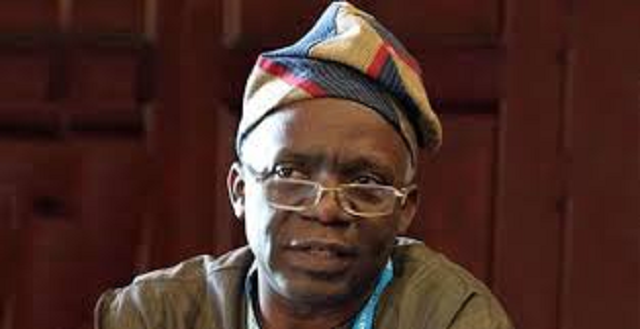
Falana Urges FG To Halt Plans To Increase School Fees

Falana Urges FG To Halt Plans To Increase School Fees

Femi Falana, a human rights lawyer, has urged the administrations of federal universities across the country to “immediately suspend the plan to increase tuition and school fees, especially because the majority of the people have been rendered impoverished as a result of the Federal Government’s removal of fuel subsidies.”

On Thursday, Falana issued a statement signed by Tayo Soyemi on behalf of Falana and Falana Chambers.

The senior lawyer said, “Since the federal government has not lifted the 1975 policy which abolished the payment of tuition fees in federal tertiary institutions, the federal universities lack the power to impose astronomical tuition fees on students.”

“The payment of school fees in junior secondary schools is illegal as Section 2 of the Compulsory, Free Universal Basic Education Act and Section 15 of the Child’s Rights Act have imposed a legal obligation on the federal and state governments to provide free, compulsory and universal basic education for every child from primary to junior secondary level.

“We have noted that the governments have not taken cognizance of the plight of physically challenged people in the implementation of the new education policy. It is pertinent to point out that it is illegal to collect school fees from physically challenged students.”

BizWatch Nigeria calls that the Federal Government (FG) raised school fees for Federal Government Colleges (FGCs), also known as Federal Unity Colleges, from ₦45,000 to ₦100,000.

The University of Lagos (UNILAG) also raised school fees for new and returning undergraduate students.

According to a statement acquired by BizWatch Nigeria, UNILAG based the action on “prevailing economic realities.”

“After careful deliberations with its stakeholders (students, parents/guardians, staff unions, alumni among others), the University of Lagos (UNILAG) Management has reviewed the obligatory fees (mandatory charges for an academic session/year) of new and returning undergraduate students of the University,” UNILAG explained.

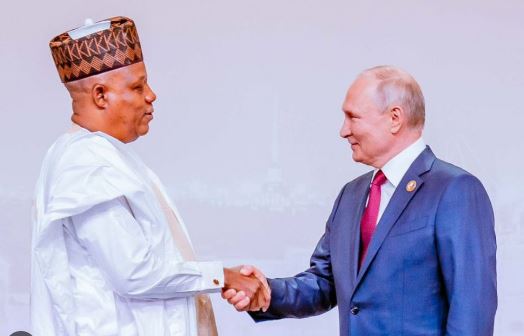
Nigeria, Russia Pledge Ties To Develop Energy, Information, Communication, Others

Russia’s President Vladimir Putin offered greater connections with Nigeria and other African nations on Thursday, promising African leaders that the European country was ready to collaborate with African governments to strengthen their energy, information and communication, education, and health sectors, among others.

This comes as Vice President Kashim Shettima stated that Nigeria will work with Russia to resurrect the Nigerian Aluminium Smelter Company, particularly through engaging key stakeholders in the sector.

They both talked during the current Russia-Africa Economic and Humanitarian Forum in St. Petersburg, Russia, as part of the Russia-Africa Summit. Several African heads of state are in attendance, including Shettima, who is representing President Bola Tinubu, and Zimbabwean President Emmerson Mnangagwa.

Shettima is attending the summit with a team of Nigerian delegation, Other officials at the forum were Nigeria’s Ambassador to Russia, Shehu Abdullahi; Nigeria’s Ambassador to Germany, Yusuf Tugar; Permanent Secretary, Ministry of Petroleum Resources, Gabriel Aduda; Permanent Secretary, Ministry of Mines and Steel Development, Mary Ogbe, and Chief Executive Officer of the Nigerian Upstream Petroleum Regulatory Commission, Mr Gbenga Komolafe, among others.⁣

“The sooner we get this plant back to production, the better for everyone. We need to walk the talk; the Nigerian people deserve better,” Shettima said at a meeting with the management of Russian Aluminium Company, UC RUSAL, and other stakeholders in the project on the sideline of the summit.

Meanwhile, Putin noted in his opening remarks that the potential for trade and economic cooperation between Russia and African countries was much higher than the trade turnover of $18bn seen in 2022.⁣
He restated his country’s commitment to food security in Africa and beyond, stressing that “Russia will continue to work towards shaping a more equitable global food distribution system.”⁣

The Russian leader added that his country would increase its support for Africa which accounts for 65 percent of the world’s arable land and around 10 per cent of domestic renewable freshwater sources, noting “its huge potential for the further development of agriculture.”⁣

“I would like to emphasise that Russia is sincerely interested in continuing to promote all-round development and deepen trade, economic and humanitarian cooperation with all African countries. I have no doubt that this forum and the thematic meetings, round tables and talks held within its framework will certainly be useful and will bring us closer to our common goals,” he said in his speech at the event.

The Russian leader also pledged to help Nigeria and other African states to tackle food crisis.

He said, “Our country will continue to support states and regions in need, including with its humanitarian supplies. We are seeking to actively participate in the formation of a more equitable system for the distribution of resources and are doing our utmost to prevent a global food crisis.

“In principle, we are convinced that with the application of appropriate agricultural technologies and the correct organisation of agricultural production, Africa can in the long term not only feed itself and ensure its own food security, but also become an exporter of various types of food. And Russia will only support you, I assure you.”

Meanwhile, Olusola Abiola, State House Director of Information, Office of the Vice President, said in a statement later on Thursday titled ‘Reviving ALSCON: VP Shettima meets stakeholders, restates FG’s determination to resuscitate plant,’ that Shettima’s sideline meetings at the event were in furtherance of the Federal Government’s efforts to reactivate production lines at ALSCON by re-engaging with UC RUSAL

Speaking following a presentation by the UC RUSAL management, Shettima emphasized the great advantages for the economy in many areas, including energy transition and job creation both directly and indirectly, as well as the influence on the growth of small enterprises.⁣

He urged all the stakeholders to expedite work on the plan of action to restart production at the company.⁣ Earlier, Shettima joined other African leaders at the Russia–Africa Economic and Humanitarian Forum declared open by Russian President, Vladimir Putin.⁣

The VP also attended a State banquet hosted by President Putin for the visiting heads of delegation at St. Petersburg’s ExpoForum.⁣

Nigeria’s Bond Benchmark Yield Increases To 13.1%

The average benchmark yield on Nigerian government bonds climbed on Thursday as a result of price declines. This comes as market investors seek higher rates on government new issuing as inflation continues to climb.

Nigeria’s headline inflation rate surged to 22.79% in June, fueled by food inflation. According to researchers, the statistic does not account for the increase in gasoline prices caused by the loss of subsidies. As a result, Broadstreet analysts believe the consumer price index will deteriorate in the second half of the year.

Fixed income dealers in the secondary market were negative yesterday, as the average yield jumped by 18 basis points to 13.1%. This occurred despite the banking system’s increased liquidity.

According to Cordros Capital, the average yield increased at the short (+59bps) and long (+4bps) ends of the benchmark curve as market participants sold off the MAR-2024 (+294bps) and JUN-2053 (+44bps) bonds, respectively.

In contrast, the average yield in the mid-segment closed flat. Cowry Asset Management stated in its market analysis that the 10-year, 20-year, and 30-year FGN bonds were unchanged at 12.99%, 14.60%, and 14.63%, respectively.

FGN Eurobonds rose across all tracked maturities, suggesting continued optimistic sentiment, while the average secondary market yield fell 25 basis points to 10.10%.

At the monthly bond auction, the DMO had planned to N360 billion worth of bonds. However, robust system liquidity ensured that demand was robust at 2.6x the offer. This enabled the Debt Office to eventually sell N657 billion worth of local bonds at lower average rates of 13.63% from 14.94% in June.

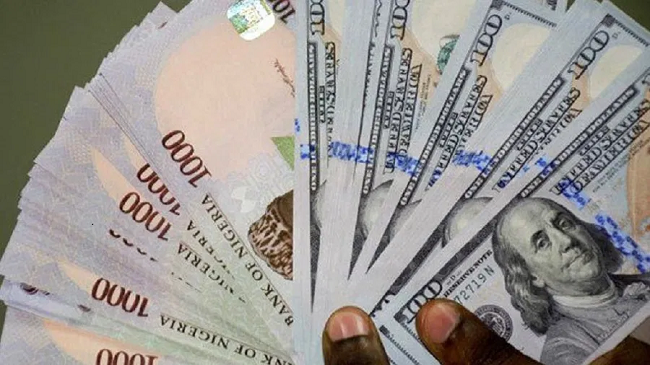
Naira Falls To N768.60, External Reserves Below $34bn

Dollar To Naira Exchange Rate Today (Fri. April. 28, 2023)

The Nigerian naira lost the war against the main foreign currency, the US dollar, at the investors’ and exporters’ FX window, with FX market statistics showing a 3.7% daily decrease.

The exchange rate deteriorated due to a lack of FX supply throughout Nigerian FX markets, resulting in a series of devaluations of the local currency in recent years.

The spot rate in the investors’ and exporters’ window at the FMDQ OTC FX market fell against the US dollar, trading at N768.60, down from N740.08.

In contrast, the Naira remained constant in the parallel market at N870 per US dollar, extending the difference between official and open market values by more than N100.

Nigeria’s External Reserves Below $34bn

External reserves were US$37.39 billion in December 2022, down from US$42.60 billion in 2021. External Reserves may fund 5.4 months of goods and services or 7.1 months of goods alone, compared to 7.3 months or 9.6 months in 2021.

Nigeria’s foreign reserves had fallen below $34 billion by mid-June 2023, and accretion had been constrained due to creeping remittance records. Access to Eurobonds, while available, will come at a high cost – Africa’s largest economy by GDP may be unable to add salt to the wound.

In the medium to long term, Nigeria’s external reserves are likely to continue well above the international standard of 3.0 months of import cover. This optimistic outlook is contingent on on the sustained improvement in crude oil production as the Nigerian government intensifies efforts to address the existing production challenges.

In addition, the current account surplus in the medium to long-term horizon is assumed to support the maintenance of buoyant external reserves.

T-Bills Rises To 7.12% As Market Weighs Rate Increase

LBS Discloses FG's Targets With Naira Redesigning

Following selloffs in the short, belly, and long-dated securities, the average yield on Nigerian Treasury notes increased by 281 basis points on Thursday. The pessimistic bias emerged when the market assessed the net consequences of the monetary authority’s recent interest rate rise on their portfolios.

The secondary market buying of Nigerian Treasury Bills had increased, aided by substantial liquidity in the banking system. As the actual return on investment in the fixed income market stays negative across risk-free government borrowing instruments, the inflation rate has already surpassed the upside.

Despite the negative interest rate, demand for Nigerian Treasury notes issued by the top bank has been high, allowing the Central Bank to reduce market rates to single digits. Though the market’s liquidity remained strong yesterday, there were exit transactions throughout tenure as the market continues to look for triggers to drive yield repricing.

A surge in banking system liquidity was caused by around N600 billion inflows from FAAC. Futureview Financial Services Limited disclosed in its market update that system liquidity grew to 441.72 billion on Thursday, up from 290.94 billion midweek.

In the absence of financial demands, the open repo rate (OPR) and overnight lending rate (OVN) both fell to 0.90% and 1.30%, respectively, according to data from MarketForces Africa’s FMDQ Exchange platform review.

The bearish trend in the secondary market caused the average yield to expand by 281 basis points to 7.1%. In its market update, Cordros Capital Limited said across the curve, the average yield advanced at the short (+179bps), mid (+234bps), and long (+334bps) segments.

The upward yield trend came following profit-taking on the 91-day to-maturity (+204bps), 182 days to maturity (+268bps) and 336 days to maturity (+422bps) bills, respectively.

The true yield jumped higher as a result of sell pressures from traders seeking higher yields. On Wednesday, the treasury bills market traded cold as investor shifted their attention towards the CBN primary market auction.

The apex bank auction result showed allotment of N264.31 billion out of the total subscription of N398.15 billion.

NGX Loses N111bn As FMCG, Banks Stocks Gets Offloaded

Stock Exchange Closes Trading Week With N30bn Gain

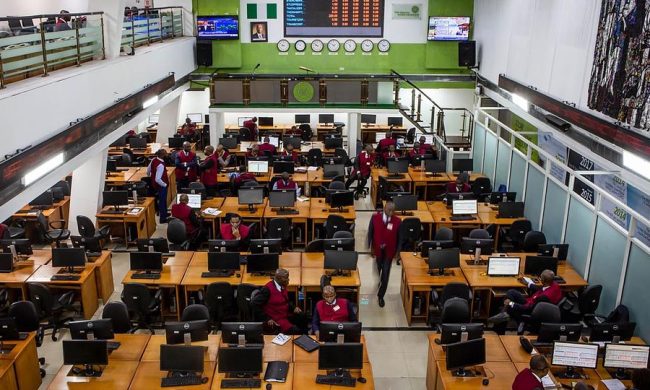
The Nigerian Exchange (NGX) lost more than N111 billion on Thursday as alpha hunters continued to offload stock following the interest rate rise and the revelation of poor profits for the first half of 2023.

Bearish sentiment was high, fueled in part by selloffs in banking equities and dismal earnings reports from key corporations in the fast-moving consumer goods sector.

The recent 25 basis point interest rate rise by the Central Bank of Nigeria’s (CBN) monetary policy committee has begun to drive yield repricing in the fixed income market. According to market updates from investment specialists, this has increased the benchmark yield on Nigerian Treasury notes.

The average yield on Nigerian Treasury notes, for example, was pushed up by 281 basis points to 7%, according to Cordros Capital Limited via email, owing to selloffs despite the financial system’s strong liquidity.

Futureview Financial Services remarked in response to stock market performance that negative feelings took hold for the second time this week, producing a downward shift in the market index, as investors continue to respond to the new benchmark interest rate of 18.75% released on Tuesday.

The NGX All-Share Index (NGXASI) fell 0.31% to 65,482.91 points from 65,991.02 points in the previous session, according to data from the local market.

Futureview said Thursday’s market deterioration was primarily influenced by profit-taking activities in significant stocks, including JAPAULGOLD (-9.91%), FBNH (-4.39%), GTCO (-3.10%), PZ (-2.12%), FLOURMILL (-4.55%), and 33 other stocks.

Selloffs on NB share dragged market price downward by 4.76% while ZENITH BANK fell by 0.85%. Specific market development showed that investors decided to further shed their holdings in CADBURY (-9.80%) and UNILEVER (-1.59%) due to their disappointing H1 earnings.

Consequent to selloff bias, the year-to-date return settled at 27.77%. Meanwhile, sectoral performance was predominantly positive, with three out of the five sectors appreciating, according to stockbrokers.

The Insurance and Consumer Goods sectors closed negative, declining by 0.95% and 0.66%, respectively.

On the flip side, the Oil/Gas Sector closed positive, gained 0.88%, driven by price rise in TOTAL and OANDO. Followed by the Banking and Industrial sectors, which both gained 0.02% and 0.01%, respectively.

Meanwhile, market activity improved, with total deals and volume increasing by 9.87%, and 1.76%, respectively, amounting to 8,070 trades, and 509.25 million units. In terms of volume, JAPAULGOLD emerged as the most actively traded stock, with 115.70 million shares worth N129.72 billion changing hands in 471 deals.

Also, the gainers-to-losers ratio, which measures investor sentiment, decreased to 0.37x from 1.33x in the prior session as 14 stocks appreciated, 38 stocks depreciated while 64 stocks closed flat. Overall, equities market capitalisation advanced by N111.15 billion to N35.63 trillion.

Nigeria, South Africa Set To Battle Economic, Cybercrimes

Cybercrime: The Greatest Challenge Of The Nigerian Youth In The Digital Age

Nigeria and South Africa have reaffirmed their determination to combat cybercrime, money laundering, and other economic and financial crimes. The EFCC’s Acting-Chairman, Abdulkarim Chukkol, made this known on Wednesday in Abuja, during a visit by a senior team from South Africa’s Directorate of Priority Crime Investigation (DPCI), led by Lt.-Gen. CS. Mosipi.

Chukkol informed the team that the EFCC was honored to accept the visit, which he described as a crucial step “towards fostering a deeper understanding and collaboration between our esteemed agencies.”.

“The EFCC actually recognizes the track record and unwavering commitment demonstrated by your organization, the DPCI, most especially in prioritizing and combating serious crimes that threaten the fabric of our societies.

“As we all gather here today, united by our shared mission to safeguard our nations from the clutches of economic and financial crimes, we recognize the crucial role that knowledge exchange and cooperation play in strengthening our collective efforts.

“These challenges that we face are quite complex and multifaceted requiring a holistic and collaborative approach.”

Chukkol added that the EFCC placed a premium on cooperation and collaboration with law enforcement and anti-corruption agencies in Africa.

“So, collaboration with agencies like yours will go a long way in addressing some of the challenges we face in our continent.

“Through open and transparent sharing of intelligence, strategies and methodologies we can bolster our capabilities and enhance our resilience in the face of evolving criminal tactics,” he said.

On his part, Mosipi stated that the delegation was at the commission to develop new pathways in tackling economic and financial Crimes issues and other related offences bedevilling the society.

The leader of the delegation called for collaboration and cooperation between both agencies and the implementation of the existing law enforcement Memorandum of Understanding, MoU, between Nigeria and the Republic of South Africa.

“Within the DPCI we deal with serious economic and financial crimes; there is a section that deals with that and we equally deal with drugs, there is a section that deals with that.

“We are happy to be here and we hope that when we leave here we will have a way forward, we know exactly what we want to do and how we want to do it and we can from this table, get the capacity to deal with those things,” he said.

Why Our Aircraft Is Trapped In Nigeria – MaxAir

Why Our Aircraft Is Trapped In Nigeria -MaxAir

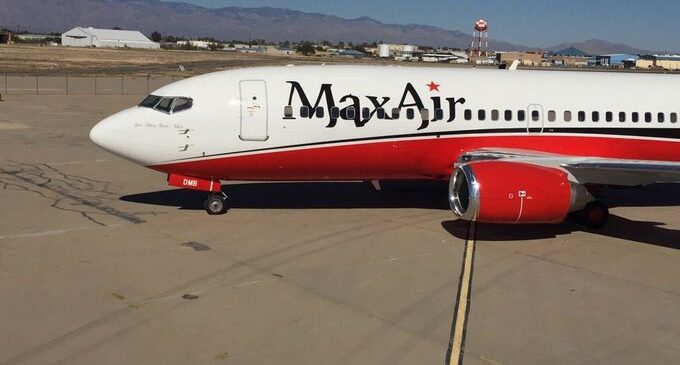
MaxAir has stated that one of its aircraft is temporarily trapped in Niamey due to the ongoing military coup in Niger.

In a statement on Thursday, the airline’s management said the aircraft had successfully dropped off the last group of Niger pilgrims it became stranded.

Although the aviation firm did not state the number of passengers on board, it was reported that the airline, a B-747-400, landed in Niamey with 360 Nigerian pilgrims onboard and about 18 crew onboard.

“MaxAir Limited regrets to announce that one of our aircraft has been temporarily trapped in Niamey, Niger, after successfully dropping off the last group of Niger pilgrims,” the statement reads.

“The safety of our crew and staff on board is assured, and we are actively seeking approval to depart as soon as possible.

“The situation is a result of ongoing unrest in the country. Our management team is in constant communication with local authorities and is working diligently to resolve the matter promptly.

“We extend our gratitude for the patience and understanding of our passengers and their families during this time. Updates will be provided regularly as the situation progresses.

“MaxAir Limited prioritises safety above all else and remains committed to the well-being of our passengers and crew.”

Earlier today, Niger soldiers announced the removal of President Mohamed Bazoum from office, leading to the suspension of all institutions and closure of the country’s borders.

CAC To Deregister 100,000 Companies CAC

CAC To Deregister 100,000 Companies CAC

The Corporate Affairs Commission (CAC) has concluded plans to deregister 100,000 companies for their alleged failure to publish returns.

The Registrar of CAC, Alhaji Garba Abubakar, stated this in Kano while addressing members of civil society organisations, the media, security agencies, and other stakeholders, on the use of Beneficial Ownership Register initiatives.

He has also has reiterated his commitment to strengthen the fight against corruption and ensure transparency in the system.

According to him, “The law is clear on the procedures; any company not filing its returns is considered not in operation or inactive, and is liable to be struck out.”

He further stated that the names of the affected companies will soon be published on the commission’s website, adding that: “They will be given four weeks within which to respond, failure of which they will be struck off from the CAC data.

“After the first 100,000 companies are delisted, another batch of no fewer than 100,000 defaulting companies will also be compiled. The consequences of striking them out are like a lost property but they are at liberty to reapply on the register to be relisted, and if they are not relisted within the next ten years, whatever property they have is lost.

“The register is not an end in itself but a means to an end, especially as an avenue to check financial crimes carried out using corporate bodies.

“You will agree with me that most procurements are done using companies, but the new system provides information about the true owners of these companies so it makes it easier for investigators to know the true owners of these companies, the natural persons that truly control the companies.”

He stated that: “The register is designed and implemented in line with international commitment, the commitment made by the Nigeria Government to have an open central register organisation of companies in line with the principle of Financial Act.

“If a company delays providing necessary documents and information to the agency, it attracts a defaulting fine of a minimum of N10,000. The whole essence of the issue is to have an open register that will support the efficient work of the anti-corruption agency, civil society organisation and the media to carry out their investigation of such a company if the need arises.”

Meanwhile, speaking in Lagos, Abubakar the BOR platform would be beneficial in strengthening the government fight against corruption and ensured transparent in the system.

He explained that the platform that was launched in May this year would make it easier to search for information on persons with significant control (PSC).

“The portal is an automated platform where records of PSC collated by CAC are stored and accessible both to the general public and for government use.

“This platform offers a search function and information on persons with significant control (PSC) in accordance with the international standard of beneficiary ownership data standards (BODS) under the guidance of the World Bank.

“It also provides an Enterprise Service Bus (ESB) gateway for data exchange in accordance with BODS in the required format.

“The BOR Portal will enable users to find the Person with Significant Control (PSC) of any entity when a search is initiated with either of the following parameters: entity’s name, entity’s number, PSC first name, and PSC surname.

The CAC boss further said that the platform would provide a simple, precise, and user-friendly environment for the search and provision of information on persons with significant control (PSC).

He added that the CAC has a customer relationship management system (CRM) in line with global best practices.

“The CRM is expected to upscale the commission’s customer service by allowing customers to lodge and resolve complaints in record time,” he said.

MAN: We Are Confused About Tobacco And Alcohol Tax

The Manufacturers Association of Nigeria (MAN) is demanding that the Federal Government provide clarification regarding the higher excise duty on tobacco products and alcoholic beverages outlined in the 2023 Finance Act.

The President of MAN, Francis Meshioye, in an exclusive interview with The PUNCH, commended President Bola Tinubu for suspending the implementation of some new taxes contained in the Finance Act.

He said there was still some confusion regarding the position of the government on the excise duty on tobacco products and alcoholic beverages.

He said, “About the excise tax increase on alcoholic beverages and tobacco products. It is not clear whether this has been suspended. It was mentioned by Alake that the President was conscious of this, but he did clarify whether this would be suspended. Our prayer has been that this should be totally suspended.”

According to Meshioye, there was a road map on how the increase will come to play, and the manufacturers had the confidence of the previous administration that they will respect the road map as agreed upon.

He added, “But all of a sudden, we find that this is not the case, that the Finance Act introduced an increase. This is very astonishing to us. We plead that if this part of what is being suspended by this Executive Order, we want it to be very clear so that our members will not have any problems in compliance and that there would be no threats from any other government agencies, especially Customs.

“If otherwise, I want to use this medium to plead with the President to suspend it totally because the roadmap stipulates a gradual increase in excise duty. What I want the president to do is evaluate the impact of the increase already meted, which has been passed on to the consumers. How are they reacting to it? What does it mean to them? This is our plea to the President. He should engage the stakeholders. We are willing to dialogue with the administration and see how we can support the economy without jeopardising the interest of the manufacturers.

Shell Warns Against Sabotage And Crude Oil Theft

Shell sells OML 17 stakes to TNOG for $533m

Shell Petroleum Development Company of Nigeria Ltd has warned against sabotage and crude oil theft.

The oil firm gave the warning as three host communities in Delta State Ogulagha, Iduwini Delta and Iwereland revealed their development trusts in Warri, on Thursday.

The Petroleum Industry Act which was signed into law in 2021, established Trusts as the main platform for development of host communities, while their incorporation provided legal backing to attract resources, and channel them to the development of communities.

The Managing Director of Shell and Chairman, Shell Companies in Nigeria, Mr Osagie Okunbor, at the unveiling of the three Delta host communities’ development trusts held at Shell conference centre, Ogonu, urged stakeholders to help ensure hitch-free operations to be able to fully benefit from the new dispensation.

Okunbor, who was represented by the Project Manager, NCDT, Dr. Alice Ajah, noted that, “With the latest unveiling, it means that the PIA is making progress in the Niger Delta, with SPDC, supported by her partners, continuing with its handshake with communities in the region.”

Highlight of the ceremony was the formal unveiling of the Chairmen, Board of Trustees of the three Delta Host Communities Development Trust, Chief Anoruse MacDonald (Ogulagha); Benikurukuru Ibamugha (Iduwini Delta) and Alli Lemmy Omagbitse (Iwereland) respectively.

The Shell Managing Director recalled that similar ceremonies had been held earlier in Rivers and Bayelsa States.

He noted that the train of development would hopefully move from Delta to Imo State as the SPDC JV was working to embed the provisions of the Petroleum Industry Act on community development in these four states by incorporating a total of 22 Trasts.

“This unveiling means the PIA is making progress in the Niger Delta, with SPDC, supported by her partners, continuing with its handshake with communities in the Niger Delta,” he stated.

He noted that the PIA provided for amicable resolution of grievances with oil companies, and all stakeholders including the communities are to deploy them as necessary. Also, communities which allowed internal strife and chieftaincy struggles to negatively impact the establishment or operations of Trusts in their areas would be inflicting a lot of self-harm.

Impact Summit: Sterling One, Coca-Cola, Microsoft, Others Partner

The Sterling One Foundation and the United Nations Nigeria, co-conveners of the Africa Social Impact Summit 2023, have officially revealed partners for the second edition of the Africa Social Impact Summit.

A statement said during a press conference in Lagos, the organisers said the events would take place in August.

‘The Africa Social Impact Summit, now in its second year, is a transformative summit that will bring together thought leaders, impact investors, and stakeholders from diverse sectors to address pressing challenges and design market-led solutions for sustainable outcomes in Africa,” the statement said.

Under the theme, ‘Global vision, local action: Repositioning the African development ecosystem for sustainable outcomes’, the summit sought to reshape Africa’s development landscape by fostering collaboration, innovative thinking, and impactful investment into critical areas.

The Summit aimed to accelerate the United Nations Sustainable Development Goals 2030 and the African Union 2063 Agenda.

The UN Resident and Humanitarian Coordinator in Nigeria, Mr Matthias Schmale, highlighted the UN’s dedication to working with the private sector and government to implement a cooperation framework for sustainable development.

He stressed the need for the private sector to move beyond corporate social responsibility and integrate sustainability into their business models.

“We want to see all stakeholders, especially the private sector, use the Africa Social Impact Summit as an opportunity to join hands to formulate a rescue plan for the SDGs,” he said.

While unveiling the partners for Africa Social Impact Summit 2023, the Chief Executive Officer of the Sterling One Foundation, Mrs Olapeju Ibekwe, said, “The African continent needs every impact resource and every player focused on how we can move from just potential and that is what each of us here has committed to, and I cannot express just how excited I am to see the number of partners we have brought to the table from what we had last year; this shows that the message of sustainable development is resonating.

BizWatchNigeria.Ng
Privacy Overview

This website uses cookies so that we can provide you with the best user experience possible. Cookie information is stored in your browser and performs functions such as recognising you when you return to our website and helping our team to understand which sections of the website you find most interesting and useful.