








Home Blog Page 2959

World Communicators to Converge At WCF in Davos Switzerland

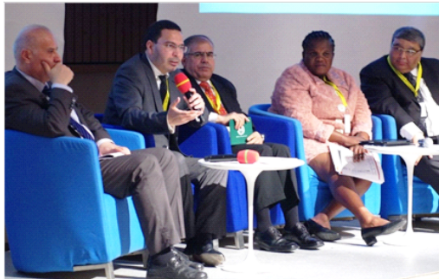
All is set for the World’s biggest Communications Forum in Davos Switzerland from 8-9 March, 2016. Communication professionals, CEOs, representatives of ministries, global media practitioners and some of the world’s most influential PR and marketing communications personalities will get together to discuss the key trends in the field of global communications at the WCF Forum in Davos Switzerland.
davos

The programme provides a diversified content and publicity opportunities for experts with out-of-the-box vision for the future of the industry. The participants will find out how to add meaning, integrate interests, how to engage the globe with city storytelling, how to manage crisis periods on the social media, and much more.

davos2

The focus of this year’s edition of the forum will be on the global communication agenda. WCF-Davos’2016 includes a number of presently relevant/ controversial topics, among which are: Country Branding, Communications in the Arab world, Communicating Inter-Governmental Brands, Education in Communications, Global Tourism industry in the age of Communications. From digital evolution to robot revolution – humanity, communications, ethics, Quantity or Quality- What is your social media top priority? Revolutionizing Communications and How to be prepared for the future.

Among the speakers and moderators of the plenary panels are leading experts, such as:
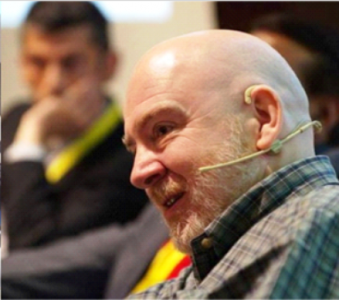
Mustapha Khalfi, Minister of Communications and Spokesperson of the Government of Morocco, Scott Fahlman, Research Professor at Carnegie Mellon University, also known as “Father” of the smiley emoticon, Tanuja Kehar, Vice President Corporate Communications at Unitech in India, Solly Moeng, Managing Director of Don Valley in Soth Africa, Kate Thompson-Duwe, Managing Director of Amplicon Group in South Africa, Sean Gardner, co-Founder of the pioneering Huffington Post “Twitter Powerhouses Series”, Don Anderson, Chairman and co-Founder of the Asia Content Marketing Association and Regional Managing Director of We Are Social in Singapore, Saurabh Uboweja, Founder, CEO & Director Brand Strategy at Brands of Desire.

Traditionally, WCFDavos holds the Communications for Future (C4F) Davos Award. However, this time it offers up to 23 categories for recognition of remarkable creativity and unique vision of the future of communications, in two major groups of awards: Personal (individual communicators with a strong influence on global communications) and Corporate (companies setting the standards for effectiveness & professionalism).
davos3

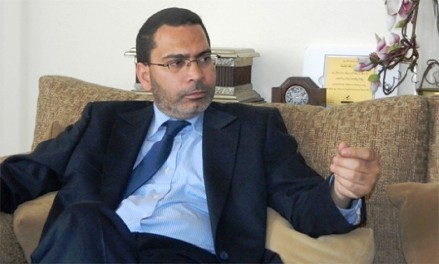
Mustapha Khalfi, Minister of Communications of Morocco, stated that, “I have no doubt that the World Communication Forum is assured of its place in the history as a platform where new solutions for an exciting new world are being shaped”.
davos4
Paul Holmes, the PR industry guru worldwide and Founder of the Holmes Report, added: “No idea how they did it, but in just a few years the organizers have created the most lively, engaging and influential event in the industry. This forum is an absolute phenomenon!”
davos5

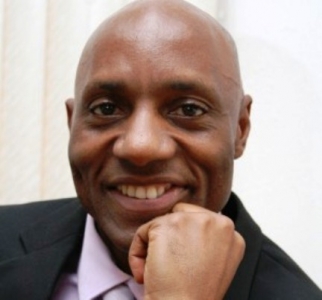
Dr Phill Osagie ( A renowned Global Strategist)

On March 8 and 9, parallel with the main forum, a session will be held for the first time, focused on global education in communications. WCFDavos | GlobEdu is intended for students and young communication professionals. During the two-day training session, participants will be grouped into several teams of 5 students and a senior university representative as a leader, with a real case study being assigned to each team. At the end of the training, a jury will evaluate and acknowledge the most effective strategy for dealing with the assignments.

WCFDavos 2016 is supported by exclusive partner agencies from all over the world: M3 Communications (Bulgaria), Kaiser Communication (Germany), Capital Communications (Hungary), CROS (Russia), Grou-AGAMA (Ukraine), Don Valley (South Africa), SPEM Communications (Slovenia), Manifesto Communications (Turkey), Cyber Gear (UAE), RADA Research & PR (Egypt), First House (Norway, DonValley (South Africa), Cyber Gear (UAE), Competence (Italy), The Story (Poland), JSP Communications (Nigeria), Depot WPF (Russia), Armenian Public Relations Association (APRA), PR Hub, The Place Brand Observer, PR Newswire, Sostav.ru , Facemark, LifeInterMidia and China International Public Relations Association (CIPRA).

The World Communication Forum in Davos (#WCFDavos) was inaugurated as an annual global professional event back in 2010. Since then, it has been traditionally held at the Davos Congress Centre in Switzerland as a platform for open dialogue between leading experts in the field of social, political and business communication. The Forum has become a respected international platform and the basis for formation of a global professional community that marks and creates key trends within the industry. The 6 editions have summoned managers from over 55 countries, across 5 continents, representing a variety of businesses.
NBS Projects 5.41% Annual Economic Growth From 2017

The National Bureau of Statistics, NBS, has projected that the Nigerian economy’s growth is expected to grow averaging 5.41 per cent yearly between 2017 and 2019.

The Bureau, in its latest Economic Outlook and Review 2016 Report released at the weekend hinged its projections on improving operational environment associated with current policy reforms by government to minimize wastages in public finance, fix decaying infrastructure and other fiscal and monetary initiatives, amongst other factors.

Reflecting on the headwinds in global commodity markets which sagged commodity prices, the decision by US Federal Reserves (FED) on key interest rates and other developments in Euro zone, Indian and Asian economies and the implications for the Nigerian economy, the NBS noted that these ugly developments had helped government to take hard decisions required to keep the economy on the path of sustainable growth.

Specifically, the Bureau recalled that the crisis in the commodity markets which started in the second half of 2014 impacted negatively on the Nigerian economy in 2015 as oil prices fell 66.8 per cent from $114/barrel recorded in June 2014, to $38.0 by December 2015; and worse still falling to as low as $32.6 as at Wednesday last week.

In addition, it also reported that beyond commodity markets, recent developments in the global economy, including return of Iran to the global oil market as well as turmoil in the Euro zone which remains a key importer of Nigerian exports, amongst others, created a trifecta of headwinds that the nation has to contend with.


Nigeria Loses N1trillion Yearly to Software and Device Importation

The Office for the Nigerian Content Development in ICT, ONC, has said Nigeria loses over N1 trillion in foreign exchange annually to the importation of ICT devices and software.

ONC’s national coordinator, Inye Kemabonta, who revealed this at a press conference in Abuja on Wednesday, February 10, said Nigeria lost N250 billion to the importation of foreign software, and N750bn to the importation of millions of hardware.

He said 4, 000, 000 phones were imported into Nigeria every month while most of our data were hosted abroad.

“Nigeria is facing security and economic risk because we import virtually all the ICT devices and software we use in the critical sectors of our economy,” he said.

He added that Nigeria may not have been brought to its kneels because it has not posed any threat to technological giant countries.

World Bank Launches N31.52billion Package for Nigeria’s MSMEs

World Bank on Wednesday, February 10,  unveiled a $160m (about N31.52bn) Growth and Employment Project to facilitate the provision of access to finance and technical assistance for micro, small and medium enterprises, MSMEs, in Nigeria.

In order to push through the initiative, Business Innovation and Growth, an online platform code-named BIG, was launched in Abuja by the Minister of Trade, Industry and Investment,  Okechukwu Enelamah.

Largely an initiative of the Federal Ministry of Trade, Industry and Investment and funded by the World Bank, BIG is the main channel through which GEM assistance is expected to be made available to MSMEs to stimulate economic activities in some key non-oil sector areas.

Some of the identified GEM sectors include ICT, construction, entertainment, light manufacturing, including agro-processing, and hospitality and tourism. Speaking during the formal launch of the initiative, which has three years implementation time frame, World Bank’s country director for Nigeria,  Rachid Benmessaoud, said the project would not only help to complement the nation’s industrialisation efforts, but also assist the present administration’s quest for job creation. Explaining the modalities for accessing the funds, the World Bank chief noted that MSMEs operating under the GEM sectors throughout Nigeria would be invited to register on the BIG platform through its dedicated website.

He hinted further that the enterprises would apply and be screened, and that if they meet the required criteria, would be given access to high quality training and capacity building. If they pass through the training phase successfully, they may become eligible to apply for grants.


Ibadan Disco Requires N30billion for Prepaid Meters

The Ibadan Electricity Distribution Company, IBEDC, has said  it needs about N30 billion to procure pre-paid meters for electricity consumers in its area of business operation.

The chairman of the IBEDC, Tunde Ayeni, said this in his discussion with Governor Abdulfatah Ahmed of Kwara State and the Emir of Ilorin, Alhaji Ibrahim Sulu-Gambari, during an advocacy visit on planned tariff increase by the electricity company

He said the existing transaction between the company and the Bureau of Public Enterprise could not allow the company to source for huge funds from banks to buy meters for its consumers.

Gov. Ahmed, who said that public perception of the power company hasn’t changed, urged it to step up advocacy, particularly, in rural areas, to give the people a sense of belonging.


“11 Contractors Collected N4billion Without Going to Site” – Senate Reveals

The Senate Committee on Works on Wednesday, February 10, has revealed that 11 road contractors collected N4billion in 2015 from the federal ministry of Works and did not mobilize to sites.

Chairman of the Committee, Senator Kabiru Gaya revealed this on yesterday, when the Minister of Power, Works and Housing, Mr. Babatunde Fashola appeared before his Committee for budget defence.

He said some contractors collected N500 million while one of the contractors collected N1 billion. He gave an instance of the dualisation of Otukpo township road, in Benue State where the contractor was paid N1 billion.

Gaya demanded the minister to check the details of such contracts and report back in the next meeting noting that there is no point giving a contractor mobilization fee when he cannot perform.

Responding, the minister promised to check and get back to the committee.

Also the House of Representatives committee on aviation yesterday queried the Nigeria Meteorological Agency (NIMET) over a double allocation of N180 million for a single project.

The committee observed during a budget defence session with NIMET yesterday in Abuja that the agency proposed N85 million under the main budget and another N95 million from its Internally Generated Revenue (IGR) both for capital expenditure with similar sub-head in the proposed budget.

The committee chaired by Rep Nkeiruka Onyejeocha (PDP, Abia) also frowned at a practice by the agency where it would generate funds through US Dollars and remit to the Federation Account via naira.

Ministry of interior and Accident Investigation Bureau (AIB) also defended their budget yesterday at the National Assembly.

Fire Guts Farmlands in Edo State, Destroys Crops Worth N50 Million

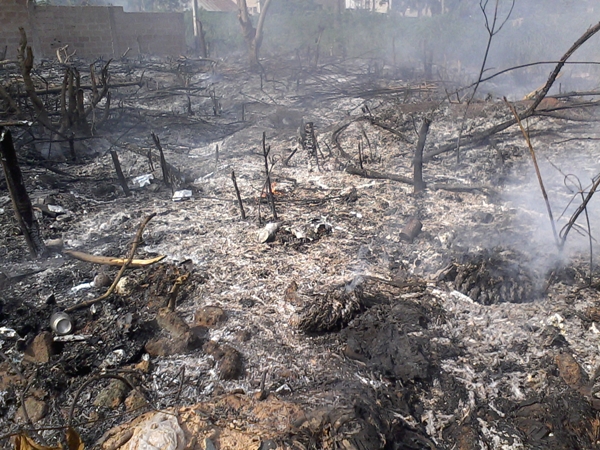
Farmlands belonging to the people of Orhua community in Uhumwode local government area of Edo state was gutted by wild fire and this has resulted in a lot of losses and devastation for the people of the community.

The agrarian community is home to business mogul, Dr Nosa Okunbo and the member representing Uhumwode in the Edo state House of Assembly, Mrs Elizabeth Ativie who was expected to raise the issue at plenary Wednesday.

The community dwellers claimed the fire destroyed ‎ Oil palm, plantain and  Allied plantations,  also devastated subsistence  arable crop farms, leaving many jobless and hopeless.

Elder Samuel Ozigbo, the oldest man in the community expressing frustration at the turn of events said though no lives and properties were lost, the farmlands destroyed is in the region of N50million.

He said, a lot of crops were damaged meaning their major means of survival is gone.

He then appealed to the state and federal governments to come to their rescue not by providing such relief materials as mattresses, blankets and assorted building materials but food items and cash support to enable many breadwinners meet their obligations.

LASG Shuts Down 6 Companies Over N32.17 Million Tax Debts

Mrs Ajibike Oshodi-Sholola, the Head, Distrain Unit of The Lagos State Internal Revenue Service (LIRS), said it has shut down  six companies for failure to remit a total of N32.17 million deducted as personal income tax of their employees to the state government.

She disclosed this while speaking with the News Agency of Nigeria (NAN) in Lagos on Wednesday.

Oshodi-Sholola said that the companies were audited by LIRS about one to five years ago, but the companies had not been meeting their tax obligations to the state till date making their liability period run from 2009 to 2013.

She said that LIRS went to court and obtained an order to seal the companies since they refused to pay these taxes after many years of been audited.

She said that tax payment was a civic responsibility of everyone and that companies had no reason for not remitting taxes of workers to the government.

According to her, the affected companies are into communication, security management, shipping and pharmaceutical, among others.

Oshodi-Sholola, however, advised that companies could contest or object to tax liabilities given to them within time allowed for consideration by the service which is  30 working days after the demand notice letter was issued.


“Nigeria’s Oil Production Output Leaps in January, Remains Below Budget Target” – OPEC

The Organization of Petroleum Exporting Countries, OPEC, on Wednesday February 10, said Nigeria witnessed an increase in crude oil production in the first month of 2016 while production decreased in the country’s closest African rival Angola.

Relying on data from secondary sources, OPEC said crude oil output rose to 1.8m barrels per day (b/d) in January from 1.7m b/d in December 2015.

OPEC’s crude oil production based on direct communication also showed that output increased from 1.6m b/d in December to 1.9m b/d in January.

But the country’s output levels still fall below the 2.2m b/d target set by the federal government in the 2016 budget, the OPEC data also showed.

In its Monthly Oil Market Report (MOMR) for February 2016, the oil cartel said crude oil output also increased mostly from Iraq, Saudi Arabia and Iran, but production showed a decrease from Angola, Venezuela and Algeria.

OPEC said the total crude oil production by its 13-member group in January averaged 32.33m b/d, an increase of 131,000 b/d over the previous month.

Production upsurge in Nigeria was assisted by an additional rig count, the report showed. Africa’s top oil producer recorded 28 rig count in January up from 27 in December 2015.

The rig count is essentially a reflection of the level of exploration, development and production activities occurring in the oil and gas sector.

The head of Energy Research at Ecobank, Dolapo Oni, said the coming on stream of two fields operated by Shell and Chevron must have contributed to the rise.

Oni said, “ Shell brought on Phase 3 of Bonga, and Mobil also completed Erha North. Shell’s Phase 3 was 55,000 barrels while Bonga was 50,000 barrels. Both of them must have contributed to the increase.”

OPEC said the non-oil private sector in Nigeria had a modest improvement in business conditions in January.


Nigeria’s Active Telecoms Subscribers Slides By 1million

The Nigerian Communications Commission, NCC, has said the active subscribers in Nigeria’s telecommunications industry dropped by 1,105,928 in the month of December 2015.

The commission made this known in its Monthly Subscriber Data, which was obtained by the News Agency of Nigeria (NAN) on Wednesday, February 10 in Lagos.

NAN reports that active lines in Nigeria stood at 151,017,244 for the month of December, against the figure of 152,123,172 in November.

According to the data, 148,681,362 of the 151,017,244 active numbers subscribe to the Global System for Mobile Communications (GSM) network services.

The GSM operators’ active customers reduced by 1,105,758 as against the 149,787,120 subscribers they recorded in the month of November.

The Code Division Multiple Access (CDMA) operators had 2,148,727 active users in December, indicating a decrease of 393 from the 2,149,120 customers they had in November.

Also, the monthly subscriber data showed that the Fixed Wired/Wireless networks’ consumers increased to 187,155 in December, as they added 383 customers to their record of 186,772 in November.

The chart revealed that the teledensity of the country’s telecommunications industry decreased to 107.87 per cent in December, from 108.66 per cent in the month of November.

NAN reports that the teledensity statistics measure the percentage of a country’s population with access to telecommunications services, as determined from the subscriber base.

Nigeria’s teledensity is currently calculated by the NCC on a population of 140 million people.

NAN also reports that there is a decrease of 0.79 per cent in the teledensity of Nigeria in December. (NAN)

Commercial Banks Lost N2.2billion to Fraud in 2015

The Central Bank of Nigeria, CBN, has said the value of funds lost by commercial banks to fraud in 2015 hit N2.2 billion.

It however added that it is a massive drop from N6.6 billion recorded the previous year.

Its Director, Banking and Electronic Payments, ‘Dipo Fatokun, who spoke on Wednesday, February 10, said the reduction of fraud losses meant that fraud rate in Nigeria is less than that of Europe as a whole, and indeed that of Portugal which boasts the least fraud rate in Europe.

Speaking at a conference titled: CBN Real Sector Financing: A Catalyst for Economic Growth and Development, in Ibadan, he said the new record of fraud rate was made possible by some policy shifts in the CBN especially the implementation of two factor authentication for internal banking processes which started January last year.

He said the review of operations of the Nigeria Interbank Settlement System (NIBSS) Instant Payment (NIP) System and Other e-Payment Options with Similar Features and establishment of industry fraud desk were responsible for the drop in fraud value.

Fatokun also said the introduction of the Bank Verification (BVN) initiative, deployment of the Central Anti-Fraud Solution and collaboration of the banks’ fraud desk and coordination by NIBSS also cut fraud statistics within the period.

‘’The policies/circulars issued by the CBN most times have direct impacts on the fraud levels in the industry; sometimes we see a direct decline in the fraud rates in the months the CBN circulars were released,’’ he said.

Speaking on agent banking, Fatokun said the CBN Board of Governors will this month meet on the application of telecom companies for Super Agent.

Part of CBN’s guidelines on agent banking stipulates that banks and agents should treat and resolve any customer-related issues in agent banking within 72 hours.

The apex bank also said financial institutions shall be responsible for setting up dispute resolution mechanism for their agents to facilitate resolution of customers’ complaints.

The CBN also pegged the minimum shareholder fund for Super Agents in Agent Banking at N50 million, a guideline released at the weekend stipulated.

Nigeria Shops for $2billion Chinese Loan to Fund Budget

Nigeria is seeking a $2billion loan from China to fund the 2016 budget as the Finance Minister Kemi Adeosun, is set to travel to China next week to negotiate the loan to help fund the record budget spending, financial and government sources were on Wednesday, February 10, quoted by News Agency Reuters.

According to sources, Nigeria has discarded plans to meet investors about returning to commercial borrowing on the Eurobond market.

One Nigerian government official told Reuters that any loan agreed during Mrs Adeosun’s trip could be signed by President Muhammadu Buhari in Beijing next month.

“The finance minister, in the company of the Central Bank Governor Godwin Emefiele, is scheduled to be in China sometime next week to conclude negotiations on the $2 billion loan,” said the official, who asked not to be named.

The official acknowledged negotiations had been underway for some time and that the terms had yet to be agreed.

He however added: “Hopefully it may be sorted out during this meeting and the loan will be signed during President Buhari’s visit to China next month.”


INEC Earmarks N10billion on 80 Election Rerun

The Chairman of the Independent National Electoral Commission, INEC, Mahmud Yakubu has said 80 rerun elections ordered by the courts will cost the country N10 billion,

Yakubu said the rerun elections must be conducted between now and March 19.

Yakubu, while presenting the commission’s 2016 budget before the House of Representatives’ Committee on Electoral Matters, said the N10 billion was reqiured for logistics and other electoral activities.

The committee assured Nigerians of its readiness to offer assistance for the prosecution of the 2019 general election, saying early preparation for the 2019 polls should be prioritised.

As a result, Chairperson of the committee, Aishatu Dukku, demanded the schedule of the purchases to be made by the commission.

In addition, she said the committee would visit state offices to ascertain the level of preparedness.


FG Predicts 4.2% GDP Growth by 2017

The Federal Government has forecasted a 4.2 per cent growth in the country’s Gross Domestic Product, GDP, by 2017.

Minister of Finance, Kemi Adeosun, made this projection when she addressed Chief Financial Officers, CFOs, at the just concluded KPMG Professional Services CFO Forum and Survey Launch in Lagos.

Adeosun, in her presentation on the theme; Outlook of the Nigerian Economy, she noted that the country’s GDP for 2015 was the lowest in the last 15 years, at an average of 4 percent.

“Nigeria GDP, growth from 2005 to 2010 was at an average of 9 percent, and everybody was trying to announce about Nigeria saying, how fantastically we have been doing with great money in the economy.

“But we are actually mastering some vulnerability because if you look at the drop from 2010 to 2011, it was an average of 5 percent while oil price was still high.

“There was vulnerability building up in the economy, and this situation has been breeding for quite a while, and then we have the drop in crude price at 2015 and our GDP drop to an average of 4 percent.”

“My administration plan basically is to stimulate the economy to achieve a real GDP growth rate of 4.2 percent by 2017, then reduce the cost of governance, extract efficiencies in the public service and enhance collection of internally generated revenues.

“Also, we want to increase government expenditure on infrastructure, and then we are going to try and fund this budget deficit in the most efficient manner possible.

“There was vulnerability building up in the economy, and this situation has been breeding for quite a while, and then we have the drop in crude price at 2015 and our GDP drop to an average of 4 percent.”


Naira Slides Down to N315 Per Dollar As Exchange Rate Pressure Intensifies

Pressure on exchange rate at the parallel market segment on Wednesday, February 10,Pulled naira down even as the Central Bank of Nigeria, CBN, window remained stable.
At two of the main market hubs in Lagos, Naira traded at N315 to one US Dollar as black market operators sold at high N318/USD1 but CBN’s rate remained at N197/ USD1, while interbank rate was N199.
One of the black market operators who engaged Vanguard in an argument on why Naira was under pressure, explained that since the apex bank stopped selling foreign currencies to Bureau De Changes, BDCs, there had been acute shortages in the supply of the resources.
He admitted that the black market operators actually got supplies from the BDCs who had sourced the foreign exchange from the official CBN window, thereby confirming the apex bank’s allegation that the BDCs were diverting the official allocation of the foreign currencies for higher rates at the black market.


Savings From Fuel Subsidy Removal Soars to N647million Daily

Federal government is saving N647.2 million daily from the suspension of subsidy on Premium Motor Spirit, also known as petrol.

At the current price of N86.50 per litre in petrol stations, the country is making an extra N16.18 per litre.

The saving is partly due to the continuous decline in the price of crude oil in the international market, which dragged the open market price of petrol to N70.32 per litre.

The amount the country is saving is based on a 40 million litres average daily consumption of PMS by Nigerians as declared by the Federal Government.

Since the announcement and commencement of the price modulation regime by the Federal Government, the open market of PMS had fluctuated between N4 and N12 per litre before rising to its current level.

Data obtained, on Wednesday, February 10, from the Petroleum Products Pricing Regulatory Agency, PPPRA, in its pricing template for PMS for February 9, 2016, revealed that at a retail price of N86.50 per litre, as approved by the Federal Government, the country is saving N16.18 per litre of the product.

The PPPRA put the landing cost of the product at N56.02 per litre, composed of Cost plus Freight — N51.19 per litre; Lightering Expenses — N2.02; NPA Financing — N0.15, Jetty Throughput Charge — N0.60 and Storage Charge — N2.00 per litre.

In addition, total margins stood at N14.30 per litre, composed of Retailers, Transporters and Dealers margins of N5, N3.05 and N1.95 per litre respectively, while Bridging Fund, Marine Transport Average and Admin Charge stood at N4, N0.15, and N0.15 per litre respectively. The PPPRA put the total cost of the product, which is the expected open market price, at N70.32 per litre and the ex-depot price, which is the price at which petrol stations owners buy from depot, at N76.50 per litre.

Read more at: http://www.vanguardngr.com/2016/02/savings-from-fuel-subsidy-removal-rise-to-n647m-daily/

FG Slashes Army’s 2016 Budget by N386billion

The federal government has trimmed the 2016 budget of the Nigerian army from the proposed N526 billion to N139 billion.

Chief of Army Staff, Lieutenant General Tukur Buratai said the army’s N139 billion allocation slashed from the initial N526 billion proposal will affect the operation and barracks rehabilitation of the military.

Buratai, who appeared before the army committee of the House on Wednesday, February 10, to defend the budget, urged the lawmakers to jerk up the amount in view of the urgency to address myriads of dilapidated structures.

He said going by the level of ammunition consumption in the North East, the present allocation for the purchase of weapons and other operational vehicles could proved to be inadequate.

Buratai said the army has been utilizing the pool of its expertise in fixing obsolete equipment, which saw over 2900 unservisable AK47 repaired by electrical and mechanical engineers.

Chairman of the committee, Rep Rima Shawulu told the army chief that an independent assessment by the committee shows reduction in the personnel cost compared to allocation of the last three years.

FG Expends N825billion on Travel Allowances, Others in Three Years

The Federal Government spent N825 billion in three years on travels, maintenance, local and international training, welfare and stationery/computer consumables.

The Head of the Efficiency Unit, set up by the Ministry of Finance to streamline government overhead expenditure, Patience Oniha, who disclosed this on Wednesday, February 10, said from the study of government overhead expenditure it carried out between 2012 and 2014, 60 per cent of Federal Government’s overhead expenditure were, on the average, incurred through local and international travels, maintenance, local and international training, welfare, office stationery and consumables, honourarium and sitting allowance, meals and refreshment and books.

Oniha  said: “In furtherance of its commitment to re-prioritise spending and cut cost on recurrent expenditure, The Efficiency Unit of the Federal Ministry of Finance is planning to introduce detailed price guidelines to ensure value for money in procurement by Ministries, Departments and Agencies (MDAs).

“To reduce the incidence of cash, the deployment of Ministerial Debit Cards is being piloted. The unit, which carried out an extensive and detailed review of the Overhead Expenditure data of the government for the period 2012 to 2014, found that the overhead spending pattern was concentrated on a limited number of items, including travel, maintenance, local and international training, welfare and office stationery/computer consumables.

“The Cumulative Expenditure on these five items was N825 billion, representing 61 per cent of the Cumulative Total Overhead Expenditure of N1,353 billion for 2012 to 2014.

“This means that the average amount expended annually on these five items during this period was N275 billion. The estimate for 2015 shows a continuation of this trend. “Overhead spending exceeded allocations to capital in all the years reviewed.”


Over 200 Roads Worth N2 Trillion Will Be Completed in 2016- Fashola

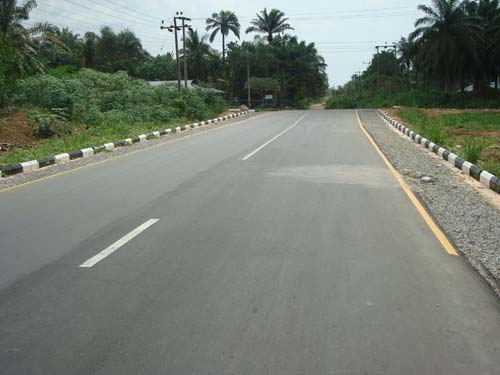
Minister of Power, Works and Housing Mr. Babatunde Fashola, has said over 200 roads worth N2 trillion awarded by the previous administration will be completed across the country this year.

 He said this at a budget session with the House of Representatives’ committees on Power, Works and Housing and FERMA, saying the government owes road contractors over N1 trillion.

The minister said 206 projects were in diverse stages of completion, while contractors, consultants for engineering design and supervision consultants, etc. have not been paid.

On the 2016 budget proposal, Fashola said of the N433 billion proposed for the three critical sectors, N208 billion is for roads, N99 billion for power and N66 billion for housing.

Fashola said the main challenge of the ministry is inadequate budgetary provision for projects to sustain annual cashflow requirement levels and there is a need to  diversify the sources of funding highway projects.”

He presented a three-year plan (2016-2018) for the completion of major economic roads linking different states and regions, totalling over 6,000 kilometres.

He said some of the priority roads included: Sokoto-Kantagora-Makera Road, Katsina-Kano-Maidugari road, Hadeja-Nguru-Gashua Road, Ilorin-Jebba-Makowa, Lagos-Ibadan road, Enugu-Portharcourt, Calabar-Adokpani-Ikot road and Ajibandele-Sagamu road.

On the delay in the completion of the Lagos-Ibadan Express road, the minister blamed the concession agreement between the Federal Government and Bi-Courtney Limited, which he described as “problematic”.


FG to Compile List of Nigerians Who Bought Houses in UAE with Looted Funds

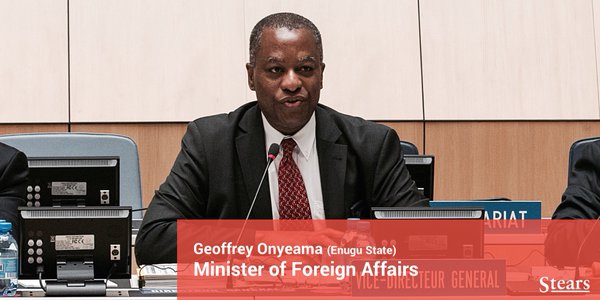
The Minister of Foreign Affairs, Mr Geoffrey Onyeama, on Tuesday, said efforts were ongoing  to secure list of Nigerians who owned choice properties in the United Arab Emirate (UAE) from proceeds of fraud.

He made this known to  the Senate Committee on Foreign Affairs during the budget defence of the ministry in Abuja.

He added that the Federal Government was already discussing with the UAE government to get the list of properties owned by Nigerians in that country, saying that the ministry was also engaged in recovering looted funds from the US.

Sen. Monsurat Sumonu,the Chairman of the Senate Committee on Foreign Affairs,  also called for better working relationship between NASS and the ministry to enable them to work to deliver dividends of democracy to Nigerians.

BizWatchNigeria.Ng
Privacy Overview

This website uses cookies so that we can provide you with the best user experience possible. Cookie information is stored in your browser and performs functions such as recognising you when you return to our website and helping our team to understand which sections of the website you find most interesting and useful.