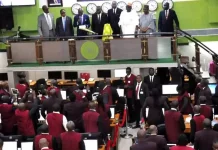
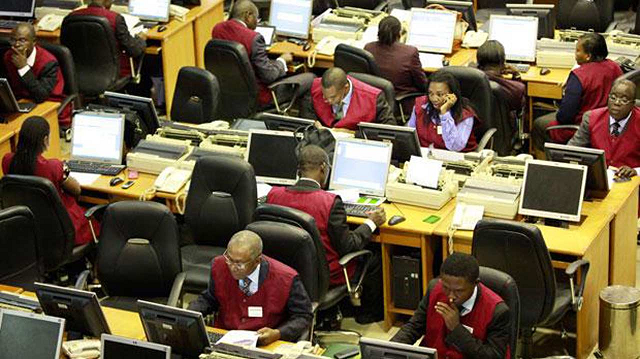
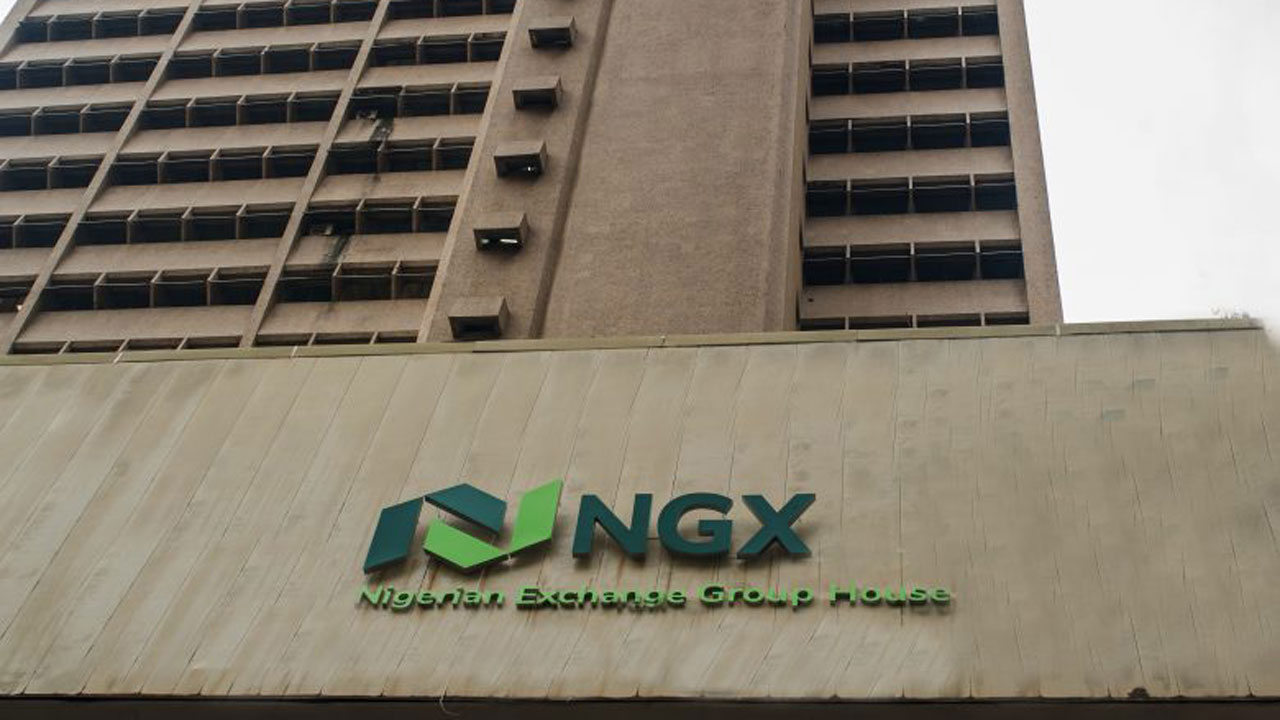
The Nigerian Exchange (NGX) closed in the red on Wednesday as sustained sell-offs across major stocks dragged market performance lower.
Investors recorded a total loss of ₦663 billion, with the market capitalisation dropping from ₦90.227 trillion to ₦89.564 trillion, representing a 0.73% decline. The All-Share Index also fell by 1,047.16 points, closing at 141,566.31 compared to 142,613.47 in the previous session.
Market breadth remained negative, with 52 losers against 18 gainers. Conoil and Guinness Nigeria led the laggards with a 9.98% decline each, settling at ₦211.10 and ₦140.20 per share, respectively.
Other significant losers included Consolidated Hallmark Holdings (-9.94% to ₦4.35), Royal Exchange (-9.92% to ₦2.27), and FG142027S1 (-36.97% to ₦75).
On the flip side, Austin Laz topped the gainers’ chart with a 10% rise to ₦2.64, followed by Champion Breweries (+9.97% to ₦19.74), NCR Nigeria (+9.77% to ₦9.55), Multiverse Mining (+8.82% to ₦11.10), and Enamelware (+8.64% to ₦39).
Trading activity slowed, as total volume and value declined. Investors exchanged 721.82 million shares worth ₦12.94 billion in 28,745 deals, compared to 1.03 billion shares valued at ₦17.66 billion in 34,352 deals on Tuesday.
Champion Breweries led the activity chart with 54.5 million shares valued at ₦988.3 million, followed by Universal Insurance (47.8m shares worth ₦57.3m), Royal Exchange (46.2m shares worth ₦105.2m), Regency Alliance Insurance (40.8m shares worth ₦55.5m), and AIICO Insurance (39.3m shares worth ₦156.4m).
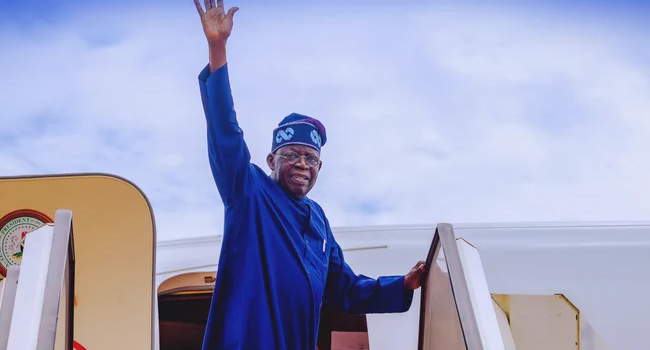
President Bola Tinubu has commended the Nigerian Armed Forces for their current momentum in tackling insecurity, describing their achievements as a foundation for national development and stability.
Speaking yesterday at the plenary session on Peace and Stability during the ongoing 9th Tokyo International Conference on African Development (TICAD9) in Yokohama, Japan, Tinubu reaffirmed his administration’s commitment to addressing insecurity not only through military operations but also by tackling its root causes.
“Nigeria’s brave armed forces can win any number of battles, but we do justice to their heroism only when we, as government, are courageous in tackling not just terror, but also the underlying causes,” Tinubu said.
He highlighted investments in infrastructure, institutional reforms, and partnerships with civil society and international actors as part of a broader strategy to improve citizens’ welfare. While acknowledging that conflicts persist across Africa, Tinubu pointed to recent mediation efforts in Congo as proof that linking peace initiatives with economic investment could yield sustainable results.
The president also stressed Nigeria’s belief in inclusivity, diversity, and the rule of law as key strengths for national cohesion, adding that these principles guide the country’s security and governance reforms.
Call for UN Reforms
Tinubu used the platform to renew Nigeria’s call for reforms at the United Nations, particularly the Security Council, to grant Africa greater representation.
“Africa deserves two seats in the Permanent Category, with all prerogatives and privileges, including the right of veto,” he said, referencing the Ezulwini Consensus and Sirte Declaration as frameworks supporting Africa’s position.
The president further urged for market-driven international partnerships rather than traditional aid and handouts, while also calling for global cooperation to ensure technology is harnessed as a tool for peace rather than division.
Japan’s Pledge to Africa
Earlier, Japanese Prime Minister Shigeru Ishiba outlined Japan’s vision for Africa’s growth, anchored on private sector-led sustainable development, youth and women empowerment, and regional integration.
Ishiba announced a new collaborative economic framework between Japan and the African Development Bank, valued at up to $5.5 billion, to be channelled through the Japan International Cooperation Agency (JICA). He urged African nations to leverage their youthful populations through industrialisation and manufacturing, while also noting Japan’s own demographic challenges of an ageing and shrinking population.
“Locally rooted solutions are essential for Africa’s development. Japan seeks co-creation, not one-sided assistance,” Ishiba stated.
Nigeria’s Agenda at TICAD9
Meanwhile, the Nigerian presidency dismissed social media claims suggesting poor participation at TICAD9, particularly a viral video showing an empty booth labelled “Nigeria.”
Presidential spokesperson, Bayo Onanuga, clarified in a statement that Nigeria’s mission at the conference is centred on bilateral and multilateral engagements in power, industry, and agriculture, rather than participation in the trade exhibition.
According to him, President Tinubu is scheduled to meet with executives of Toyota Corporation, CFAO, UN-Habitat, UNDP, and the International Finance Corporation. The Minister of Power, Adebayo Adelabu, is also holding talks on several JICA-funded projects, including the Lagos-Ogun Power Transmission System Improvement, vocational training partnerships, and a $190 million renewable energy scale-up programme.
The Bank of Industry, led by its Managing Director, Dr. Supo Olusi, is equally engaging with JICA and other multilateral partners for its annual global fund syndication.
Onanuga stressed that Nigeria remains “fully and well represented” at TICAD9, adding that the delegation’s activities are targeted at securing tangible economic outcomes for the country.
The Central Bank of Nigeria (CBN) adjusted spot rates on Nigerian Treasury Bills at its midweek primary market auction, raising yields on short- and long-tenor instruments while leaving the mid-tenor unchanged.
The apex bank offered ₦230 billion across the standard maturities of 91-day, 182-day, and 364-day bills to roll over maturing papers. Subscription levels were strong, with total demand hitting ₦396.42 billion, representing 1.72 times the amount on offer.
Investor appetite was heavily skewed towards the 364-day bills, which drew ₦356.18 billion in subscriptions against an offer size of ₦150 billion. Demand for the shorter papers was weaker, with 91-day bills undersubscribed at ₦10.9 billion versus the ₦50 billion offered, while the 182-day bills attracted ₦29.35 billion against a ₦30 billion offer.
In terms of allotment, the CBN sold ₦7.70 billion of the 91-day paper at a yield of 15.35%, up 35 basis points from 15% at the previous auction. The 182-day bills were allotted at ₦27.70 billion, with the yield unchanged at 15.50%. For the 364-day tenor, ₦268.38 billion was allotted at a yield of 17.44%, reflecting a sharp 94-basis-point increase from 16.50% at the last auction.
The results highlight the apex bank’s continued bid to manage liquidity and tame inflationary pressures through selective adjustments to Treasury bill rates.
Over 3.5 billion barrels of oil and condensate remain locked in undeveloped fields across Nigeria’s basins, according to a recent report by the Nigerian Upstream Petroleum Regulatory Commission (NUPRC).
At an average crude price of $65 per barrel, these reserves are valued at about $227.5 billion (₦341.25 trillion at ₦1,500/$). This figure is more than six times Nigeria’s 2025 budget of ₦54.9 trillion. To put it in perspective, the amount could build over two million primary health centres at ₦150m each, five million classroom blocks at ₦65m each, or 413,000 kilometres of roads at ₦825m per kilometre.
Rising Debt, Shrinking Revenues
Despite these dormant resources, Nigeria’s 2025 budget carries a ₦13.08 trillion deficit, to be financed by domestic and external borrowing. Expenditure allocations include:
₦13.64tn for recurrent spending,
₦23.96tn for capital projects,
₦14.32tn for debt servicing, and
₦3.65tn for statutory transfers.
The Debt Management Office reported that the nation’s public debt climbed to ₦149.39 trillion as of March 31, 2025, a 22.8% year-on-year increase from ₦121.67 trillion in 2024. Analysts attribute the debt surge to fresh borrowings and naira depreciation, which has inflated the local value of external loans. Compounding the problem, Nigeria still depends on imports for refined petroleum despite being Africa’s top oil producer.
Locked Resources in Deepwater Fields
The NUPRC revealed that as of January 2025, Nigeria’s total oil and gas reserves stood at 37.28 billion barrels of crude and 210.54 trillion cubic feet of gas. However, vast quantities remain untapped:
3.5 billion barrels of oil/condensate and 18.8 TCF of gas lie in undeveloped fields.
Only 12.25% of deepwater oil and gas fields are fully developed.
31.65% remain undeveloped, the single largest category.
5.10% are in the pipeline for development.
In deep offshore terrain specifically, 25% of reserves are developed, 23% are “in view,” while more than half (52%) remain idle.
220 Unlicensed Oil Blocks Still Dormant
NUPRC data shows that 220 oil blocks remain unlicensed nationwide. The largest share lies in the deep offshore terrain (59 blocks), followed by the Benue Trough (41), Chad Basin (40), Sokoto Basin (28), and Bida Basin (16). Even mature zones like the onshore and offshore Niger Delta host idle blocks.
The commission clarified that these blocks are not abandoned but awaiting periodic licensing rounds in line with the Petroleum Industry Act (PIA) 2021, which empowers it to issue Petroleum Prospecting Licences and Mining Leases.
Industry Leaders Call for Urgency
At the 50th anniversary of the Nigerian Association of Petroleum Explorationists (NAPE), the Group CEO of NNPC Limited, Bayo Ojulari, stressed that crude oil in the ground is of no economic value until extracted.
“Our oil in the ground doesn’t matter to anybody. It has to convert to cash for the country to get the benefit. We’ve had oil in the ground for too long. It’s time to strike deals that will bring it out,” he said, through his representative, Udobong Ntia.
NAPE President Johnbosco Uche urged the regulator to hold annual bid rounds to attract investors and grow reserves to 40 billion barrels. He said Nigeria still ranks among the world’s most prolific basins but requires better seismic data and the right technology to unlock reserves, as the “days of easy oil are gone.”
Government’s Position
In April, Minister of State for Petroleum Resources (Oil), Heineken Lokpobiri, warned that undeveloped oil blocks risk being withdrawn from idle owners. He said operators who fail to utilise assets for decades should be ready to forfeit them.
“We cannot continue to have assets sitting idle for 20 to 30 years without development. If you are not utilising an asset, it neither adds value to your books nor to us as a country,” Lokpobiri stated.
He urged oil companies to adopt collaborative approaches such as farm-outs and shared resource development for contiguous assets, or risk forfeiting them to investors willing to produce.
Bottom Line
Nigeria’s heavy debt burden contrasts sharply with its dormant energy wealth. With trillions of naira in potential revenue trapped in undeveloped oil and gas fields, stakeholders warn that urgent reforms, licensing rounds, and investment-friendly policies are needed to turn reserves into production — and cash.
The Nigeria Civil Aviation Authority (NCAA) has issued a new regulation requiring all mobile phones and electronic devices to be completely switched off during take-off and landing.
Michael Achimugu, NCAA’s Director of Public Affairs and Consumer Protection, announced the directive on Tuesday via his official X handle. He explained that the long-standing practice of using “airplane mode” has been suspended until further regulatory reviews are completed in line with evolving technology. Airlines have been instructed to update their security programmes to reflect the new policy.
Meanwhile, the NCAA has invited a passenger, Comfort Emmanson, and Ibom Air cabin crew members over a viral incident aboard an Uyo–Lagos flight on August 10. Videos showed Emmanson being forcefully dragged by airline staff, sparking public outrage.
Achimugu confirmed that NCAA officials had spoken with Emmanson and that she, along with the crew involved, will face further questioning on Wednesday. He added that the matter resurfaced after landing in Lagos when Emmanson became the last passenger to disembark.
Buhari Abdulfatai, Chairman of the Senate Committee on Aviation, condemned rising cases of unruly passenger behaviour as well as lapses in professionalism among aviation staff. He urged stakeholders to support NCAA’s enforcement measures to safeguard air travel.
Nigerian singer Keshinro Ololade, popularly known as Lil Kesh, has reportedly been stabbed during a robbery attack in Lagos.
The assailants were said to have dispossessed the 29-year-old artiste of jewellery worth millions of naira during the incident, which occurred on Wednesday.
According to reports by Hip TV, the “Shoki” crooner was stabbed in the neck while being attacked. The news sparked widespread concern among fans, who took to social media to send prayers and messages of support.
As of press time, neither Lil Kesh nor the Lagos State Police Command has issued an official statement regarding the attack.
The incident has drawn strong reactions from music lovers and fellow entertainers, many of whom described it as shocking and wished the artiste a quick recovery.
Lil Kesh, who shot to fame in 2014 with the release of Shoki, has remained a notable voice in Nigeria’s street-hop scene and has collaborated with music heavyweights including Olamide, Davido, and Wizkid.
Equity investors lost about ₦2 trillion in just two trading days as the Nigerian Exchange (NGX) reversed the bullish momentum that had driven market indicators upward. The market closed negative on Wednesday, weighed down by profit-taking in recently appreciated stocks.
Data from the NGX showed that the All-Share Index (ASI) fell by 955.76 points, or 0.73%, to close at 141,566.30, while the year-to-date return further moderated amid sustained sell pressure. Market capitalisation dipped by ₦662.50 billion to settle at ₦89.56 trillion.
Stockbrokers attributed the downturn to selloffs in GUINNESS, CONOIL, TRANSCORP, and STANBIC, among others. In total, 50 stocks recorded losses, with the insurance sector leading the decline.
Trading activity also weakened as the total volume and value of deals fell by 29.37% and 25.79%, respectively. About 721.82 million units valued at ₦12.94 billion were exchanged in 28,745 deals. In terms of volume, CHAMPION led with 7.58% of total trades, followed by UNIVINSURE (6.65%), ROYALEX (6.42%), REGALINS (5.67%), and AIICO (5.46%). ZENITHBANK topped in value terms, accounting for 9.86% of all trades.
AUSTINLAZ led the gainers’ chart with a 10% increase, trailed by CHAMPION (+9.97%), NCR (+9.77%), MULTIVERSE (+8.82%), and ENAMELWA (+8.64%). However, GUINNESS and CONOIL shed -9.98% each to top the losers’ chart, alongside CONHALLPLC (-9.94%), ELLAHLAKES (-9.81%), INTBREW (-9.75%), VERITASKAP (-6.98%), and TRANSCORP (-5.72%).
Market breadth closed negative, with 18 gainers against 50 losers. Sectoral performance mirrored the weak sentiment: the insurance sector slumped by -7.20%, consumer goods fell -1.90%, banking lost -1.22%, and industrial goods slipped -0.01%. Oil and gas was the lone bright spot, posting a marginal gain of +0.11%.
The Federal Government has reduced the cost of kidney dialysis in federal tertiary hospitals to ₦12,000 (less than $8) per session, down from ₦50,000, under the newly launched Kidney Dialysis Subsidy Scheme.
Mr. Alaba Balogun, Deputy Director and Head of Information, Ministry of Health and Social Welfare, announced this in a statement on Wednesday in Abuja. He said the intervention was designed to save lives and ease the physical and financial burden on patients, particularly vulnerable Nigerians.
“This initiative is a deliberate effort of the present administration to bring relief to patients with kidney-related diseases and expand access to Universal Health Coverage,” Balogun stated.
The pilot scheme has already taken off in 11 federal tertiary hospitals across the country, including:
Aminu Kano Teaching Hospital
University of Maiduguri Teaching Hospital
Abubakar Tafawa Balewa University Teaching Hospital
University of Jos Teaching Hospital
National Hospital, Abuja
Federal Medical Centre, Ebute Metta, Lagos
University College Hospital, Ibadan
University of Benin Teaching Hospital
Federal Medical Centre, Yenagoa
Federal Teaching Hospital, Owerri
Federal Medical Centre, Abakaliki
Balogun emphasized that the government was committed to ensuring no region was excluded, noting that more hospitals would be added as the programme expands.
The dialysis subsidy, introduced in 2024, aims to cut treatment costs by as much as 80 percent, in line with the government’s Renewed Hope agenda of improving healthcare access nationwide.
The Financial Reporting Council of Nigeria (FRC) says the country is strengthening investor confidence in its capital market through sustainability reporting, moving beyond a narrow focus on regulatory compliance to creating avenues for capital inflows.
Speaking at the second Regulatory Roundtable on the implementation of International Sustainability Standards Board (ISSB) sustainability reporting standards in Abuja, the Executive Secretary and Chief Executive Officer of the FRC, Rabiu Olowo, explained that Nigeria’s strategy is to demonstrate how quality disclosures can support better investment decisions.
Nigeria became the first African country to adopt the ISSB’s standards in 2024, a move that underscores its ambition to align local reporting with global benchmarks. The adoption, being implemented in partnership with NGX Regulation Limited and the ISSB, is structured to begin with voluntary participation before gradually becoming mandatory across various sectors. Some early adopters already include Access Bank, Fidelity Bank, MTN Nigeria, and Seplat Energy.
Olowo described the progress as a sign that sustainability reporting in Nigeria is becoming a model for Africa. According to him, the reforms are beginning to reflect positively in both the capital and bond markets, reinforcing the administration’s broader economic goals. He stressed that the council’s focus is not only on compliance but also on ensuring that Nigerian businesses remain globally competitive while attracting sustainable investment.
He also noted that the ISSB is considering amendments to its reporting requirements in response to industry concerns, particularly around complex disclosures such as Scope 3 Category 15 emissions. Proposed changes, he said, are aimed at easing the reporting burden for institutions while maintaining transparency for investors.
Other speakers at the event, including ISSB member Ndidi Nnoli-Edozien, emphasized the need for Nigeria to demonstrate tangible benefits from sustainability reporting, such as unlocking capital and reducing the cost of financing. She highlighted the importance of sharing case studies from early adopters to showcase both successes and challenges, while also stressing the need for locally relevant climate data.
Similarly, the Director-General of the Nigerian Meteorological Agency, Charles Anosike, underscored the role of accurate data in strengthening corporate disclosures. He noted that effective sustainability reporting requires integrating climate risk into decision-making, given the growing threats from extreme weather events and policy changes linked to climate change.
Through these ongoing efforts, Nigeria is seeking to position itself as a leader in sustainability reporting, using global standards not only as a compliance tool but also as a lever for competitiveness and investment growth.
Sony has announced that it will raise the price of its PlayStation 5 consoles in the United States by $50, a move the company says has become unavoidable in the face of a difficult economic climate and new trade tariffs.
The standard PlayStation 5 will now sell for $550, while the Digital Edition will retail for $500. A new Pro version is expected to go for $750. According to Isabelle Tomatis, Sony Interactive Entertainment’s vice president of global marketing, the decision reflects the added costs created by tariffs on Japanese imports into the US.
“Similar to many global businesses, we continue to navigate a challenging economic environment,” Tomatis explained in a post on Wednesday. She noted that although Japan had successfully bargained down a threatened 25 percent tariff to 15 percent, the impact remains significant. Sony has estimated the policy could shave as much as $680 million from its earnings this fiscal year, making the increase in console prices a matter of necessity rather than choice.
Sony is not alone in feeling the squeeze. Across industries, US-bound companies are adjusting to higher costs. Cosmetics giant Estee Lauder has warned of a $100 million tariff hit in its next financial year and is preparing to raise product prices. PepsiCo is reportedly considering a 10 percent increase in its soft drink prices due to higher aluminium costs from tariffs on imported cans. Energy drink maker Monster Beverages has also signalled possible price changes, citing what its executives describe as a “complex and dynamic customs landscape.”
Meanwhile, the US Commerce Department has broadened tariffs on steel and aluminium, extending them to cover hundreds of everyday products ranging from child car seats and tableware to heavy equipment. The sweeping measures form part of President Donald Trump’s revived protectionist strategy since returning to office, one that now touches almost all of America’s major trading partners.
Although economists say the effect of these tariffs on consumer prices has so far been muted, they warn the true costs will surface gradually. Some companies have responded by stockpiling goods ahead of tariffs, while others, like Sony, have chosen to pass the burden on to customers.
For American gamers, this means that owning the PlayStation 5 will now cost significantly more — a reminder that global trade battles and shifting economic policies can have very local consequences, even in the world of entertainment.
Popular musician Azeez Fashola, also known as Naira Marley, has opened up on the controversies surrounding the death of his former signee, Ilerioluwa Aloba, popularly called Mohbad, insisting that he neither bullied him nor played any role in his death.
In a two-hour documentary released on Wednesday, the Marlian Music boss narrated his relationship with the late singer, how their business dealings unfolded, and the events that strained their ties. He recalled that in June 2020, he discovered Mohbad was using a hard substance known as “Ice.” According to him, Mohbad admitted he started using it due to stress, but he advised him against it rather than react with anger. “I know the damage it has done to people I know from the UK. I told him the danger. I didn’t force him to do anything,” he said.
Naira Marley also spoke about their financial arrangement, saying his dealings with Mohbad were transparent, with a 50-50 split on revenue. He claimed Mohbad personally chose his manager and had agreed on a 10 per cent fee, contrary to rumours of exploitation. He dismissed suggestions that the late singer was afraid of hospitals, citing messages that showed Mohbad visited health facilities when necessary.
The Marlian Music founder revisited the 2022 incident when NDLEA officers raided his residence. Although he was abroad at the time, Mohbad was taken into custody alongside others and later went live on Instagram, accusing the label and its members of threatening his life. Naira Marley said those allegations were made while Mohbad was having a panic attack and were later withdrawn. He added that Mohbad, his parents and his girlfriend apologised after the episode.
According to him, Mohbad’s struggles deepened after that incident. He claimed the singer once attempted suicide in March 2022, and he tried to get him help by paying for health checks and medication. On October 7, 2022, Mohbad’s lawyer informed Marlian Music of his desire to leave the label. Naira Marley alleged that not long after, Mohbad withdrew $72,000 from a digital streaming partner without remitting the funds, which led the label to withhold part of his royalties. He said that was the last time he had direct communication with him.
On the day of Mohbad’s death in September 2023, Naira Marley maintained that he was in Amsterdam, stressing that he could not have been involved. “I’ve never sent anybody to bully him,” he said, insisting that those who were with the singer in the final 48 hours should have been the focus of investigations. He also criticised the police for detaining him for two months in Lagos after he returned to clear his name.
The artiste added that all royalties from Mohbad’s music under Marlian Music remain untouched and can be collected by his family through their lawyer. He also said Sam Larry, accused alongside him, explained his own innocence in the matter and he believed him.
While a Magistrate’s Court in Yaba earlier cleared Naira Marley, Sam Larry, and others of involvement in Mohbad’s death, a Coroner’s Court in Ikorodu ruled that the auxiliary nurse who administered an injection to Mohbad acted with gross negligence, describing her actions as “unlawful and professionally negligent.”
The Manufacturers Association of Nigeria (MAN) has renewed its call for the adoption of a Nigeria First Policy to drive economic growth by strengthening local production, improving competitiveness, and fostering sustainable development.
Speaking at the 58th Annual General Meeting of the association’s Ikeja branch in Lagos on Wednesday, MAN President, Francis Meshioye, said the manufacturing sector remains central to Nigeria’s economic future and must be given priority in policymaking.
He likened the Nigeria First Policy to the America First model, which prioritises national interests, stressing that the initiative aligns with MAN’s mission of boosting local industries and advancing industrial sustainability.
“We are working assiduously to institutionalise the Nigeria First Policy, and together we will push for sustainable development in Nigeria’s manufacturing sector,” Meshioye said.
On the Lagos State Government’s ban on single-use plastics, Meshioye urged a rethink, noting that many manufacturers have invested in recycling technologies. He argued that the outright ban was unnecessary and counterproductive, recommending instead that the Ministry of Environment embrace circular economy practices and efficient waste management.
He further appealed for streamlined regulations, constructive dialogue, protection of manufacturers from harassment by non-state actors, and a review of rising waste management costs.
Also speaking, MAN Ikeja Branch Chairman, Robert Ugbaja, said the Nigeria First Policy should not be seen as a slogan but as a national strategy requiring collective effort, strong institutions, and decisive leadership. He urged manufacturers to remain united, solution-driven, and ambitious in vision.
Lagos State Governor, Babajide Sanwo-Olu, represented by the Commissioner for Commerce, Cooperatives, Trade and Investment, Mrs. Folashade Ambrose-Medebem, reiterated government’s support for the initiative. He said manufacturing was at the core of Nigeria’s industrial transformation and Lagos, as the nation’s commercial hub, would continue to play a leading role in advancing the agenda.
“Nigeria stands at a crossroads where the choices of government, private sector, and citizens will determine our economic trajectory. The Nigeria First Policy challenges us to prioritise local production and empower indigenous enterprises, with manufacturing at the centre of this conversation,” the governor said.
Chairman of the Nigerian Economic Summit Group, Olaniyi Yusuf, also cautioned that Nigeria risks becoming a dumping ground for foreign goods unless urgent steps are taken to strengthen local production capacity.
Meanwhile, the Ikeja branch of MAN elected Mr. Thomas Osubu as its new chairman at the meeting.
The Revenue Mobilisation Allocation and Fiscal Commission (RMAFC) has revealed plans to review the salaries of political office holders in Nigeria, describing current pay as “inadequate, unrealistic, and outdated” given rising responsibilities and economic pressures.
Speaking at a press briefing in Abuja on Monday, RMAFC Chairman Mohammed Shehu disclosed that President Bola Tinubu earns N1.5 million monthly, while ministers receive less than N1 million — figures unchanged since 2008.
“You are paying the President of the Federal Republic of Nigeria N1.5 million a month, with a population of over 200 million people. Everybody believes that it is a joke,” Shehu said. He argued that ministers and top officials cannot be expected to “put in their best” when paid far less than some agency heads and regulators.
Shehu stressed that the commission’s mandate is limited to political, judicial, and legislative office holders, not civil servants or public sector workers. He urged public support for “reasonable living salaries” for the President, ministers, and directors-general.
Labour Pushes Back
The Nigeria Labour Congress (NLC) strongly rejected the proposal, saying it ignored worsening inequality and the hidden perks politicians already enjoy.
A senior NLC official stated that while the President’s salary may be N1.5m, allowances for medical care, housing, security, travel, and other perks can push the package “well above N100 million annually.”
“The real burden is in the allowances. If the government can publish salaries, it should also publish allowances,” the union said, accusing leaders of living in luxury while workers struggle with the N70,000 minimum wage and rising food inflation.
The NLC argued that billions spent on foreign trips and overseas medical care should instead go into hospitals, schools, and job creation. “If politicians continue to prioritise themselves over the nation, this country risks imploding,” the official warned.
Revenue Formula Under Review
Beyond salaries, RMAFC also announced plans to overhaul Nigeria’s decades-old revenue-sharing formula. The current arrangement, in place since 1992, allocates 52.68% of federally collected revenue to the federal government, 26.72% to states, and 20.60% to local governments.
Shehu said the review would address states’ growing fiscal burdens following recent constitutional amendments. “It has become essential to re-evaluate fiscal federalism to foster state-level growth and ensure equity and sustainability,” he explained.
The commission pledged an “inclusive, data-driven, and transparent” process involving the Presidency, National Assembly, governors, civil society, and development partners.
Finance expert Professor Uche Uwaleke welcomed the review but urged that additional funds to states be ring-fenced for capital projects like infrastructure and power. He also called for benchmarking Nigeria’s model against other federations such as Canada, Brazil, and India.
Long-Running Debate
Efforts to amend the revenue formula have repeatedly failed. Drafts submitted under previous administrations, including Goodluck Jonathan and Muhammadu Buhari, were never implemented. Political resistance, analysts say, stems from the federal government’s reluctance to cede a larger share of revenue to states.
Despite past setbacks, Shehu expressed optimism, noting that RMAFC now enjoys financial autonomy for the first time under a new law signed in April.
Your 20s are often described as the “defining decade,” the period when you experiment, make mistakes, and slowly shape the foundation of the life you want to live. While this stage comes with freedom and self-discovery, it is also when certain habits can either propel you forward or hold you back for years.
By your mid-20s, it becomes clear that you are no longer a teenager, yet not fully settled into adulthood. This transitional stage is when you must let go of unhelpful habits that don’t serve your future.
Here are 10 habits you should outgrow in your 20s to build a better and more fulfilling life:
1. Why You Should Stop Comparing Yourself on Social Media in Your 20s
Social media often paints a false picture of perfection. Instagram feeds and TikTok videos highlight people’s best moments, not their struggles. Constantly comparing your beginnings to someone else’s success can drain your energy and self-confidence. Focus instead on your own growth, one step at a time.
2. How Toxic Relationships Can Hold You Back in Your 20s
Your 20s should be a time to build uplifting friendships and supportive relationships. Staying connected to people who disrespect you, drain your energy, or make you feel small will hinder your growth. Prioritize peace of mind by surrounding yourself with people who inspire, encourage, and believe in your vision.
3. Why Ignoring Your Health in Your 20s is a Big Mistake
A diet of fast food, late nights, and minimal exercise might seem harmless now, but it can create long-term health problems. Your 20s are the best time to start prioritizing wellness—drink more water, eat balanced meals, and stay active. Building healthy habits early is an investment your future self will thank you for.
4. The Importance of Budgeting in Your 20s
Living without a financial plan can keep you trapped in a cycle of stress. Money disappears quickly when you don’t track your income and expenses. Cultivate financial discipline by budgeting, saving, and avoiding unnecessary debt. Even small, consistent savings can set you up for financial stability later in life.
5. Stop Believing You Have All the Time in the World
Time moves faster than you think. Many young adults fall into the trap of thinking their 20s are endless, only to realize years have passed without progress. Don’t keep postponing opportunities—apply for that job, start that business, or learn that skill now. Action beats procrastination every time.
6. Why Personal Growth Matters in Your 20s
Your 20s are a golden period for self-development. Invest in your future by reading books, taking online courses, networking, and learning new skills. Growth doesn’t always bring immediate results, but over time it compounds, setting you apart in both your personal and professional life.
7. Learning to Say No: How to Stop People-Pleasing in Your 20s
Trying to please everyone is exhausting and unsustainable. You don’t have to attend every party, say yes to every favor, or be available at all times. Protecting your boundaries is crucial. Saying no to what doesn’t serve you means saying yes to your peace of mind and focus.
8. Taking Responsibility Instead of Playing the Blame Game
Yes, life is tough. Yes, the system can feel unfair. But constantly blaming your parents, your boss, or the government will not change your reality. Taking responsibility for your choices and actions puts you in control of your future. Accountability is the first step to true growth.
9. Why Staying in Your Comfort Zone Hurts You in Your 20s
Real growth never happens in a safe bubble. Staying too comfortable means missing out on opportunities that could change your life. Use your 20s to experiment—travel, try side hustles, pitch your ideas, and meet new people. Fear will keep you stuck; courage will push you forward.
10. Don’t Forget to Enjoy the Journey in Your 20s
Amid the hustle and grind of building your career, don’t forget to live in the moment. Laugh with friends, enjoy hobbies, explore love, and create lasting memories. Achievements are important, but the joy of life lies in the moments you treasure along the way.
Final Thought
Your 20s are not about perfection—they are about progress. By letting go of these 10 habits, you give yourself the freedom to grow into a healthier, more fulfilled, and successful version of yourself.
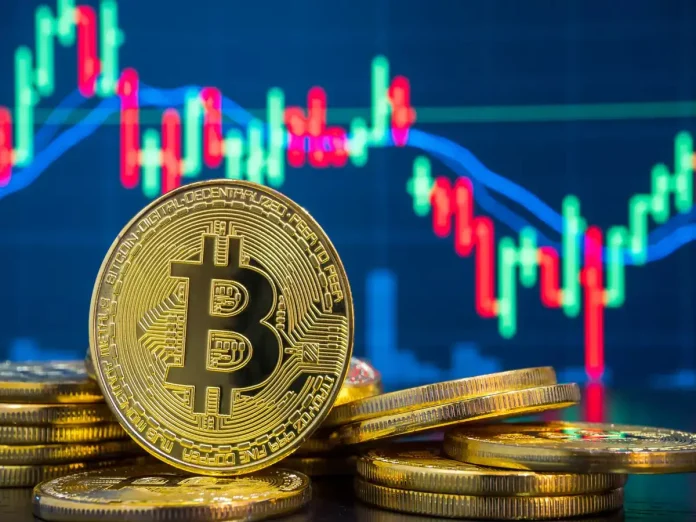
Bitcoin prices slumped below the $113,000 threshold in midweek trading, extending losses as inflation concerns in the United States and a sharp sell-off in technology stocks rattled investor sentiment across financial markets.
The world’s leading cryptocurrency fell beneath a key upward trendline established since early April, closing under its 50-day Exponential Moving Average (EMA) of $114,903. The move marked Bitcoin’s first monthly loss since March, interrupting a four-month rally that had seen the digital asset soar by 66% from cycle lows to a record high of $124,517 on August 14.
Market analysts attributed the downturn to renewed macroeconomic jitters. A stronger-than-expected U.S. Producer Price Index (PPI) report weakened expectations for aggressive Federal Reserve rate cuts later this year. As risk appetite faltered, cryptocurrency valuations mirrored the slump in overvalued tech stocks, forcing leveraged traders to unwind positions.
According to market trackers, more than $500 million in Bitcoin positions were liquidated in a single day, pushing the asset to an overnight low of $112,580 — a 9.5% drop from its August peak. Ether also fell sharply, consolidating within the $4,100–$4,000 support range.
Technical indicators reflected deepening bearish momentum. The Relative Strength Index (RSI) hovered at 41, below the neutral 50 level, while the MACD signaled a bearish crossover, confirming downside risk. Despite gold reaching historic highs on safe-haven demand, Bitcoin has struggled to sustain its “digital gold” narrative, remaining closely tied to risk-sensitive assets.
Nevertheless, institutional flows continue to underpin Bitcoin’s long-term outlook. From a February low of $81,975, the cryptocurrency has climbed nearly 39%, consolidating near cycle highs despite distribution from institutional players. Current market capitalization stands at $2.26 trillion, with Bitcoin’s dominance at 58%, signaling its continued leadership in the crypto ecosystem even as altcoins gain marginal ground.
Analysts caution that the Federal Reserve’s upcoming September meeting could prove pivotal for Bitcoin’s trajectory. With institutional profit-taking creating near-term headwinds, traders are eyeing the $112,000 support level as critical for sustaining momentum in the world’s largest cryptocurrency.
The Nigerian Exchange (NGX) experienced another wave of sell-side pressure on Wednesday, with losses in banking and oil sector equities dragging the market lower at midday.
By noon, the All-Share Index (ASI) had fallen by 0.33%, reflecting weakened investor confidence and sustained correction in portfolio values. Market data revealed that equity capitalization dipped further following Tuesday’s staggering N1.33 trillion loss, underscoring the persistent bearish trend.
Market analysts observed that the downward momentum was primarily fueled by heavy sell-offs in mid- to large-cap stocks, particularly in the financial and energy sectors. According to a market update from Alpha Morgan Capital Limited, the NGX was deeply entrenched in negative territory by midday, with projections suggesting a likely negative close by the end of the trading day.
Among the leading intraday losers were CONOIL (-9.98%), International Breweries (-9.03%), AIICO Insurance (-6.98%), Transcorp (-5.72%), and Mansard (-3.99%). Other key decliners included Dangote Sugar (-3.07%), Stanbic IBTC (-2.46%), Sterling Financial Holdings (-2.44%), FCMB (-2.31%), GTCO (-1.05%), AccessCorp (-0.18%), and FBN Holdings (-0.15%).
The recent decline in trading activity has been linked to waning investor sentiment following a slowdown in corporate earnings releases. Market watchers note that the prevailing correction phase has dimmed buying momentum, leaving investors cautious about re-entering the market.
With oil prices facing global headwinds and banking stocks struggling under persistent selling pressure, analysts warn that the bearish sentiment may linger in the short term unless renewed investor appetite emerges from upcoming corporate disclosures or policy shifts.
Oil prices climbed in global trading on Wednesday, supported by signs of stronger demand in the United States and optimism surrounding diplomatic efforts to end the Russia-Ukraine conflict.
Brent crude futures rose 0.48% to $65.92 per barrel from $65.60, while U.S. benchmark West Texas Intermediate (WTI) advanced 0.51% to $62.27, compared with $61.95 in the previous session.
Data from the American Petroleum Institute (API) revealed a 2.4 million-barrel drawdown in U.S. crude stockpiles last week, significantly exceeding expectations of a 1.2 million-barrel decline. Investors are awaiting confirmation when the U.S. Energy Information Administration (EIA) publishes official figures later in the day.
Geopolitical dynamics also played a role in the upward momentum. European Council President Antonio Costa reaffirmed ongoing cooperation with the United States to provide security guarantees for Ukraine, following a virtual meeting with EU leaders. He emphasized the bloc’s commitment to supporting Kyiv while pursuing peace efforts, including prisoner exchanges and the return of displaced children.
U.S. President Donald Trump also held talks with Ukrainian President Volodymyr Zelenskyy and European leaders at the White House earlier in the week. Discussions reportedly included preparations for a potential summit involving Russian President Vladimir Putin, Zelenskyy, and Trump.
Meanwhile, Washington’s newly announced 25% tariff on Indian goods in response to New Delhi’s purchase of Russian crude has added another layer of geopolitical tension, raising questions about trade negotiations between the two countries.
Market watchers believe India will continue importing Russian oil as long as the cost advantage remains, while ongoing U.S.-India talks could shape oil price direction in the coming weeks.
Investors are also keeping an eye on monetary policy signals, as Federal Reserve Chair Jerome Powell is expected to deliver a key address at the Jackson Hole Economic Policy Symposium on August 22, which could provide further clarity on interest rate cuts and global demand outlooK
Nigerian money market rates fell on Wednesday following a major inflow from Open Market Operation (OMO) maturities, which eased pressure on system liquidity.
Despite an earlier deficit of about ₦95 billion in the financial system, data from the Central Bank of Nigeria (CBN) indicated that liquidity conditions improved significantly after a ₦854.46 billion OMO maturity credit was injected into the market.
According to AIICO Capital Limited, the liquidity boost triggered a sharp drop in interbank rates, with the Nigerian Interbank Borrowing Rate (NIBOR) falling across major tenors. Overnight, 1-month, 3-month, and 6-month rates declined by 2.96%, 1.25%, 1.28%, and 1.01%, respectively, Cowry Asset Management Limited reported.
The money market also recorded a mixed trend in other indicators. The Open Repo Rate (OPR) dipped 30 basis points to 32.10%, while the overnight lending rate edged slightly higher by 30 basis points to 32.40%.
Meanwhile, the Nigerian Interbank Treasury Bills True Yield curve declined across most maturities. However, secondary market sell-offs lifted the average yield by 13 basis points to 18.12%.
Analysts at AIICO Capital noted that with no major funding flows anticipated in the immediate term, rates are expected to remain close to current levels.
Dangote Cement Plc has seen its market capitalization fall below ₦9 trillion, as investors trimmed positions despite the company’s impressive first-half 2025 earnings. Data from the Nigerian Exchange (NGX) showed the cement giant’s share price dropped from ₦577 to ₦520, with 2.598 million units valued at ₦1.35 billion changing hands.
The selloff pushed the firm’s market value down to ₦8.774 trillion. This comes shortly after Dangote Cement rebounded from earlier sell pressure to hit a new 52-week high.
Analysts note that the company’s H1 2025 performance was robust, with earnings climbing to ₦520.5 billion—well ahead of last year’s results. A review by CardinalStone Securities Limited credited the strong earnings to improved local pricing, contained cost growth, and foreign exchange gains, which helped offset headwinds across Pan-African operations.
Projections remain optimistic, with analysts forecasting sustained elevated cement prices and increased domestic demand, supported by ongoing public and private sector projects as well as growing exports.
Margins are expected to remain resilient, boosted by reduced input costs, improved procurement efficiency, and further progress in energy-saving initiatives.
CardinalStone Securities also highlighted that Dangote Cement’s phased rollout of 1,600 CNG-powered trucks is expected to lower logistics expenses in the near term. The firm projects average gross and EBITDA margins of 59.5% and 47.5% respectively, higher than previous estimates.
Analysts believe the cement company’s margin strength is anchored on structural efficiency measures, including local input substitution and expanded use of alternative fuels. With its Thermal Substitution Rate (TSR) now at 9.8%, up from 8.3% in H1 2024, the company is already seeing reduced energy cost escalation. With 11 of 17 alternative fuel projects commissioned, more cost savings are anticipated in the second half of 2025 and beyond.
The Central Bank of Nigeria (CBN) is gearing up to open subscriptions for Treasury Bills in its scheduled midweek primary market auction. The Debt Management Office (DMO) will coordinate the auction on behalf of the apex bank, with offers distributed across standard maturities.
Market analysts expect spot rates to moderate as a result of easing inflationary pressure and widening real investment returns. Nigeria’s inflation rate dropped to 21.88% year-on-year in July, while the Monetary Policy Committee (MPC) retained the benchmark interest rate at 27.50%.
The MPC’s decision to maintain the tight monetary stance follows previous increases aimed at curbing persistent headline inflation, which has remained well above the CBN’s target range.
With disinflation and strong investor appetite at play, Treasury bill rates have been repriced across standard maturities, supported by improving macroeconomic fundamentals.
In the secondary market, activity has been more visible in the short- and medium-term maturities. Pre-auction trading remained subdued, although dealers reported mild buying interest in short-dated bills such as the November 20 NTB, while offers were spotted in the February 5 and February 19 maturities.
At market close, the average mid-rate held steady as investors turned their focus to the midweek auction, where ₦230 billion worth of Treasury Bills will be on offer, according to AIICO Capital Limited.