






Crude oil prices opened the week on a softer note as traders assessed persistent concerns around global demand growth and abundant supply, despite escalating geopolitical tensions involving Venezuela and divisions within the OPEC+ alliance.
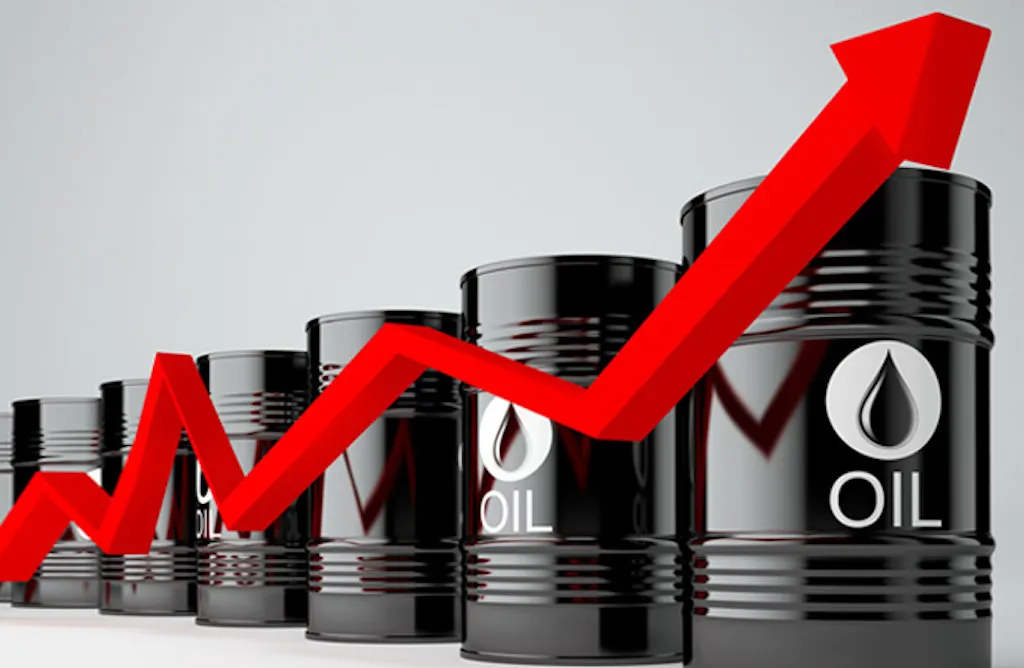
In early Monday trading, Brent crude futures slipped to $60.33 per barrel, marking a 0.6 percent decline from Friday’s settlement of $60.73. Meanwhile, U.S. benchmark West Texas Intermediate (WTI) fell by approximately 0.7 percent to trade at $56.82 per barrel, compared with last week’s close of $57.21.
Oil prices initially weakened during Asian trading hours, attempted a brief rebound, and then resumed their downward trajectory as ample supply conditions continued to cap gains, even as political risks intensified across key oil-producing regions.
Market participants are closely monitoring the potential fallout from recent U.S. military actions in Venezuela, against a backdrop of sluggish consumption growth and a well-supplied global oil market. On Saturday, the United States confirmed the capture of Venezuelan President Nicolas Maduro, with U.S. President Donald Trump stating that Washington would assume control of the country until a transition to a new administration is completed. No specific timeline or operational details were provided.
Venezuela, home to the world’s largest proven crude oil reserves—surpassing even Saudi Arabia—has seen its oil production collapse over recent years due to chronic underinvestment, operational failures, and international sanctions.
Speaking to reporters aboard Air Force One, Trump said the United States was effectively “in charge” of Venezuela following the operation that led to the detention of Maduro and his wife, who were transported to the U.S. to face criminal charges.
When asked whether he had communicated with Venezuela’s Vice President Delcy Rodriguez, who was named acting president by the country’s top court, Trump declined to give a direct response, stating that identifying leadership at this stage would be “very controversial.”
Trump also suggested that U.S. involvement in Venezuela would require unrestricted access to the country’s resources. “We need total access. We need access to the oil and to other things in their country that allow us to rebuild their country,” he said.
Despite the dramatic political developments, analysts say the immediate impact on oil markets has been limited, largely because global supply remains robust. Reports indicate that U.S. military operations did not damage Venezuela’s oil production or refining infrastructure. Trump also warned that additional military action could follow if remaining officials within the Venezuelan administration fail to cooperate.
Beyond Venezuela, markets are also watching developments in Iran, where Trump has issued warnings of potential intervention amid widespread protests. At the same time, the Organisation of the Petroleum Exporting Countries and its allies (OPEC+) has opted to maintain current output levels, further reinforcing expectations of oversupply.
On Sunday, eight OPEC+ members agreed to keep production unchanged, despite growing political frictions between key members Saudi Arabia and the United Arab Emirates, and the geopolitical shock stemming from Venezuela. The group collectively accounts for roughly half of global oil production.
The decision comes after oil prices tumbled more than 18 percent in 2025, marking their sharpest annual decline since 2020, as concerns over rising supply and weakening demand intensified.
The eight countries—Saudi Arabia, Russia, the UAE, Kazakhstan, Kuwait, Iraq, Algeria and Oman—had previously increased production targets by about 2.9 million barrels per day between April and December 2025, representing nearly three percent of global demand. They agreed in November to suspend further output hikes for the first quarter of the year, and sources indicated that Sunday’s meeting was unlikely to alter that stance.
Political tensions within the group have also escalated. Relations between Saudi Arabia and the UAE deteriorated last month following clashes linked to the prolonged conflict in Yemen, after a UAE-aligned faction seized territory from a Saudi-backed government.
The dispute has exposed deep-seated differences between the two long-time allies, representing one of the most significant internal rifts the oil bloc has faced in decades.
While OPEC has historically managed to navigate internal conflicts—such as those during the Iran-Iraq War—by prioritising market stability, the current environment presents multiple overlapping challenges. Russian oil exports remain constrained by U.S. sanctions linked to the war in Ukraine, while Iran faces mounting internal unrest and renewed external pressure.
For now, traders appear unconvinced that geopolitical risks alone will be enough to offset weak demand fundamentals and elevated supply, keeping oil prices under pressure in the near term.