



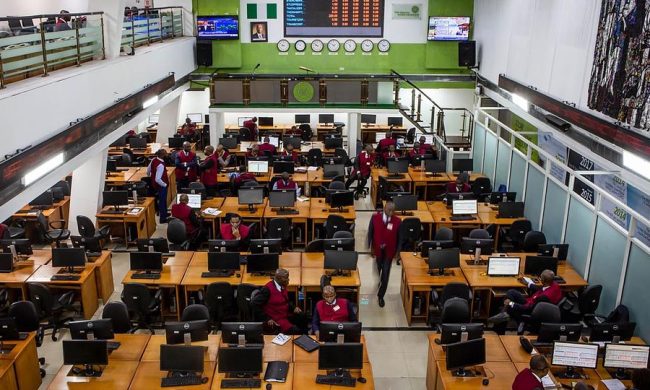






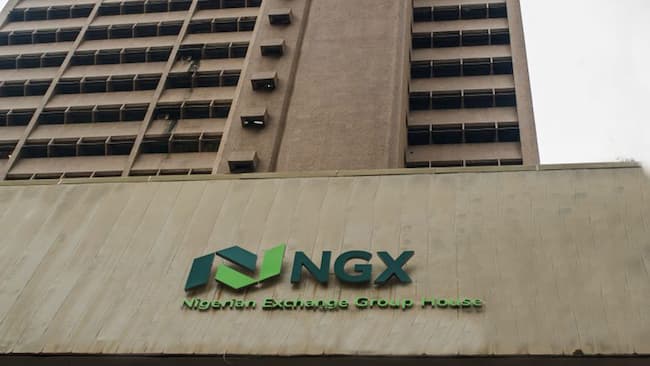
Nigeria’s capital market has secured a prominent position on the African continent, with the Nigerian Exchange Limited (NGX) ranking as the third-largest stock exchange in Africa by the number of listed companies, according to the Organisation for Economic Co-operation and Development (OECD).
The ranking, contained in the OECD Africa Markets Report 2025, shows that the NGX hosts 156 listed companies, placing it behind Egypt’s Stock Exchange, which leads the continent with 245 listings, and South Africa’s Johannesburg Stock Exchange (JSE) with 204 listed firms and an estimated market capitalisation of approximately $33 billion.
The OECD report underscores South Africa’s continued dominance in Africa’s equity markets, noting that the country accounts for about 60 per cent of the continent’s total market capitalisation. The organisation added that South Africa’s market capitalisation-to-GDP ratio of 84 per cent significantly exceeds that of other African economies and is also higher than the average for emerging markets, which stands at 61 per cent.
Beyond aggregate size, the OECD highlighted company-level metrics, stating that South Africa’s listed firms tend to be larger than those in many other regions. The median market capitalisation of South African companies was estimated at $195 million, a figure that surpasses the median size recorded in both emerging markets and global benchmarks.
Nigeria, alongside Morocco and Egypt, was identified as one of the few African countries with relatively sizeable and active equity markets. According to the report, these three markets collectively account for around 15 per cent of Africa’s total market capitalisation and represent almost half of all listed companies on the continent.
Other exchanges making the OECD’s top 10 list include Mauritius, with 94 listed companies; Tunisia, with 79; Kenya, with 61; Zimbabwe, with 60; Côte d’Ivoire, with 45; Ghana, with 29; and Botswana, with 23.
However, the report also highlighted the uneven development of Africa’s capital markets. It noted that exchanges in countries such as Tanzania, Uganda, Zambia, and Namibia, alongside Ghana and Botswana, remain relatively small, with listings ranging from 12 to 29 companies. In these markets, capitalisation levels remain modest, typically accounting for between five and 20 per cent of national GDP.
Commenting on Nigeria’s performance, Temi Popoola, Group Managing Director of the Nigerian Exchange Group, described the ranking as a reflection of the market’s growing depth, resilience, and adaptability amid improving macroeconomic conditions and ongoing structural reforms.
Popoola said the exchange plans to sustain the momentum by strengthening market infrastructure, expanding product offerings, and leveraging strategic partnerships and technology. According to him, these initiatives are aimed at positioning Nigeria’s capital market as a preferred destination for long-term investment in Africa.






 ranking as the third-largest stock exchange in Africa by the number of listed companies, according to the Organisation for Economic Co-operation and Development (OECD).)