








The Nigerian National Petroleum Company Limited (NNPCL) has announced plans to attract $60 billion in new investments over the next five to seven years to expand gas infrastructure and reinforce the country’s position in the global energy market.
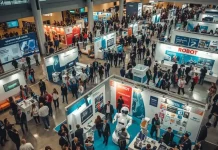
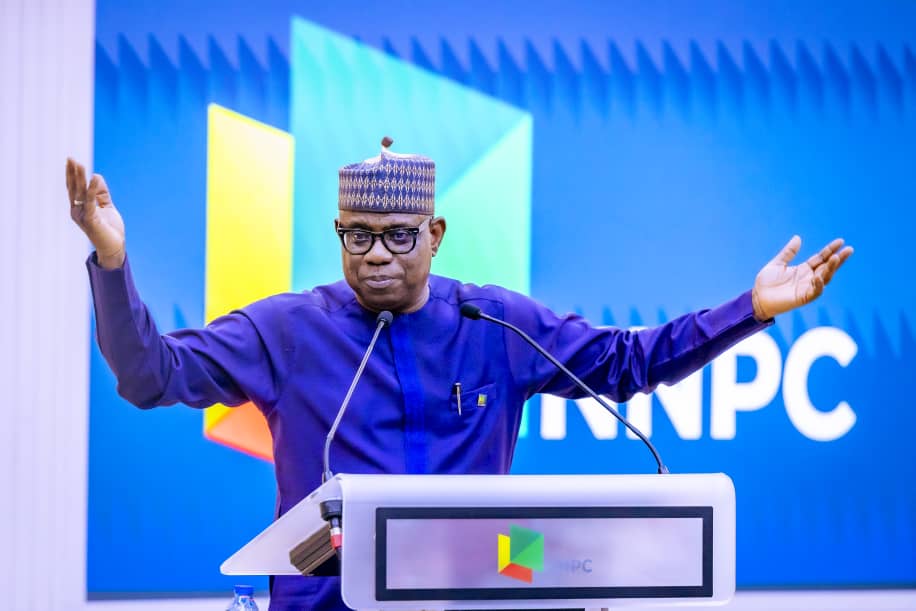
Speaking at the opening of the Gastech Exhibition and Conference in Milan, Italy, Group Chief Executive Officer of NNPCL, Mr. Bayo Ojulari, told delegates from over 150 countries that the investment drive aims to scale Nigeria’s natural gas production to 12 billion cubic feet per day while expanding refinery capacity to meet surging global demand.
“We are seeking at least $60 billion in investment over the next five to seven years, which for our oil and gas industry is just the tip of the iceberg. We are seeking investors to grow production,” Ojulari said.
He noted that the Petroleum Industry Act (PIA), signed into law in 2021, transformed NNPC into a limited liability company, giving it direct access to funding and the capacity to forge stronger global partnerships. Currently producing about 1.6 million barrels of crude oil per day, NNPCL has set targets to increase output to 2 million bpd by 2027 and 3 million bpd by 2030.
Highlighting ongoing projects, Ojulari cited the Ajaokuta–Kaduna–Kano (AKK) pipeline, the extension of the West African Gas Pipeline to Morocco and Europe, and the expansion of the Nigeria LNG project. Nigeria, he said, already supplies 60% of LNG imports to Portugal and Spain and is completing NLNG Train 7 by 2026, with plans for Trains 8 and 9.
“Nigeria has one of the best-run LNG businesses globally. We want to take advantage of the current high energy demand, which is also expected to go even higher,” he stressed.
On cleaner energy initiatives, Ojulari pointed to government-backed programmes promoting LPG adoption and a nationwide rollout of 2 million cylinders, alongside a Compressed Natural Gas (CNG) transition scheme for vehicles and industrial use.
He added that geopolitical shifts, particularly the Russia-Ukraine war, had accelerated the push for regional pipeline projects to strengthen energy security. With more than 200 undeveloped oil and gas fields, Nigeria, he said, represents “greenfield opportunities” for global investors.
Minister of State for Petroleum Resources (Gas), Mr. Ekperikpe Ekpo, also reaffirmed Nigeria’s commitment to leveraging its 210 trillion cubic feet of gas reserves to drive industrialisation, regional integration, and global energy security.
“Natural gas remains central to our energy strategy—powering industries, clean cooking, agriculture, job creation, and public health,” Ekpo said, adding that NLNG’s capacity would rise from 22 MTPA to 30 MTPA with the completion of Train 7.
He also highlighted Nigeria’s regional gas diplomacy, including the 5,000-kilometre Nigeria-Morocco Gas Pipeline and ongoing engagements with Algeria and Equatorial Guinea on the Trans-Saharan Gas Pipeline.
“With the right regulatory reforms and executive orders introduced under President Bola Tinubu, Nigeria is open for investment. Our natural gas is the bridge to renewables and the anchor for developing countries like ours to remain competitive in the global energy transition,” he concluded.
Nigeria’s participation at the summit signals its ambition to consolidate its status as a key player in the global energy landscape.



 has announced plans to attract $60 billion in new investments over....)