










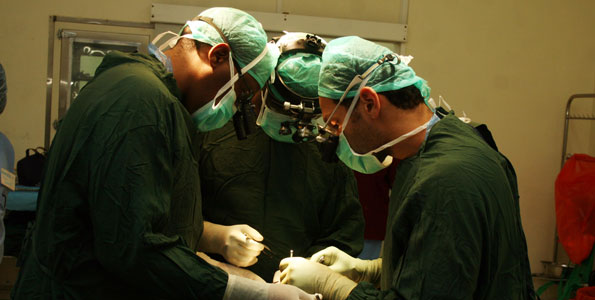
Nigeria has taken a major step forward in advanced medical care following the successful performance of West Africa’s first robotic-assisted gynaecological surgery, carried out in Lagos by The Prostate Clinic (TPC).
The landmark procedure represents a significant expansion of robotic surgical applications in the country, extending beyond male-focused interventions to include complex women’s health treatments. Medical experts have described the development as a defining moment for Nigeria’s healthcare system and a signal of the country’s growing capacity for cutting-edge medical innovation.
The surgery, conducted on Sunday, was led by Consultant Robotic Surgeon and Medical Director of TPC, Professor Kingsley Ekwueme. He explained that the move aligns with the clinic’s long-standing commitment to pioneering advanced medical technologies within Nigeria and the wider West African region.
According to Ekwueme, TPC introduced the first surgical robotic system in West Africa last year, initially deploying it for urological and prostate-related procedures. The latest intervention marks the first time robotic technology has been applied to gynaecological surgery in the sub-region.
“This is a natural progression of our innovation journey,” Ekwueme said. “Today, we are extending the benefits of robotic surgery to women, ensuring they have access to the same precision-driven care that has transformed outcomes in other specialties.”
The patient, a young woman diagnosed with an ovarian tumour, underwent a successful robotic-assisted procedure that involved the removal of two large tumours. Ekwueme said the patient experienced minimal blood loss and rapid recovery, making it possible for her to be discharged the same day and resume normal activities almost immediately.
“With robotic-assisted surgery, recovery timelines are dramatically reduced,” he said. “Once vital signs are stable—often within six hours—the patient can eat, mobilise, and return home. Many are able to return to work within 24 hours.”
He noted that robotic surgery significantly reduces the pain, prolonged hospital stays, and complications commonly associated with traditional open surgery, while preserving vital organs and bodily functions.
Ekwueme described the technology as a game-changer for managing conditions such as uterine fibroids, endometriosis, ovarian tumours, and select cases of ectopic pregnancy, conditions that affect millions of women across Nigeria.
The procedure was carried out free of charge under TPC’s corporate social responsibility initiative. Ekwueme explained that the economic cost of prolonged illness, lost productivity, and delayed treatment often far outweighs the cost of advanced surgical care.
He also revealed that TPC is working with the Imo State Government to establish Nigeria’s first dedicated robotic surgery centre, positioning the country as a potential regional hub for advanced medical treatment, training, and research.
“This is only the beginning,” he said. “Nigeria has the talent and capacity to lead Africa in advanced healthcare if the right investments and partnerships are sustained.”
Supporting the procedure was Consultant Gynaecologist at Lagos State University Teaching Hospital (LASUTH), Professor Yusuf Oshodi, who said the 30-year-old patient was thoroughly evaluated before being selected for robotic-assisted surgery.
Oshodi confirmed that the ovarian tumour was benign and that the precision offered by robotic technology allowed surgeons to remove the affected tissue without compromising the patient’s fertility.
“She had endured months of pain,” he said. “With robotic assistance, we can target only diseased tissue while protecting surrounding structures. She is now pain-free without long-term reproductive consequences.”
Oshodi highlighted the prevalence of gynaecological conditions among Nigerian women, noting that fibroids, endometriosis, ovarian tumours, and abnormal menstrual bleeding remain widespread but often underreported.
He explained that fibroids alone affect up to 70 percent of women in certain communities, although only a fraction experience severe symptoms requiring intervention. Delayed diagnosis and treatment, he warned, frequently lead to complications such as chronic anaemia and, in severe cases, impaired cardiac function.
UK-based Consultant Gynaecologist, Mr Olaolu Aladade, also emphasised the clinical and socioeconomic advantages of robotic surgery over traditional open procedures.
“Open surgery typically comes with higher complication rates and longer recovery periods,” Aladade said. “Robotic-assisted surgery allows patients to recover faster, return to work sooner, and achieve better psychological and economic outcomes.”
He added that wider adoption of robotic surgery could significantly reduce the healthcare burden on families and improve overall quality of life for women requiring complex gynaecological care.











.)