







• Tinubu: We must stimulate rural economies for inclusive growth
• States urged to fast-track implementation of ward-based programme
The Federal Government has announced a far-reaching economic stimulus programme targeting over 8.8 million Nigerians across all 8,809 electoral wards in the country, as part of efforts to deepen grassroots development and accelerate inclusive growth.
At the 150th meeting of the National Economic Council (NEC) held on Thursday in Abuja, the council endorsed the Renewed Hope Ward Development Programme (RHWDP)—a ward-based initiative designed to stimulate local economies through direct intervention in rural and underserved communities.
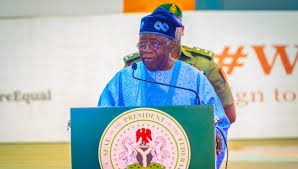
President Bola Ahmed Tinubu, who attended the NEC meeting, underscored the need to drive economic growth beyond the macro level, calling on state governors to prioritise investments that improve livelihoods in rural areas.
“We know the situation in the rural areas. Let us collaborate and do what will benefit the people,” Tinubu charged. “The economy is working, we are on the path of recovery, but we must stimulate growth in the rural areas.”
The RHWDP, presented by the Minister of Budget and Economic Planning, Senator Abubakar Atiku Bagudu, aims to activate economic activity in every ward by supporting a minimum of 1,000 economically active individuals per ward, with a higher threshold for more populous areas.
The programme draws legal backing from Chapter Two of the 1999 Constitution and the Fifth Alteration Act, which mandates government at all levels to promote food security, economic prosperity, and production efficiency.
Bagudu explained that the RHWDP would be jointly implemented by federal, state and local governments and funded through increased revenues accruing to the Federation Account, alongside existing intervention programmes.
“Having stabilised the macroeconomy, the next logical step is to drill down development to the lowest levels,” Bagudu said. “We believe this will generate employment, reduce poverty, enhance food security, and strengthen social protection.”
A National Steering Committee comprising representatives from all six geopolitical zones will supervise implementation, with the Ministry of Budget and Economic Planning serving as the programme secretariat.
The initiative aligns with President Tinubu’s Renewed Hope Agenda, which envisions growing Nigeria’s economy to $1 trillion by 2030. Achieving this target will require annual growth rates of 15 per cent—far above the current rate, which hovers below four per cent.
Governor Hope Uzodimma of Imo State commended the programme, stressing that while federal reforms had boosted revenues, the key challenge was translating that into tangible outcomes for ordinary Nigerians.
“We acknowledged Mr President’s efforts in driving revenue growth, but the real challenge now is ensuring that this increased income makes meaningful impact at the grassroots,” Uzodimma said. “This initiative decentralises development and empowers communities.”
NEC Approves Emergency Flood Response Funding
In a related development, NEC also directed the Federal Ministry of Finance to release emergency funds to all 36 states and relevant federal agencies for the country’s 2025 flood preparedness and response.
This followed a presentation by the Director-General of the National Emergency Management Agency (NEMA), Mrs Zubaida Umar, who outlined a comprehensive national flood risk reduction strategy for 2024–2027. The agency highlighted early warning dissemination, pre-positioning of search-and-rescue assets, and coordination with security agencies as key actions taken so far this year.
However, challenges persist, including poor drainage infrastructure, weak compliance with urban planning laws, and inactive local emergency committees.
Council resolutions urged state governments to operationalise State Emergency Management Agencies (SEMAs), enforce environmental hygiene regulations, and prioritise flood preparedness in annual budgets. Local communities were also directed to take ownership of risk mitigation efforts.
Governors Lament Education Crisis
Meanwhile, state governors at the NEC meeting raised alarm over the worsening crisis in Nigeria’s basic education system, citing high out-of-school rates, poor foundational learning, and systemic underfunding.
Speaking at a parallel State-Level Workshop on Foundational Learning and Out-of-School Children, Chairman of the Nigerian Governors’ Forum (NGF) and Governor of Kwara State, AbdulRahman AbdulRazaq, said the education sector faced a foundational crisis.
“Nigeria is confronted with a crisis,” AbdulRazaq said in a speech delivered by NGF Education Advisor, Leo The Great. “Enrolment does not translate into learning. Foundational skills are critical building blocks for educational progression.”
The governor disclosed that nationwide data indicated a 66 per cent out-of-school rate among primary school-age children and warned that poor education quality was driving high dropout and low transition rates.
He attributed the crisis to inadequate funding, lack of training, poor monitoring, weak local capacity, and minimal support for digital and literacy skills at the foundational level.
The Executive Secretary of the Universal Basic Education Commission (UBEC), Dr Aisha Garba, represented by Deputy Secretary, Technical, Rasaq Akinyemi, echoed the concerns, stressing that systemic reforms were required to deliver quality and inclusive education.
Vice President of Policy and Partnerships at NewGlobe, Ifeyinwa Ugochukwu, added that while access had expanded in some states, major gaps remained in learning outcomes.
With growing revenues from macroeconomic reforms, stakeholders now expect more visible and measurable improvements in citizens’ lives—particularly at the grassroots. From ward-based entrepreneurship and rural infrastructure to disaster response and foundational education, Nigeria’s new development direction hinges on whether collaborative governance can deliver results where they matter most.