








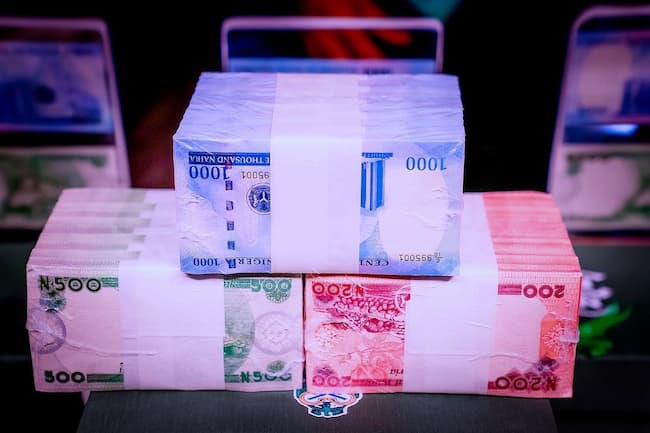
For the third consecutive trading session, the Nigerian naira has depreciated against the U.S. dollar, as foreign exchange supply dwindles and pressures mount on the currency market. According to the latest CBN FX data, the spot rate slid to ₦1,471.0892/US$, underscoring a widening gap between dollar demand and available supply.
At the start of October, the official rate was ₦1,455.2373, but in recent days the naira has steadily declined in the absence of significant FX intervention. On Tuesday, the intraday high touched ₦1,477/US$, reinforcing the demand pressure when compared to the ₦1,475 posted earlier in the week.
FX inflows into the market have dropped sharply. Coronation Merchant Bank’s research unit noted that inflows fell to US$835.60 million, down from US$1.18 billion in the previous week.
In September, the naira had remained relatively stable, buoyed by stronger inflows and active CBN intervention. Trading was largely confined to the ₦1,531–₦1,522/USD range, with support from exporters, foreign portfolio investors, and central bank sales.
In a bid to stem weakness, the CBN injected US$150 million into the FX market. This strategic intervention is viewed as part of an effort to defend the naira and reinforce external reserves.
On the production front, domestic crude output averaged 1.6 million barrels per day (mbpd) in August, slightly above Nigeria’s OPEC quota of 1.5 mbpd. The increase was driven by lower incidents of theft and pipeline vandalism.
The Nigerian Upstream Petroleum Regulatory Commission (NUPRC) reported that daily crude losses fell dramatically to 9,600 bpd, a sharp decline from 102,900 bpd in 2021. This improved security performance helped stabilize export volumes and reserve inflows.
Bonny Light crude traded at an average of US$73.18 per barrel in August — marginally lower than the prior month’s US$73.50, but notably higher than US$65.90 seen in May. Exports held near 1.06 mbpd in June and July (versus 1.00 mbpd in May), providing steady foreign exchange inflow. Nigeria’s foreign reserves climbed to US$42.544 billion as of Monday, up from US$42.353 billion at end-September 2025.