









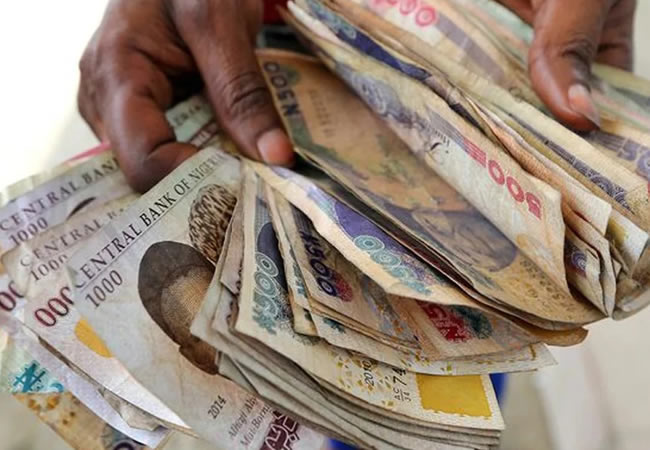
Nigeria’s money market recorded mixed movements across key rates as liquidity conditions improved following OMO bill maturities and increased placements by deposit money banks at the Central Bank of Nigeria’s (CBN) Standing Deposit Facility (SDF).
Market activity indicated that the financial system remained awash with cash, with banks actively leveraging SDF placements to enhance short-term earnings. At the same time, a segment of lenders accessed the Standing Lending Facility (SLF) to cover liquidity shortfalls, borrowing at rates above prevailing short-term investment returns.
System liquidity opened the trading day on a stronger footing, posting a surplus balance of N2.21 trillion, representing an increase of N740.03 billion from the previous session. The improvement was largely driven by a substantial N810.10 billion inflow from maturing Open Market Operation (OMO) bills.
In addition to the OMO inflows, banks sustained sizable placements at the CBN’s SDF window, totaling approximately N1.40 trillion, reinforcing overall liquidity conditions within the financial system.
However, the surplus was partially offset by N101.50 billion in borrowings from the CBN’s SLF, largely attributed to tier-2 banks seeking to manage intraday funding requirements.
Despite the improved liquidity backdrop, Nigerian Interbank Offered Rates (NIBOR) showed divergent movements across tenors. The overnight lending rate advanced by 2 basis points to 22.84 percent, suggesting pockets of tightness within the interbank market.
In line with this trend, average funding costs edged higher by 1 basis point to 22.60 percent, according to data compiled by investment banking firms tracking daily money market activity.
Figures from the FMDQ Exchange revealed that the Open Repo Rate (OPR) remained unchanged at 22.50 percent, while the Overnight Rate (OVN) increased by 2 basis points to close at 22.70 percent.
The mixed tone extended to the secondary market for Treasury Bills, where yields moved in different directions across maturities. The 12-month Treasury Bill yield declined by 17 basis points, reflecting sustained demand at the long end of the curve. In contrast, yields on the 1-month, 3-month, and 6-month tenors rose by 46 basis points, 13 basis points, and 3 basis points, respectively.
Overall, the composite average yield on Nigerian Treasury Bills remained flat at 18.02 percent, indicating stable investor sentiment despite the shifting liquidity and rate dynamics.
Market participants continue to monitor liquidity flows, CBN operations, and upcoming maturities for clearer signals on the near-term direction of money market rates.




 Standing Deposit Facility (SDF).)