









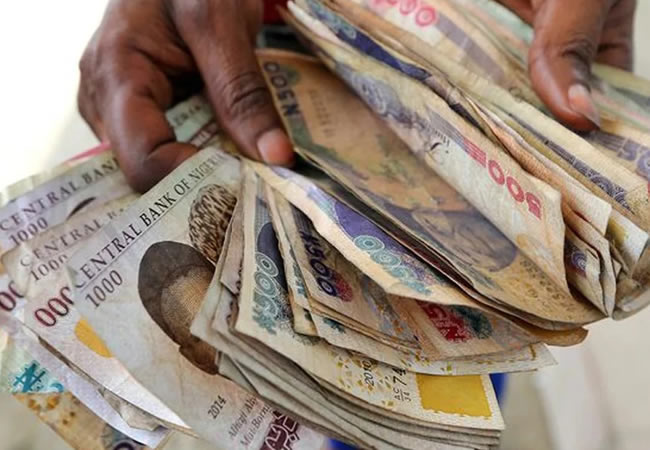
A series of aggressive interventions by the Central Bank of Nigeria (CBN) has significantly tightened liquidity across the Nigerian financial system, pushing money market rates to alarming highs above the 30% threshold. The impact of multiple liquidity-draining mechanisms—ranging from cash reserve deductions to Open Market Operations (OMO) and foreign exchange interventions—has left banks grappling with funding shortages.
The net system liquidity fell by a staggering ₦393.69 billion, transitioning from a credit balance of ₦275.53 billion to a deficit of ₦118.17 billion, despite a notable ₦301.94 billion inflow from maturing Treasury Bills during the week. The influx did little to stem the pressure, as persistent outflows overwhelmed the system, intensifying short-term borrowing demand.
This funding stress sent interbank rates soaring. Cowry Asset Management reported a sharp jump in the Nigerian Interbank Offered Rate (NIBOR), which surged by 593 basis points to 32.75% from 26.82% the previous week—highlighting the intense strain on short-term liquidity.
At the OMO auction conducted midweek, the CBN rolled out ₦600 billion worth of bills across the 272-day and 363-day tenors. Investor interest was overwhelmingly skewed toward the longer-dated 363-day note, which absorbed ₦2.13 trillion of the ₦2.17 trillion total subscriptions. The 272-day offering received no allotments, while ₦1.25 trillion was sold at a marginal rate of 21.99%, reflecting strong appetite for high-yield debt.
Meanwhile, the Nigerian Interbank Treasury Bills True Yield (NITTY) curve dipped across the board, indicating strong demand in the secondary market. Yields on the 1-month to 12-month bills dropped to 16.06%, 16.57%, 17.73%, and 18.84%, respectively, marking sharp declines of 160 to 264 basis points.
The CBN also conducted a Treasury Bill auction on Wednesday, offering ₦250 billion in standard maturities. The auction was heavily oversubscribed, recording a total bid of ₦1.33 trillion. Ultimately, only ₦201.82 billion was allotted, with ₦126.31 billion going to the 364-day bill, which attracted ₦1.18 trillion of the total bids.
Following the conclusion of CBN’s FX settlements and other market outflows, liquidity pressures mounted further. FMDQ data showed average money market rates surging to 32%, while the repo and overnight rates jumped to 31.50% and 32.17%, respectively.
Market analysts anticipate continued tight liquidity conditions in the short term, especially as banks prepare for Asset Management Corporation of Nigeria (AMCON) obligations. The absence of upcoming maturities suggests that short-term borrowing costs could remain elevated or worsen further.








 has significantly tightened liquidity across the Nigerian....)