









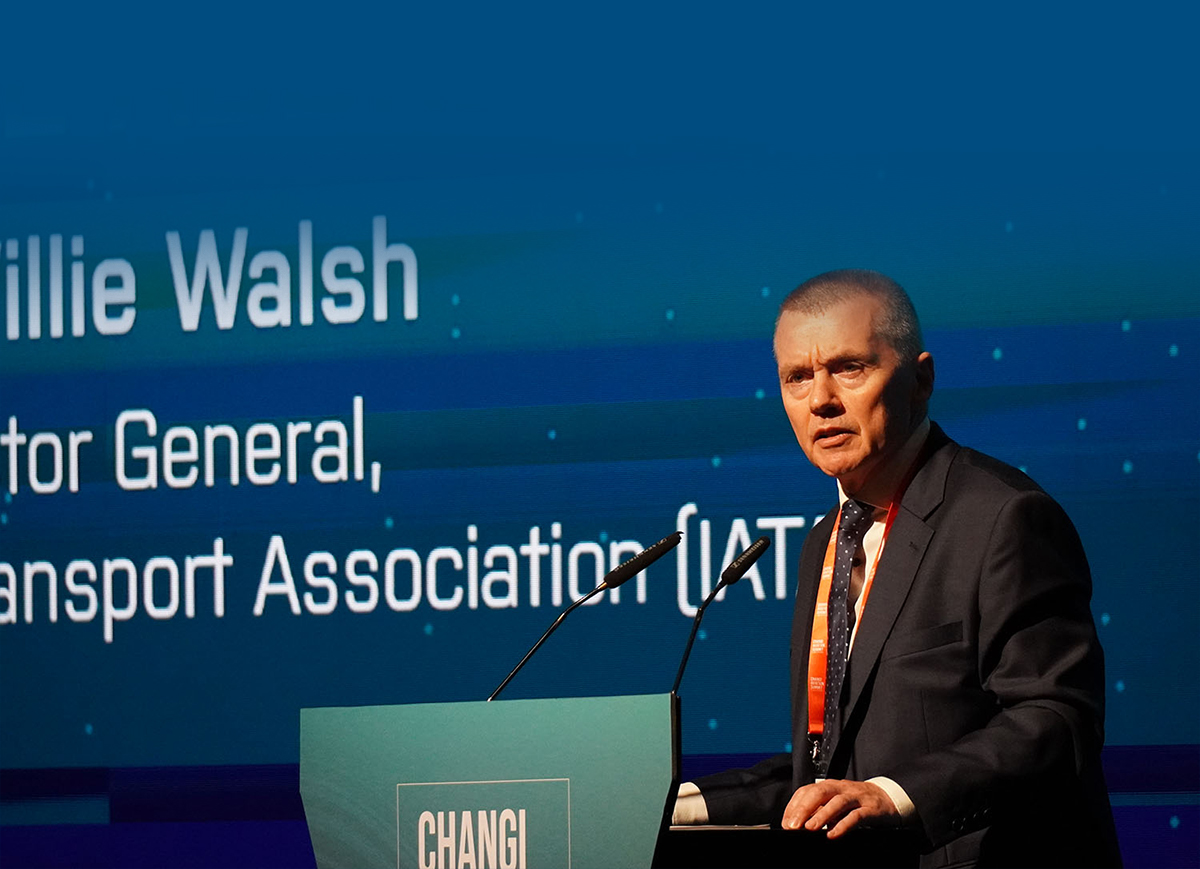
The International Air Transport Association (IATA) has projected that global passenger traffic will grow by 4.9 percent in 2026, reaching a historic peak of 5.2 billion travelers. Speaking at the Changi Aviation Summit in Singapore on February 2, 2026, Director General Willie Walsh noted that while this growth is a slight deceleration from the 5.3 percent seen in 2025, it represents a “significant advantage” for an industry navigating persistent supply chain bottlenecks.
The Asia-Pacific region is expected to lead this expansion with a 7.3 percent increase, fueled largely by robust demand in China and India and eased visa requirements across the region.
Despite the record traffic, IATA warned that the industry’s financial health remains “razor-thin.” Global net profits are forecast to hit $41 billion in 2026, up from $39.5 billion in 2025, but the net profit margin is expected to stay stagnant at 3.9 percent.
This translates to a meager $7.90 profit per passenger. Airlines are currently struggling with an $11 billion surge in maintenance and fuel costs due to aircraft delivery delays, which have pushed the average global fleet age to over 15 years, the highest in history. Consequently, airlines are filling a record 83.8 percent of all seats as they struggle to match surging demand with limited available aircraft.
The regional outlook shows a stark disparity in profitability. While Europe and North America remain the most profitable, Africa is projected to grow its passenger traffic by 6 percent, outpacing the global average, yet will earn a collective profit of only $200 million. High unit costs, which are nearly double the global average in Africa, and $954 million in blocked funds globally continue to hamper the continent’s aviation potential.
Walsh emphasized that for the industry to remain resilient, governments must move away from “punitive” taxes and mandates that discourage investment in newer, more efficient technologies and sustainable fuels.











 has projected that global passenger traffic will grow by 4.9 percent in 2026, reaching a historic peak of 5.2 billion travelers.Speaking at the Changi Aviation Summit in Singapore on February 2, 2026, Director General Willie Walsh noted that while this growth is a slight deceleration from the 5.3 percent seen in 2025, it represents a "significant advantage" for an industry navigating persistent supply chain bottlenecks.)