








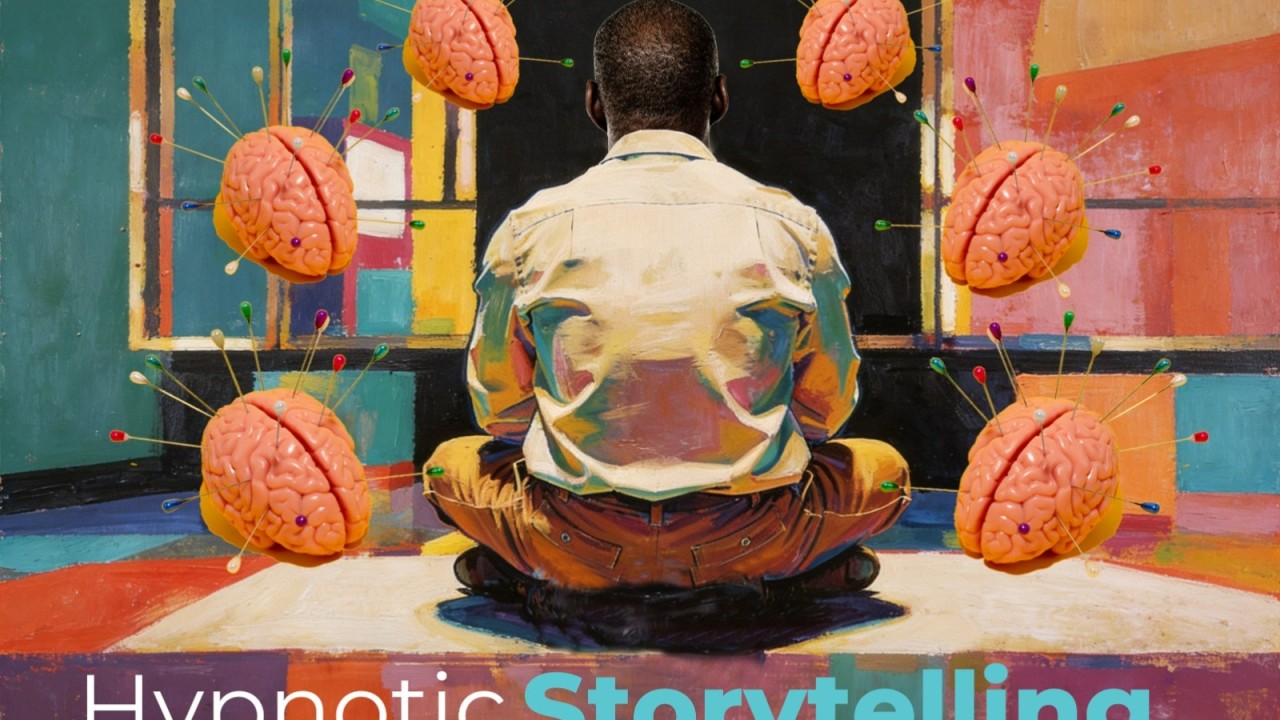
In some cultures, hypnosis is a matter of mythology. However, in public relations and storytelling, it can be both an orchestration and a potent tool when well mastered and deployed. Indeed, some of the most successful members of network organisations are recruited through hypnotic engagement. It is also valuable for political communication, as it is relevant to all stories that require audience persuasion.
What is hypnotic storytelling?
I will address this as a concept and a tool in persuasive communication.
Conceptually, in conversation management, hypnotic storytelling refers to the intentional establishment of common ground through a calm, systematic inducement that attracts intense attention, thereby fostering participatory interest through shared-value techniques. Usually, the subject of hypnosis is guided into a focused state through repetition of persuasive content and mental imagery.
A successful use of a hypnotic tool may lead the subject to become a subscriber to a cause, a volunteer advocate, and a fanatical follower. The biggest weapon in hypnotic storytelling is persuasion, and the heart of a successful communication is persuasiveness.
However, the mere act of persuasion commonly found in PR campaigns will not necessarily be considered hypnotic. Most PR campaigns only raise awareness rather than persuade because they lack believable content. Indeed, some end up as mere noise, detracting from corporate brand equity rather than advancing the intended objective.
By the way, how many of the clients really know the difference between a persuasive communication and awareness?
I have had to educate some clients on the need for sustained storytelling, with the ingredients of hypnotism, rather than a quick-fix burst of publicity that is soon forgotten within a few weeks, if not days.
For a target audience to be hypnotised, the intention must be well-construed. The ingredients of the old traditional tales by the moonlight storyteller must be present. The mood must be right, the issue or subject must be relevant, the tools must be appropriate, and common ground must be established to get the audience not just interested but emotionally connected.
What are the ingredients of hypnotic storytelling?
First, it must be understood that hypnosis cannot be achieved as a quick-fix project. A considerable time must be allowed for the objectives to be achieved.
Secondly, the conversation approach must be well-established and designed to align with a particular mood, issue or milestone. It is always easier to establish common ground when your audience is in the mood for a story.
The reason traditional folklore or tales by moonlight worked was that the setting, the mood and timing were intentionally aligned. The audience (mostly children) was usually brought together after dinner, when they were no longer distracted by other activities.
Usually, they were made to sit facing the storyteller, who would either establish common ground with a metaphorically composed song using the character of an animal to address or deliver a moral strengthening message. In the delivery of the main story, audience participation was usually embedded to ensure sustained interest. The choice of an animal as a metaphorical driver of the story was intended to deepen audience interest and expand their imagination.
From the setting and mood to the content and delivery, intentionality was always a primary binder. The delivery was usually subtle and persuasive, and the message was unambiguous. Little wonder we all remember those stories and take some of them as our moral compass—that’s hypnotic storytelling.
Relevance of hypnotism in storytelling
While elements of hypnotism are generally recommended for contemporary storytelling, it is perhaps one of the most essential concepts needed in corporate organisations’ ‘Responsibility and Sustainability’ policy communication and implementation. This is not just due to the objective of shared value that most sustainability promoters advance and profess, but also because persuasion and credibility are essential to win over stakeholders.
Is hypnotism as a conversation driver new?
Beyond the context of formal storytelling, hypnotic elements have been inadvertently present in romantic conversations and business negotiations, and they have also been used to promote adversarial interests that are counterproductive to moral order and societal goods.
For example, a study revealed that most society denounceable organisations like criminal gangs and terrorists usually employ hypnotic engagement in the recruitment of their members. So, also, are cybercriminals, romance scammers and digital fraudsters.
The list also includes religious organisations targeting women, youths and emotionally vulnerable persons. Some religious organisations, especially new-generation religious centres, offer more liberal doctrine, better ambient music, embrace trending fashion culture, and greater tolerance, with subtle and soothing messaging to hypnotise their audience.
Again, this is not about mythology but about careful identification of targets, setting the mood, and curating content to suit the target’s interests to achieve believability.
It is an orchestration that subtly leads to a believable shared interest, often resulting in loyalty, blind subscription and a fanatical following. The weapons here are: clear goals, intentionality, patience, subtlety, establishing common ground, friendship, trust building, big ideas, and immediate or long-term benefits. It is all about well-defined goals, well-identified targets, and well-curated and delivered content.
With ever-changing consumer behaviours, frequent distortions of socio-cultural norms, and media democratisation through digital evolution, it may be argued that we now operate in a more complex environment where it may be difficult to hypnotise targets.
Having helped brands navigate crises that made front pages, supported launches that shifted markets, rebuilt reputations that others had written off, and amplified government policies with appreciable results, I know how useful hypnotic storytelling has been.
Time hasn’t changed the fundamentals—Ideation, the tools applied, and implementation are the differentiators in hypnotic storytelling success.
Next, I will discuss ‘The death of media relations and rise of content curation’.
This artice is written by Adetokunbo Modupe Chairman/Group CEO at TPT international LTD