






The House of Representatives has reaffirmed its commitment to transforming Nigeria’s public service delivery through the National Digital Economy and E-Governance Bill, a landmark legislation designed to establish a comprehensive legal framework for the nation’s digital future.
The proposed bill, currently under review, seeks to modernise governance by regulating key aspects such as electronic transactions, data protection, cybersecurity, and digital infrastructure. Lawmakers say the initiative will usher in a new era of transparency, efficiency, and inclusivity in how government operates and how citizens access public services.
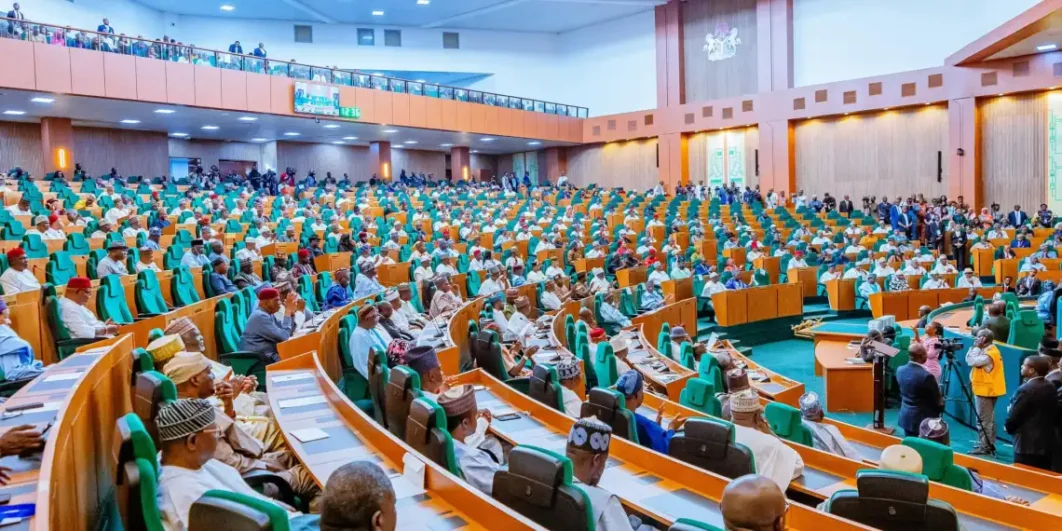
The renewed commitment was made during a One-Day Joint Public Hearing held on Monday by the House Committee on Digital and Information Technology, in collaboration with the Senate Committee on ICT and Cybersecurity.
A Vision for Smarter, Inclusive Governance
Speaker of the House of Representatives, Rt. Hon. Abbas Tajudeen, represented by Rep. Isiaq Abiodun Akinlade, described digital transformation as an urgent national priority.
“Digital governance is no longer a choice but a necessity bill embodies our vision for a new form of governance — one that is efficient, transparent, and citizen-focused.” Abbas said in a statement delivered by House Spokesman, Rep. Akin Rotimi. “
He added that the bill ensures nationwide digital inclusion, guaranteeing that “no Nigerian, regardless of location or status, is left behind in the country’s digital journey.”
Nigeria Poised to Lead Africa in Digital Policy
Chairman of the Senate Committee on ICT and Cybersecurity, Senator Shuaib Afolabi Salisu, hailed the bill as “groundbreaking”, describing it as the first of its kind in Africa.
“When enacted, this legislation will make Nigeria the pioneer on the continent in the areas of digital economy and e-governance,” Salisu stated. “It positions the country as a leader in digital innovation and public sector reform.”
Strengthening Reform Through Collaboration
Co-Chair of the hearing and Chairman of the House Committee on Digital and Information Technology, Rep. Adedeji Stanley Olajide, commended the collaborative spirit that defined the public hearing.
“This process reflects our shared determination to build a digitally inclusive, transparent, and accountable governance system,” Olajide said.
He also lauded the valuable contributions from civil society organisations, technology experts, and development partners, noting that their insights have ensured the bill aligns with global best practices while addressing Nigeria’s unique realities.
Minister of Communications, Innovation and Digital Economy, Dr. Bosun Tijani, assured participants that the executive arm of government is fully committed to the bill’s objectives.
“The President is ready to assent to the bill once it passes through the National Assembly,” Tijani affirmed, underscoring strong government support for the digitalisation agenda.
Rep. Olajide further acknowledged the collaboration of key institutions including the National Information Technology Development Agency (NITDA), National Identity Management Commission (NIMC), Nigerian Communications Commission (NCC), and Galaxy Backbone, whose technical inputs are expected to play a crucial role in implementing the reforms.
However, legal experts have raised concerns over certain provisions in the draft bill. A team of lawyers from Olisa Agbakoba Legal (OAL) recently faulted the ₦10 million fine stipulated for contraventions under the offences and penalties section.
The firm argued that the prescribed fine is disproportionate and impractical, considering that public institutions or individuals found in breach might be unable to pay such amounts. The lawyers urged lawmakers to reconsider the clause to ensure fairness and enforceability.