




Sixty-five years after Nigeria’s independence, the National Assembly—particularly the House of Representatives—remains a theatre of drama, intrigues, and contradictions, often raising doubts about whether the legislature truly exists for the people or for itself. What should have been a sanctuary of robust debates and people-oriented lawmaking has, too often, been reduced to scenes of commotion, personal vendettas, and battles of supremacy between the legislative and executive arms of government.
From the First Republic under Prime Minister Abubakar Tafawa Balewa to the Fourth Republic that began in 1999 under President Olusegun Obasanjo, the Nigerian legislature has had a chequered history. Military interregnums suspended parliamentary traditions, but even after the return to democracy, the promise of legislative independence has been marred by controversies. One of the darkest stains came in 2007, during Obasanjo’s presidency, when some lawmakers were accused of taking financial inducements in a failed bid to amend the Constitution and extend his tenure in office—an episode that further deepened public mistrust.
The clashes between the legislature and the executive have never truly abated. Under President Goodluck Jonathan, the House of Representatives frequently locked horns with the Presidency over budgetary allocations and oversight functions. The rancour intensified under Muhammadu Buhari, where the Eighth Assembly, led by Bukola Saraki, faced constant friction with the executive. What ought to have been collaboration for governance often degenerated into suspicion and hostility.
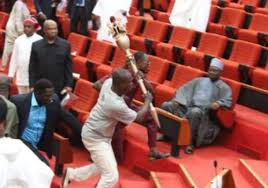
Yet, it is the physical spectacles of chaos within the hallowed chambers that have engraved themselves most vividly in public memory. In 2018, Nigerians watched in disbelief as thugs invaded the Senate and carted away the mace—the symbol of legislative authority—at the height of tensions during Buhari’s administration. In earlier years, the chambers were no strangers to fistfights: the Dino Melaye saga in 2017, under Buhari, saw the controversial senator clashing with colleagues, dragging the image of the National Assembly further into disrepute. In April 2018, similar scenes erupted when opposing factions in the House turned the floor into a wrestling ring, hurling chairs and microphones at one another as policemen stood by helplessly.
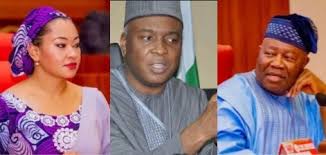
The latest installment came in 2024 under President Bola Tinubu, when the altercation between Senate President Godswill Akpabio and Senator Natasha Akpoti-Uduaghan over budgetary transparency degenerated into heated verbal exchanges, once again projecting the legislature as a battleground of egos rather than a forum of service.
Such spectacles beg the question: what is the fate of the common man in the Fourth Republic, when those entrusted with representation appear more consumed by power struggles than the people’s mandate?
The legislature, ideally the people’s bulwark against executive excesses, has too often been compromised, either by financial inducements, self-interest, or political intimidation. Nigerians, who queue under the sun to elect lawmakers every four years, are left with the bitter aftertaste of betrayal.
At 65, Nigeria’s legislature should be a mature institution of democracy, embodying debate, accountability, and the pursuit of justice. Instead, it still struggles with the immaturity of brawls, the shadow of executive manipulation, and the stench of corruption.
Until the National Assembly reclaims its moral authority and rededicates itself to the people, the promise of representation will remain unfulfilled, and the “House of the People” will continue to echo more with commotion than with the voices of those it was created to serve.