

By Boluwatife Oshadiya | March 6, 2026
Key Points
- Nigeria’s EV ecosystem now spans local manufacturers, assemblers, financiers, and global brands entering through partnerships
- Indigenous firms such as NEV Electric, EMVC, Jet Motor Company, and Innoson are assembling or producing electric cars, buses, and tricycles locally
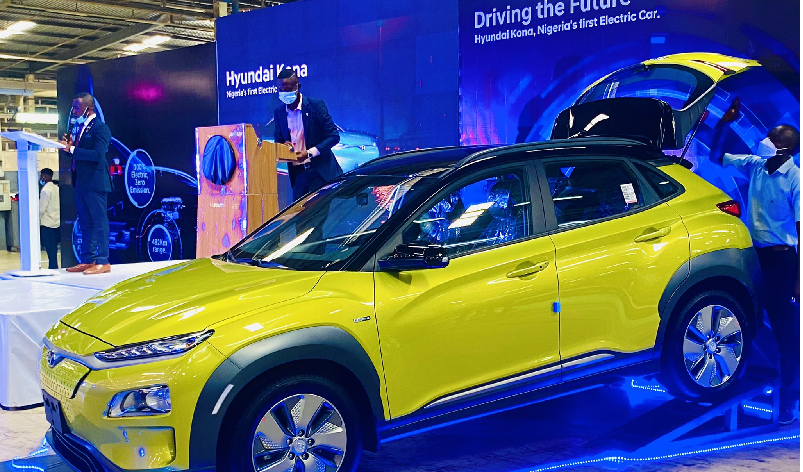
- International brands including BYD and Hyundai are entering Nigeria through distributors like LOXEA and Stallion Motors
- Battery swapping, solar charging stations, and EV financing models are emerging to address infrastructure gaps
- EV adoption is accelerating after petrol subsidy removal reshaped Nigeria’s transport economics
Main Story
Nigeria’s electric vehicle (EV) market is no longer theoretical. As of 2026, the country hosts a growing network of manufacturers, assemblers, mobility startups, battery infrastructure operators, and global automotive brands positioning for a share of Africa’s evolving clean transport sector.
While Nigeria remains a small player in the global EV market—currently dominated by China, the United States, and Europe—the domestic ecosystem is expanding steadily, driven by high fuel costs, subsidy removal, climate commitments, and private-sector innovation.
Below is a comprehensive list of electric vehicle companies currently providing products or services in Nigeria.
1. Spiro (Equitane Group)
Backed by Equitane Group, Spiro is one of Africa’s largest electric motorcycle providers. Headquartered operationally in Nairobi, the company launched operations in Nigeria in 2024 and is building a $40 million assembly plant in Ogun State.
Spiro operates a battery-swapping model—motorcycles are sold without batteries, and riders rent swappable battery packs through a network of swap stations. The model reduces upfront costs and eliminates long charging times. The company has already deployed thousands of bikes across multiple African markets and plans to scale Nigerian production significantly from 2025 onward.
2. MAX (Metro Africa Xpress)
Founded in 2015 by Adetayo Bamiduro and Chinedu Azodoh, MAX transitioned from logistics and ride-hailing into electric mobility in 2021. The company’s flagship MAX M3 electric motorcycle delivers between 80 and 110 kilometres per charge with a 3.6 kWh battery.
MAX’s strength lies in financing. Through rent-to-own and subscription models, the company has enabled over 45,000 riders to acquire vehicles. Charging and battery-swap infrastructure form part of its vertically integrated ecosystem, which now spans Nigeria, Ghana, and Cameroon.
3. Jet Motor Company
Founded in 2018 by Chidi Ajaere, Jet Motor Company manufactures commercial EVs from its Lekki facility in Lagos. Its Jet Mover bus—described as one of Nigeria’s first fully electric buses—features a high-capacity lithium iron phosphate battery and 600 Nm torque.
The company has supplied electric vans and buses to GIG Logistics and various state governments. Its electric cargo van reportedly delivers up to 300 kilometres on a single charge.
4. Innoson Vehicle Manufacturing (IVM)
Nigeria’s first indigenous automaker entered the EV space in 2024. Based in Nnewi, Anambra State, Innoson now produces models including the IVM EX02, EX01, and IVM Link.
The EX02, a subcompact electric hatchback, offers a range of approximately 330–400 kilometres per charge and launched at a price point of ₦38.4 million. The company continues to produce petrol, CNG, and electric models concurrently.
5. Saglev Electromobility
Operating from Ikorodu, Lagos, Saglev assembles electric sedans, SUVs, pickups, and luxury vehicles under brands including Voyah and Nammi (Dongfeng Motor Corporation).
Models such as the Voyah Chasing Light deliver up to 680 kilometres range and semi-autonomous features. Saglev has positioned itself in both premium and budget EV segments.
6. Electric Motor Vehicle Company (EMVC)
Founded by Prince Mustapha Audu, EMVC operates from Idu Industrial Area, Abuja. Its lineup includes the Adoja M1, Adoja M2, and Igwe three-wheeler.
The Igwe electric tricycle delivers between 125 and 200 kilometres range, while the Adoja M2 offers up to 250 kilometres. EMVC focuses on affordable, locally assembled electric mobility solutions.
7. Siltech (Savenhart Investment Limited Technology)
Founded by Tolu Williams, Siltech manufactures electric motorcycles, tricycles, quad bikes, and EV batteries. Its Falcon three-wheeler delivers up to 300 kilometres range.
Siltech operates solar charging stations across Lagos and has partnered with delivery platform Glovo for electric-powered deliveries.
8. Trekk
Trekk operates Africa’s first electric scooter-sharing platform. Active in universities including Lagos State University and Pan-Atlantic University, the scooters are geo-fenced and accessed via QR codes. The company focuses on micro-mobility for short intra-community trips.
9. Possible EVs
Founded by Mosope Olaosebikan, Possible EVs launched Nigeria’s electric taxi service with an initial fleet of 30 vehicles in Abuja. Each vehicle offers up to 400 kilometres range, with expansion planned into Lagos and Akwa Ibom.
10. Wuling Motors Nigeria
Wuling assembles electric vehicles in Lagos, including the Wuling Bingo. In partnership with local transport operators, the company supports electric taxi deployment in Abuja.
11. Nord Motors
Founded by Oluwatobi Ajayi, Nord Motors collaborates with University of Lagos engineering students and has provided electric tricycles in Kano under empowerment initiatives.
12. Roxettes Motors
With facilities in Enugu and expansion plans in Abia State, Roxettes assembles electric pickups, SUVs, and hatchbacks, including the Blaze-X and Volta X models.
13. NEV Electric
Abuja-based NEV Electric focuses on electric cars and buses designed to foster a local sustainable mobility ecosystem.
14. BYD (via LOXEA Nigeria)
Chinese EV giant BYD entered Nigeria through LOXEA, a subsidiary of CFAO Mobility. Models such as the Atto 3 and Dolphin are now available through official distribution and service channels in Lagos.
The Issues
Nigeria’s EV sector faces structural hurdles.
First, electricity reliability remains inconsistent. However, many EV operators deploy hybrid solar-public charging stations to mitigate grid instability.
Second, battery costs account for nearly 50 percent of EV production costs. Battery swapping models now address affordability by separating vehicle ownership from battery ownership.
Third, technician capacity is limited. Industry leaders argue Nigeria needs structured EV engineering training programs to support scaling.
Finally, policy remains evolving. A draft national EV transition plan exists, but full implementation—including fiscal incentives and import duty clarity—remains pending.
What’s Being Said
“Electric mobility is no longer optional for Nigeria. It is an economic response to subsidy removal and a climate necessity,” said Adetayo Bamiduro, CEO, MAX.
“Battery swapping eliminates the charging delay problem entirely. Riders can swap in minutes and continue working,” said a Spiro Nigeria representative during its Ogun rollout.
Tope Ojo, CEO, Autogig International Resources Limited, has argued publicly that infrastructure gaps remain significant, warning that technician training and grid stability must improve before mass EV adoption.
What’s Next
- Spiro’s Ogun assembly plant is expected to scale production through 2026
- Federal lawmakers continue deliberations on EV transition frameworks
- More global brands are reportedly exploring Nigerian distribution partnerships
- State governments are assessing EV fleet conversion for public transport systems
The Bottom Line:
Nigeria’s electric vehicle market is no longer experimental. It is early-stage but real. The companies listed above represent the foundation of what could become West Africa’s most significant EV ecosystem—if infrastructure, financing, and policy alignment keep pace with entrepreneurial momentum.



%20market%20is%20no%20longer%20theoretical.%20As%20of%202026,%20the%20country%20hosts%20a%20growing%20network%20of%20manufacturers....)