Keypoints
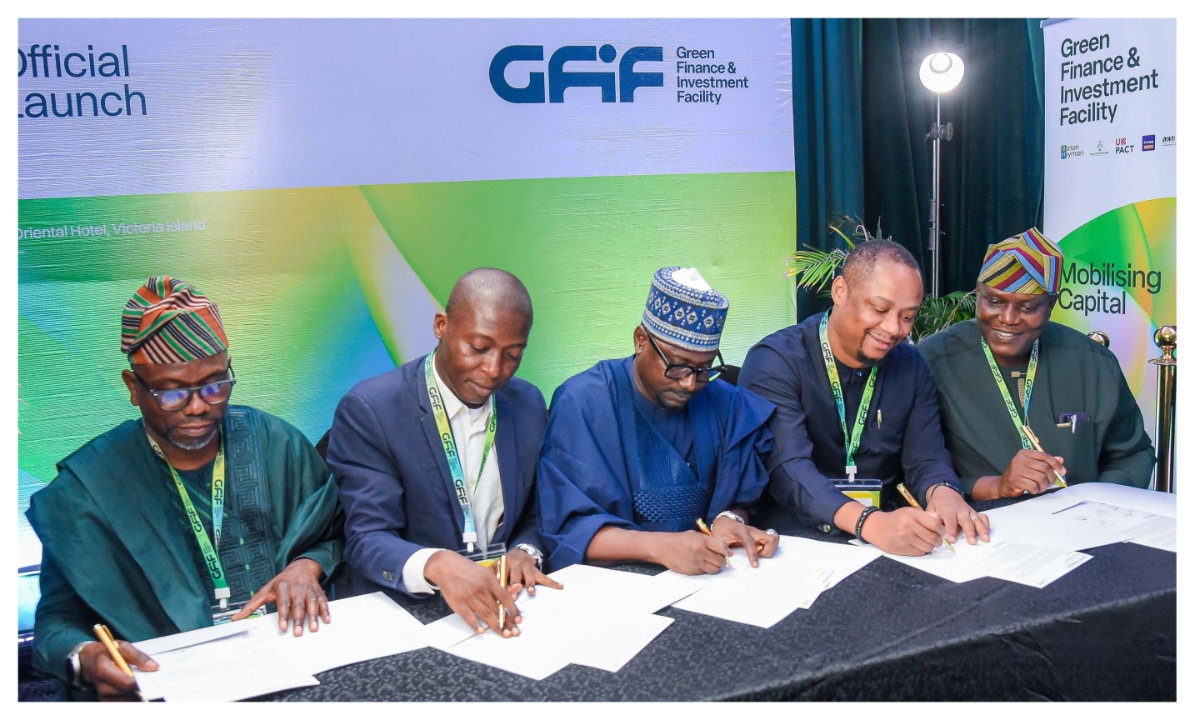
- A $188 million Green Finance Investment Facility (GFiF) was launched on May 7 in Lagos to scale renewable energy access.
- The facility targets the financing of 191 megawatts of distributed solar capacity to benefit over one million Nigerians.
- The project is a partnership between Barton Heyman Limited, the Rural Electrification Agency (REA), UK PACT, FCMB, and ARMHIIL.
- FCMB has committed N100 billion in debt financing to support the Distributed Access through Renewable Energy Scale-Up (DARES) programme.
- The pilot phase is part of a long-term ambition to mobilize $40 billion for 20 gigawatts of distributed renewable energy nationwide.
Main Story
Nigeria’s push for cleaner and more reliable energy infrastructure received a major boost with the launch of a new $188 million Green Finance Investment Facility (GFiF) aimed at scaling renewable energy access across the country.
The facility, unveiled in Lagos is a blended finance platform designed to mobilise large-scale private and institutional investment into distributed renewable energy infrastructure, particularly solar energy solutions for underserved households, businesses and communities.
The initiative is being led by Barton Heyman Limited in partnership with the Rural Electrification Agency (REA), UK PACT, FCMB and ARM Harith Infrastructure Investment Limited (ARMHIIL).
According to the promoters, the platform is targeting the financing of 191 megawatts of distributed solar energy capacity nationwide, with the broader objective of supporting over one million Nigerians through improved electricity access.
The facility also aligns with the Distributed Access through Renewable Energy Scale-Up (DARES) programme, a national initiative focused on expanding electricity access through decentralised renewable energy systems.
The Issues
- Limited access to long-term, affordable financing remains one of the primary constraints for developers attempting to deploy renewable energy solutions in rural and underserved Nigerian communities.
- Transitioning to a decentralized energy model requires complex blended finance structures that can successfully merge sovereign-backed pipelines with private commercial capital.
- Scaling from a $188 million pilot to a $40 billion target will require massive institutional participation and a replicable investment model that remains profitable for commercial lenders like FCMB.
What’s Being Said
- “The current $188 million pilot represents only the first phase of a broader ambition to mobilise up to $40 billion for the development of 20 gigawatts of distributed renewable energy capacity nationwide,” said Olumide Lala, Managing Partner of Barton Heyman Limited.
- “Africa must mobilise its own capital if development ambitions are to succeed,” noted the underlying sentiment regarding local capital integration.
- “Reliable distributed electricity would enable businesses to operate efficiently, strengthen supply chains and support economic growth in underserved communities,” stated Anthony Feyitimi, Senior Partner at Barton Heyman.
- “The initiative directly addresses one of the biggest constraints facing renewable energy deployment in Nigeria which is limited access to financing,” said Abba Aliyu, Managing Director of the REA.
What’s Next
- The facility will begin the immediate deployment of capital toward the target of 191 megawatts of distributed solar energy nationwide.
- FCMB is expected to finalize additional financing arrangements for seven more developers under the isolated mini-grid Performance-Based Grant initiative.
- Barton Heyman and its partners will work toward scaling the pilot into subsequent phases to reach the broader 20-gigawatt national target.
Bottom Line
The GFiF represents a strategic shift toward private-sector-led energy transition in Nigeria, using a $188 million blended finance model to prove the commercial viability of solar mini-grids before attempting a $40 billion nationwide scale-up.