






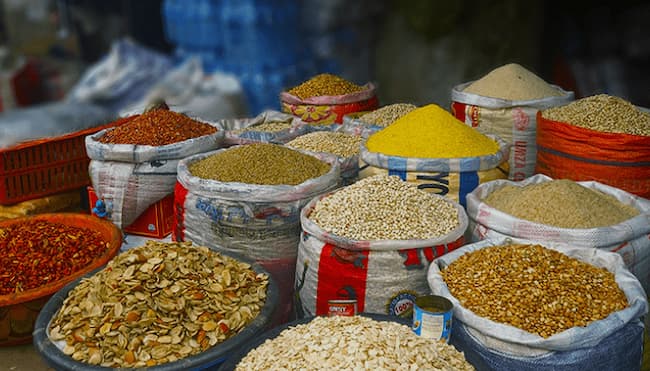
The Federal Government has raised alarm over a worsening food and nutrition crisis, revealing that about 161 million Nigerians are currently food insecure.
Director of the Nutrition and Food Safety Department at the Federal Ministry of Agriculture and Food Security, Alhaji Nuhu Kilishi, disclosed this on Friday during a stakeholders’ consultative meeting in Abuja focused on developing a Food and Nutrition Security Crisis Preparedness Plan (FNSCPP). The plan, he explained, stems from the Accelerating Nutrition Results in Nigeria (ANRiN) project — a state-led, World Bank-funded initiative aimed at reducing malnutrition by expanding access to cost-effective nutrition services for vulnerable populations.
“Only 20 per cent of Nigerians are currently food secure, meaning they are certain of their next meal,” Kilishi said. “Food insecurity has climbed sharply from 35 per cent in 2014 to around 74 per cent in recent years.” He also ttributed the rise in hunger and malnutrition to worsening insecurity, including banditry and kidnappings, which have disrupted farming activities and driven many away from agricultural production.
Kilishi said the government had initiated targeted responses to mitigate the crisis, including the distribution of seeds and inputs for homestead gardening across the country’s 774 local government areas. “Inflation and rising prices of food inputs and commodities have also made it difficult for households to afford healthy diets,”
“We have now secured World Bank funding to implement this plan in 21 states, while the remaining 15 states will be supported through federal resources,” While, Dr Ritgak Tilley-Gyado, Senior Health Specialist at the World Bank, noted that the ANRiN project, launched in 2018, had now entered a new phase with a focus on building long-term resilience.
“With additional crisis response window financing made available, the aim now is to strengthen Nigeria’s systems to prevent future food and nutrition crises,” she said. “This phase moves away from reactive measures to a more preventive and forward-looking strategy.”In her remarks, Mrs Ladidi Bako-Aiyegbusi, Director of Nutrition at the Federal Ministry of Health and Social Welfare, referenced data from the 2021 National Food Consumption and Micronutrient Survey, which showed that over 40 per cent of households in Nigeria are unable to afford nutritious meals.
She stressed that the lack of access to healthy food contributes significantly to Nigeria’s high maternal and child mortality rates and widespread clinical malnutrition. “We do not want to wait for a crisis before responding. Food and nutrition security is not the responsibility of the health sector alone — it is multisectoral,” she said. “Agriculture, education, water resources, information, security, and development partners all have critical roles to play.”
Mrs Ojuolape Solanke, National Project Manager for ANRiN 2.0, said the new plan would ensure delivery of essential nutrition services to children and pregnant women at the primary healthcare level. “We are working to ensure that within the next six months, a comprehensive plan is in place to guide Nigeria’s response to any future food and nutrition emergencies,” she said.
The proposed preparedness plan forms part of broader efforts to shield the country from a deepening food and nutrition crisis, as millions remain vulnerable to hunger and malnutrition.