

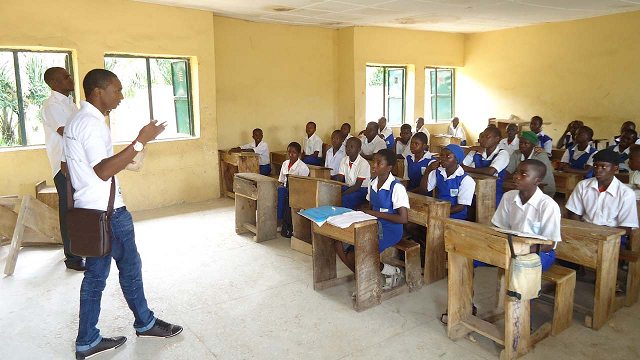
The Federal Government has officially released the approved list of subjects for the recently revised Basic and Senior Secondary Education Curriculum, cautioning schools, parents, and teachers to disregard fake lists circulating across the country.
The Nigerian Educational Research and Development Council (NERDC) confirmed the development in a statement issued on Monday, noting that the authentic list carries the signature of its Executive Secretary, Professor Salisu Shehu, dated September 8, 2025. According to the Council, any alternative subject outlines being shared outside the officially sanctioned list should be ignored.
“We call on all stakeholders—schools, parents, and teachers—to rely solely on the approved curriculum released by NERDC. Any other list being distributed is fake, misleading, and must be disregarded,” the Council declared.
To aid the implementation of the revised curriculum, the NERDC further revealed that nationwide sensitisation programmes and teacher training workshops will commence immediately. These reforms, introduced by the Federal Ministry of Education under its National Education Sector Reform Initiatives (NESRI), are designed to reduce curriculum overload and enhance learning outcomes among Nigerian students.
The new curriculum will be implemented progressively, starting at entry points for each three-year cycle: Primary 1, Primary 4, Junior Secondary School (JSS 1), and Senior Secondary School (SS 1).
NERDC emphasised that the reforms mark a new era in Nigeria’s education system, prioritising relevance, adaptability, and the early development of practical skills among learners.
Approved Subject Breakdown
Primary 1–3 (Minimum: 9 subjects, Maximum: 10 subjects):
- English Studies
- Mathematics
- One Nigerian Language
- Basic Science
- Physical & Health Education
- Christian Religious Studies (CRS) / Islamic Studies (IS)
- Nigerian History
- Social and Citizenship Studies
- Cultural & Creative Arts (CCA)
- Arabic (Optional)
Primary 4–6 (Minimum: 11 subjects, Maximum: 13 subjects):
- English Studies
- Mathematics
- One Nigerian Language
- Basic Science and Technology
- Physical & Health Education
- Basic Digital Literacy
- CRS / IS
- Nigerian History
- Social and Citizenship Studies
- Cultural & Creative Arts
- Pre-vocational Studies
- French (Optional)
- Arabic (Optional)
Junior Secondary School (JSS 1–3) (Minimum: 12 subjects, Maximum: 14 subjects):
- English Studies
- Mathematics
- One Nigerian Language
- Intermediate Science
- Physical & Health Education
- Digital Technologies
- CRS / IS
- Nigerian History
- Social and Citizenship Studies
- Cultural & Creative Arts
- Business Studies or a Trade Subject (e.g., Solar Installation, Fashion Design, Livestock Farming, Cosmetology, GSM Repairs, Horticulture, etc.)
- French (Optional)
- Arabic (Optional)
Senior Secondary School (Core Subjects):
- English Language
- General Mathematics
- One Trade Subject
- Citizenship & Heritage Studies
- Digital Technologies
Additional Senior Secondary Subjects (Science, Humanities, Business, and Vocational):
- Biology, Chemistry, Physics, Agriculture, Further Mathematics
- Nigerian History, Government, CRS, IS, One Nigerian Language, French, Arabic, Literature in English
- Geography, Technical Drawing, Visual Arts, Music, Home Management, Catering Craft, Accounting, Commerce, Economics, Marketing
- Foods & Nutrition, Physical & Health Education
- Vocational and trade-based subjects
NERDC assured parents and schools that the reforms would bring greater flexibility to Nigeria’s education sector while equipping students with the knowledge and skills needed for future challenges.