










The Federal Government is considering adopting a Public-Private Partnership (PPP) model to complete major road infrastructure projects valued at approximately ₦3 trillion, following the withdrawal of the Nigerian National Petroleum Company Limited (NNPCL) from its tax-credit funding scheme.
NNPCL officially halted its financial contributions to the scheme effective August 1, 2025, creating a significant funding gap for several critical road projects across the country.
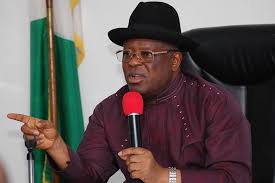
This development was confirmed by the Minister of Works, David Umahi, during a press briefing in Abuja, as reported by the News Agency of Nigeria (NAN). According to Umahi, President Bola Ahmed Tinubu has directed the Ministry of Works to seek alternative financing options to prevent the abandonment of ongoing projects.
“The Federal Government requires about ₦3 trillion to complete road projects previously awarded under the NNPCL tax credit scheme,” the minister said. “In light of NNPCL’s withdrawal, President Tinubu has mandated us to evaluate viable funding alternatives, including PPP models.”
Umahi added that the ministry is compiling a list of the affected projects, which will be presented to the President for review. He noted that priority will be given to contractors with proven technical expertise and the financial capacity to execute projects under PPP arrangements.
One of the affected projects is the 43.6-kilometre Maraba–Keffi dual carriageway, which Umahi previously highlighted. The project, now redesigned with concrete pavement due to economic conditions, will be delivered in phases. With only ₦76 billion remaining from the NNPCL funding, the ministry plans to complete the first carriageway and two kilometres of the second, while the remaining sections will be temporarily maintained.
Clarifying funding equity concerns
During the briefing, the Ministry’s Permanent Secretary, Olufunsho Adebiyi, addressed concerns over perceived regional disparities in project distribution. He explained that construction costs vary widely across regions due to factors such as terrain, groundwater levels, and availability of materials.
“For example,” he said, “constructing one kilometre of road in Bayelsa may cost as much as building ten kilometres in Katsina, due to geographical and environmental challenges.”
Impact of NNPCL’s withdrawal
The tax-credit scheme had allowed NNPCL to finance critical infrastructure in exchange for tax relief, serving as a creative solution to Nigeria’s longstanding infrastructure funding constraints. However, with the company stepping back from further commitments, the continuity and completion of several vital projects now hang in the balance.
As the government considers new funding approaches, stakeholders are watching closely to see how the PPP model could be structured to ensure transparency, timely execution, and sustainability of infrastructure development across the country.


 model to complete major road infrastructure....)