






The Federal Government has announced the permanent discontinuation of deductions made for the cost of revenue collection by agencies such as the Federal Inland Revenue Service (FIRS), Nigerian Customs Service (NCS), and the Nigerian Upstream Petroleum Regulatory Commission (NUPRC), among others.
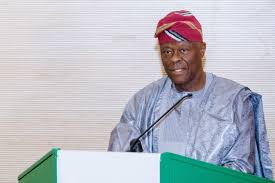
The Minister of Finance and Coordinating Minister of the Economy, Wale Edun, disclosed this on Wednesday in Abuja during a panel session at the launch of the October 2025 edition of the World Bank’s Nigeria Development Update (NDU), themed “From Policy to People: Bringing the Reform Gains Home.”
Edun explained that the move followed a presidential directive to eliminate several layers of deductions made before sharing proceeds from the Federation Account Allocation Committee (FAAC), as part of the administration’s broader effort to strengthen fiscal transparency and ensure that more resources reach the three tiers of government.
“Funds have flowed into the Federation Account, but the efficiency of spending remains critical. We have been mandated by President Bola Tinubu to review and eliminate unnecessary deductions, including the cost of collection,” Edun said. “During the last FAAC allocation, most of these deductions were removed—once and for all.”
According to the minister, the reform aligns with constitutional provisions that require all revenue collected by agencies to be remitted in full to the Federation Account before distribution. He added that the review covers all categories of deductions, including refunds and intervention funds.
“The constitution provides that funds should flow into the Federation Account and be distributed according to the prescribed formula. We are now enforcing this. The result will be greater transparency, efficiency, and predictability of funding across federal, state, and local governments,” Edun noted.
He emphasised that improved fiscal discipline and accountability are essential to achieving long-term fiscal sustainability.
Under Nigeria’s fiscal structure, certain revenue-generating agencies have historically retained a percentage of their collections as “cost of collection”—a system long criticised for encouraging inefficiency and reducing distributable revenues.
Earlier, World Bank Lead Economist for Nigeria, Samer Matta, observed that while gross revenue collections have surged in 2025, a significant portion continues to be lost to various deductions that do not directly support development.
He revealed that FAAC allocations rose from about 5% of GDP in 2023 to 9.5% in the first eight months of 2025, driven by improved oil receipts and stronger non-oil tax performance. However, he warned that “a large share of deductions goes to revenue-collecting agencies for administrative use, reducing funds available for development projects.”
Matta stressed that Nigeria’s fiscal efficiency depends on curbing such deductions and redirecting resources toward measurable economic impact.
The World Bank’s Nigeria Development Update also highlighted disparities in spending patterns across government tiers. While federal expenditure remains dominated by debt servicing, personnel costs, and overheads, state and local governments have significantly increased capital investment—from 1% of GDP in 2022 to a projected 2.7% in 2025, accounting for about 60–65% of their total expenditure.
At the federal level, however, interest payments and salaries now consume roughly 70% of total spending, leaving little fiscal room for capital projects.
The report commended Nigeria’s fiscal and monetary reforms, noting that the fiscal deficit narrowed to 2.5% of GDP in 2025, down from an average of 4.4% between 2021 and 2023—an improvement described as a sign of “fiscal resilience” amid volatile global oil prices.
Despite these gains, the World Bank cautioned that Nigeria’s primary challenge remains translating macroeconomic progress into tangible improvements in citizens’ welfare. The report identified three urgent priorities: curbing inflation (especially food inflation), ensuring efficient use of public funds, and expanding social safety nets to protect vulnerable households.
Responding, Edun said the Tinubu administration has already rolled out targeted social protection measures, including direct cash transfers using biometric and digital verification systems, reaching 10 million households—about 50 million Nigerians.
“We ensured that each beneficiary is biometrically verified,” Edun stated. “By the end of October, we expect to have reached 10 million households, and by year-end, we aim for 50 million.”
He added that the National Economic Council (NEC) has approved a ward-based development programme covering Nigeria’s 8,809 wards, designed to ensure that “reform gains reach every corner of the country.”
“The focus now is connecting these reforms to the people—bringing the gains home and ensuring every Nigerian participates in a growing and stable economy,” he said.
The World Bank projects that Nigeria’s GDP growth will reach 4.4% by 2027, driven by agricultural recovery, expansion in services, and increased industrial activity. Inflation is expected to ease to 15.8%, supported by tighter monetary policies and improved supply chains.
The report also forecasts that Nigeria’s public debt-to-GDP ratio will decline below 40% for the first time in over a decade, reflecting improved fiscal management and sustained reforms.
According to the NDU, Nigeria’s economy expanded by 3.9% year-on-year in the first half of 2025—up from 3.5% in the same period of 2024—driven by robust performance in services, non-oil sectors, and agriculture.
The World Bank noted that the country’s external position has strengthened, with foreign reserves exceeding $42 billion and the current account surplus rising to 6.1% of GDP, buoyed by higher non-oil exports and reduced oil imports.
“Despite lower oil prices, Nigeria’s fiscal deficit remains steady at 2.6% of GDP, while public debt is expected to fall from 42.9% to 39.8% of GDP,” the report concluded—signalling cautious optimism for sustained economic recovery and fiscal discipline.