





Nigeria’s Federal Ministry of Industry, Trade and Investment generated more than $500 million in export revenue in 2025, driven by expanded industrial activity and diversification initiatives across key sectors of the economy.
The Minister of Industry, Trade and Investment, Dr. Jumoke Oduwole, disclosed this while briefing the Senate Committee on Trade and Investment during the defence of the ministry’s 2026 budget proposal. She told lawmakers that the ministry’s policy interventions and programmes also resulted in the creation of over 20,000 direct jobs within the year under review.
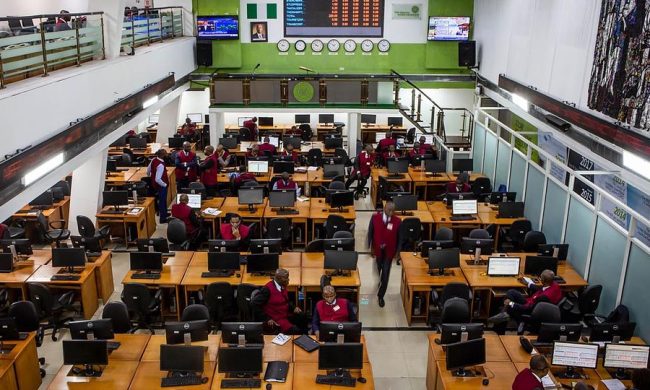
According to the minister, activity levels on the Nigeria Commodity Exchange (NCX) recorded a sharp surge, with traded volumes rising by more than 500 per cent, reflecting improved confidence and increased participation in structured commodity markets.
Oduwole noted that the ministry had advanced discussions and frameworks for the establishment of a national trade and distribution company, a move aimed at strengthening commodity aggregation, improving market access, and deepening structured trade across the country.
She further informed the committee that the Federal Executive Council (FEC) approved the National Industrial Policy in November 2025, providing a comprehensive framework to guide Nigeria’s industrial growth and competitiveness.
“In 2025, the ministry also launched Nigeria’s first-ever National Intellectual Property Policy, a milestone that positions intellectual property as a strategic tool for trade, innovation, and industrial expansion,” Oduwole said.
On fiscal performance, the minister explained that the ministry’s total appropriation for 2025 stood at ₦11.8 billion, with personnel and overhead costs fully utilised. However, she noted that aside from the ₦3.8 billion capital allocation, no further capital releases had been made as of the reporting period.
Despite funding constraints, Oduwole said the ministry’s revenue performance exceeded its target by approximately ₦100 million, with all proceeds fully remitted to the Consolidated Revenue Fund (CRF).
“Within the limits of available resources, the ministry maintained strong fiscal discipline, effective planning, and accountable utilisation of public funds,” she stated.
Looking ahead, the minister said the ministry’s 2026 priorities align with the Renewed Hope Agenda of President Bola Tinubu’s administration and are anchored on the National Development Plan, Nigeria’s trade policy, investment policy, and industrial policy frameworks.
She explained that the ministry’s focus in 2026 would shift decisively toward implementation, with emphasis on targeted value chains, industrial cluster development, and the expansion of special economic zones, while prioritising local production and non-oil exports.
Oduwole stressed that domestic investors would remain central to Nigeria’s industrialisation drive, while international investors would continue to be engaged through trade missions and in-country investment visits.
To ensure broader impact, she said the ministry would drive outcomes to the sub-national level through the National AfCFTA Tour, zonal engagements, and state-level initiatives designed to strengthen value chains and enhance state ownership of trade and industrial outcomes.
These efforts, she added, would be supported by the rollout of digital investor portals and trade intelligence platforms to improve transparency, coordination, and efficiency across trade and investment promotion activities.
The minister disclosed that the ministry’s proposed 2026 capital allocation stood at ₦2.72 billion, warning that the amount would be inadequate given the breadth of responsibilities and execution priorities.
She therefore appealed to the Senate Committee for enhanced capital support to enable effective delivery of priority programmes in line with national development objectives and the Medium-Term Expenditure Framework.
“It is within this context that I seek your continued support as we work collectively to strengthen industrial development, expand trade, attract investment, and drive sustainable economic growth across the federation,” Oduwole said.