








The Federal Government and the Academic Staff Union of Universities (ASUU) have unveiled a renegotiated agreement aimed at resolving long-standing disputes that have repeatedly disrupted Nigeria’s university system and academic calendars.
The 2025 agreement marks the conclusion of a renegotiation process that began in 2017 to review the 2009 Federal Government–ASUU pact, which was originally due for reassessment in 2012.
Several previous efforts to reach a consensus failed, including negotiations led by committees chaired by Wale Babalakin, Munzali Jibrin, and Nimi Briggs under successive administrations. A breakthrough was eventually achieved under the current government, which inaugurated a renegotiation committee led by Yayale Ahmed in October 2024.
After approximately 14 months of deliberations, both parties reached an agreement focused on improving lecturers’ welfare, strengthening university autonomy, enhancing funding, safeguarding academic freedom, and addressing structural weaknesses that have contributed to brain drain and sectoral decline.
A central component of the agreement is a 40 per cent increase in the remuneration of academic staff in federal universities, effective January 1, 2026. Under the new salary framework, earnings will comprise the Consolidated University Academic Staff Salary alongside a Consolidated Academic Tools Allowance, which accounts for the increment.
The tools allowance is intended to support essential academic activities such as research, scholarly publications, conference attendance, internet access, professional memberships, and book acquisition, with the broader aim of boosting productivity and retaining academic talent.
In addition, nine earned academic allowances have been restructured to promote transparency and equity by ensuring payments are directly linked to verifiable duties. These include postgraduate supervision, fieldwork, clinical responsibilities, examination roles, and leadership assignments within universities.
For the first time, the Federal Government also approved a Professorial Cadre Allowance for senior academics. Under this provision, full professors will receive ₦1.74 million annually, while readers will earn ₦840,000 per year. The government described the initiative as a transformative step to recognise experience, enhance professional dignity, and strengthen the academic workforce.
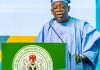
Speaking at the unveiling ceremony in Abuja, Minister of Education Dr Tunji Alausa said the agreement reflected President Bola Tinubu’s commitment to uninterrupted academic calendars and improved welfare for lecturers.
He described the deal as more than a formal document, calling it a turning point that restores trust and confidence in Nigeria’s tertiary education system. According to Alausa, President Tinubu personally drove the process, marking a rare instance of direct presidential involvement in resolving university labour disputes.
The minister noted that unresolved welfare issues had fuelled decades of industrial actions that destabilised universities and jeopardised students’ futures, but stressed that the current administration opted for dialogue, reform, and decisive action.
He reaffirmed the government’s commitment to full implementation of the agreement under the Renewed Hope Agenda and thanked members of both negotiating teams for resolving what he described as a long-standing national challenge.
However, ASUU cautioned that while the agreement represents progress, deep-rooted structural and governance issues still threaten the sustainability of Nigeria’s university system.
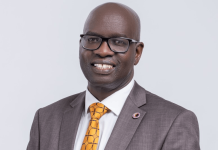
ASUU President Prof. Chris Piwuna acknowledged the government’s efforts but attributed the prolonged delay in renegotiation to what he described as a lack of sincerity in past engagements.
He warned that persistent problems remain unresolved, including weak university autonomy, government interference in governance, inadequate research funding, declining academic standards, and the broader economic crisis affecting access to education.
Piwuna highlighted concerns over governing councils being arbitrarily dissolved, vice-chancellor appointments being influenced by political interests, and merit-based processes being undermined—developments he said erode institutional integrity and fuel internal conflicts.
On research funding, ASUU reiterated that decades of underinvestment risk turning universities into teaching-only institutions disconnected from innovation. While the agreement provides for the National Research Council Bill to be forwarded to the National Assembly, the union said implementation remains uncertain.
The proposed bill seeks to allocate at least one per cent of GDP to research and innovation, a move ASUU described as critical to national development.
The union also raised concerns about alleged financial mismanagement within some universities, the growing reliance on consultants, declining standards in newly converted universities, and worsening national socio-economic conditions that could undermine the gains of the agreement.
Despite its reservations, ASUU expressed cautious optimism and said it hopes that full implementation of the 2025 agreement will not require further industrial action.








 have unveiled a renegotiated agreement aimed at resolving long-standing disputes that have repeatedly disrupted Nigeria’s university system and academic calendars.)