







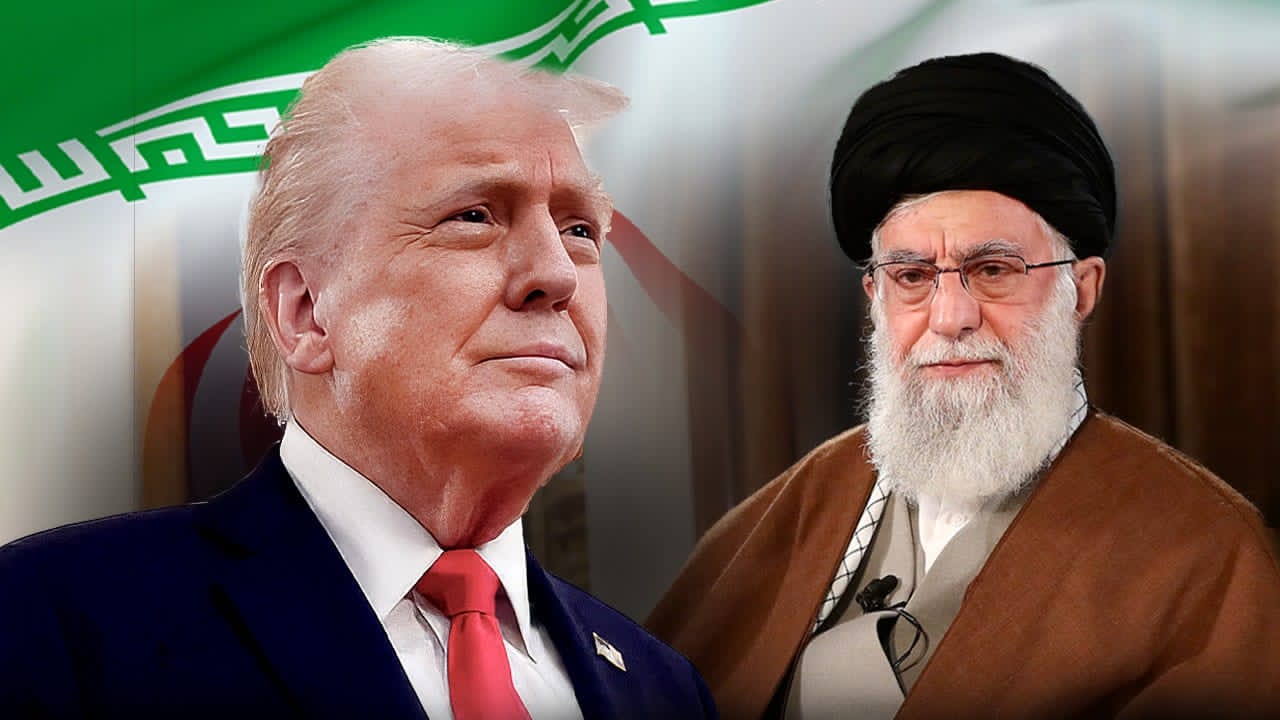
As America pulls non-essential staff from Israel amid a collapsing Iran nuclear deal, Abuja must watch oil prices closely — the Middle East tinderbox could be Nigeria’s biggest windfall or worst nightmare
Key Points
- The U.S. State Department has authorised the departure of non-emergency personnel from Israel, with Ambassador Mike Huckabee urging staff to leave “TODAY” — the strongest signal yet that Washington believes military conflict with Iran is imminent.
- Nuclear talks in Geneva collapsed on February 26 after Iran rejected U.S. demands to dismantle its three main nuclear sites and surrender all enriched uranium permanently.
- Brent crude has already risen from $58 to $70.75 per barrel on tension alone, with analysts warning prices could reach $90–$100 if conflict erupts and $120+ if Iran closes the Strait of Hormuz — through which one-fifth of global oil supply passes daily.
- Nigeria’s 2026 budget is benchmarked at $75 per barrel with a production target of 1.8 million barrels per day; prices above that threshold offer a windfall, but NNPCL’s chronic output shortfalls could limit Nigeria’s ability to capitalise.
- Three scenarios face Nigeria: a diplomatic deal (oil drops to $60–$65, budget deficit widens); prolonged limbo (oil at $68–$78, modest gains); or military escalation (spike to $85–$100+, short-term revenue boost followed by volatility and capital flight risk).
- The Excess Crude Account — Nigeria’s principal buffer against oil price shocks — remains largely depleted, leaving Abuja exposed if the windfall reverses quickly.
Main Story
In a move that sent shockwaves through global markets on Friday morning, the United States State Department authorised the departure of non-emergency government personnel and their families from Mission Israel, citing ‘safety risks.’ U.S. Ambassador Mike Huckabee was blunter: those wishing to leave, he told embassy staff, should do so ‘TODAY.’ The urgency was unmistakable. Commercial flights may soon no longer be an option.
This is not a routine travel advisory. It is the clearest signal yet that the United States and Iran are on the precipice of military conflict — a showdown that collapsed nuclear talks in Geneva just 24 hours earlier and has turned the oil-rich Middle East into the world’s most dangerous flashpoint. For Nigeria, a country where crude oil accounts for over 85% of export earnings and more than half of government revenue, the implications are enormous.
The Breaking Point: What Just Happened in Geneva
Iran and the United States spent Thursday in Geneva for what diplomats described as the ‘most intense’ round of nuclear negotiations yet — and still walked away without a deal. The talks, mediated by Oman, collapsed over three core demands Washington placed on the table that Tehran found existential.
Key sticking points in the Geneva talks (Feb 26, 2026)
- U.S. Demand 1: Iran must completely dismantle its three main nuclear sites at Fordow, Natanz and Isfahan.
- U.S. Demand 2: Iran must surrender all enriched uranium to the United States — permanently.
- U.S. Demand 3: Any deal must last ‘forever’ with no sunset clauses.
- Iran’s Position: Refuses zero enrichment; insists on its right to enrich uranium and demands sanctions be lifted first.
- Mediator Signal: Oman says ‘significant progress’ but no deal; technical talks to resume in Vienna.
Iranian Foreign Minister Abbas Araghchi acknowledged progress but the gap remains wide. Iran has simultaneously declared it will continue uranium enrichment and maintain its right to defend the Strait of Hormuz, through which one-fifth of all globally traded oil passes.
“Today was one of the best, most serious and longest rounds of negotiations.” — Abbas Araghchi, Iranian Foreign Minister
The day after the talks, Washington issued the Israel evacuation order. The move was not coincidental.
Why Israel? Understanding the Domino Effect
The authorised departure from Israel is directly tied to Tehran’s stated retaliation strategy. Iranian officials have repeatedly warned that if the U.S. launches military strikes on Iranian soil, Israel — Washington’s closest regional ally — will be among the first targets of retaliatory attacks, including from Iran’s network of proxies: Hezbollah in Lebanon, militias in Iraq and Syria, and the Houthis in Yemen.
KLM has already suspended flights from Tel Aviv’s Ben Gurion International Airport. Australia has ordered the departure of all dependents of its officials in Israel. India and several European countries have advised citizens to avoid travel to Iran. The U.S. ambassador’s urgent tone — ‘there may not be flights in the coming days’ — reflects a belief in Washington that the window for safe departure is narrowing.
A massive U.S. military fleet, including two carrier strike groups, has massed in the Middle East — the largest concentration of American firepower in the region since the 2003 invasion of Iraq.
The Oil Market in the Crossfire
Oil traders have been watching every headline from Geneva and Jerusalem with their fingers on the trigger. The numbers tell the story of rising anxiety.
Oil price movements — February 2026 tracker
- Early Feb 2026: Brent Crude at $58/bbl — EIA baseline forecast for 2026.
- Feb 18, 2026: $71 — Brent hits 6-month high; Iran tensions spike 4% in one day.
- Feb 23–24, 2026: $70–$71 — Prices hold near highs amid talk of imminent U.S. strike.
- Feb 26, 2026 (Geneva): $70.75 — Choppy session; brief $1+ spike on stalled talks, pared on Oman reassurance.
- Feb 27, 2026: Price direction uncertain — Embassy evacuation order rattles markets.
Analysts at ING Bank describe the current market logic in stark binary terms: if talks fail, supply disruption fears push oil higher; if a deal is struck, prices fall on reduced risk premium. The uncertainty alone has already added an estimated $4 to $10 per barrel ‘war premium’ to global benchmarks.
Energy consultancy FGE NexantECA warned this week that oil prices of $90 to $100 per barrel are ‘within reach’ if conflict erupts. BloombergNEF has modelled a scenario where the complete removal of Iranian crude from markets — currently about 3.3 million barrels per day — could push Brent to $91 per barrel by late 2026, even with OPEC+ increasing output.
Iran’s ultimate leverage is the Strait of Hormuz. About 20 million barrels of oil and LNG transit this narrow waterway daily. Iran’s parliament has already approved a motion to close the Strait, and analysts warn prices could spike well over $100 per barrel in any major disruption scenario.
Timeline: How We Got Here
June 2025 — Operation Midnight Hammer
The U.S. joined Israel in a 12-day war against Iran, with targeted strikes that damaged key infrastructure. Critically, Gulf oil exports avoided major disruption, providing a template for ‘limited’ military action — but also demonstrating Iran’s willingness to respond.
December 2025 — Iran Erupts From Within
Nationwide protests erupted across Iran’s 22 provinces after a violent crackdown. The Supreme Leader blamed the United States. At least 7,015 people were reported killed. The political instability shook investor confidence in Iranian oil production.
January 2026 — Trump’s Maximum Pressure Returns
President Trump imposed a 25% tariff on any country doing business with Iran. Iranian crude export volumes dropped to approximately 1.39 million barrels per day — a 26% year-on-year decline. WTI oil rose to the $59 range on the news.
February 17, 2026 — Iran Closes Parts of the Strait
In a dramatic escalation, Iran temporarily halted traffic in sections of the Strait of Hormuz during military exercises — a direct warning shot. The USS Gerald R. Ford aircraft carrier was already en route to the Gulf.
February 24, 2026 — Trump’s State of the Union Warning
President Trump told Congress: ‘We are in negotiations with them. They want to make a deal, but we haven’t heard those secret words: We will never have a nuclear weapon.’ Brent reached $71.13 — near a seven-month high.
February 26, 2026 — Geneva Talks Collapse
The third round of indirect U.S.–Iran nuclear talks in Geneva ends without a deal. Iran rejects demands to dismantle nuclear sites and transfer enriched uranium. Oman announces technical-level talks to resume in Vienna ‘next week’ — but no firm date is set.
February 27, 2026 — TODAY: Embassy Evacuation
The U.S. State Department authorises departure of non-emergency personnel from Israel. Ambassador Huckabee urges immediate evacuation. KLM suspends Tel Aviv flights. Markets on edge.
What Next? Three Scenarios for Nigeria
Scenario 1 — Diplomatic Breakthrough (Probability: 25%)
- Iran and the U.S. reach a partial deal in Vienna technical talks; major sites preserved but enrichment capped.
- Oil prices fall sharply — Brent likely drops to $60–$65 range as war premium deflates.
- Nigeria impact: NEGATIVE in the short term — lower oil prices widen budget deficit; naira faces renewed pressure.
- Silver lining: reduced global inflation risk, better import costs for non-oil goods.
Scenario 2 — Prolonged Diplomatic Limbo (Probability: 45%)
- Talks drag into March–April; no deal but no strikes either; war premium persists.
- Oil stays elevated between $68–$78/bbl.
- Nigeria impact: NEUTRAL-TO-POSITIVE — prices above the $75 benchmark provide modest windfall.
- Risk: OPEC+ decisions and U.S. shale output could cap upside; naira remains under pressure from global risk-off sentiment.
Scenario 3 — Military Strikes & Regional Escalation (Probability: 30%)
- U.S. launches targeted strikes on Iran’s nuclear facilities; Iran retaliates against Israel and Gulf states.
- Brent crude spikes to $85–$100+/bbl; some analysts see $120 in a full Hormuz closure scenario.
- Global recession risk rises sharply; demand destruction could eventually cap oil price gains.
- Nigeria impact: INITIALLY POSITIVE then VOLATILE — a price spike boosts short-term revenue, but prolonged conflict disrupts global shipping, hits import costs and could trigger capital flight from emerging markets.
- NNPCL production shortfalls could limit Nigeria’s ability to fully capitalise on the price windfall.
The Nigeria Factor: Opportunity, Vulnerability, and Urgency
For Abuja, the Middle East crisis is both a test and an opportunity. Nigeria’s 2026 Federal Budget was anchored on a crude oil benchmark of $75 per barrel and a production target of 1.8 million barrels per day. With Brent already trading above $70 — and the potential for a significant spike — Nigeria stands to gain materially from elevated prices if it can maintain and grow its output.
But therein lies the challenge. Nigeria’s crude production has historically underperformed its targets due to pipeline vandalism, ageing infrastructure, and operational inefficiencies at NNPCL. If oil spikes to $90+ but Nigeria can only pump 1.3 million barrels per day, the windfall is limited. The true prize goes to producers with spare capacity — Saudi Arabia, the UAE, and potentially U.S. shale — who can quickly fill any Iranian supply gap.
There is also a transmission risk. A regional war in the Middle East could trigger global financial market volatility, risk-off capital flows from emerging markets, and a stronger dollar — all of which would hurt Nigeria’s import bill, debt servicing costs, and naira stability, even if oil prices rise.
Nigeria’s Finance Ministry and Central Bank should already be war-gaming their responses. A high oil price scenario requires a clear plan for windfall savings — not just immediate spending — to build buffers against the demand destruction that historically follows oil price shocks. The Excess Crude Account, long depleted, needs to be the backstop.
What’s Being Said
Abbas Araghchi, Iranian Foreign Minister, on the Geneva talks:
“Today was one of the best, most serious and longest rounds of negotiations.”
Mike Huckabee, U.S. Ambassador to Israel, to embassy staff:
“Those wishing to leave should do so TODAY. There may not be flights in the coming days.”
Donald Trump, U.S. President, State of the Union address, February 24:
“We are in negotiations with them. They want to make a deal, but we haven’t heard those secret words: We will never have a nuclear weapon.”
ING Bank analysts on the oil market dynamic:
“If talks fail, supply disruption fears push oil higher; if a deal is struck, prices fall on reduced risk premium.”
What’s Next
- Technical-level U.S.–Iran talks expected to resume in Vienna; no firm date confirmed by either side.
- Oil markets will remain volatile pending clarity on whether diplomatic or military action follows the Geneva breakdown.
- Nigeria’s Finance Ministry and Central Bank are expected to begin scenario planning for both windfall and shock outcomes.
- OPEC+ scheduled supply increase decisions in April will be a key variable in whether Nigeria’s upside is capped.
- The National Assembly’s review of the Excess Crude Account mechanism will determine Abuja’s buffer capacity heading into any escalation.
The Bottom Line
The U.S. Embassy evacuation order from Israel is not a routine diplomatic formality. It is a five-alarm warning that America believes conflict with Iran is imminent. For Nigeria, this is a moment of double exposure: the potential for an oil price windfall that could ease a stretched budget, and the danger of being swept up in a global economic storm if the conflict becomes protracted. Watch Brent crude, watch the Strait of Hormuz, and watch whether Vienna brings a deal — or just more time on the clock.
Sources: U.S. Embassy Jerusalem, Associated Press, CNBC, Bloomberg, Al Jazeera, Reuters, CSIS, BloombergNEF, OilPrice.com, Times of Israel, Newsweek, NPR. Published February 27, 2026.