







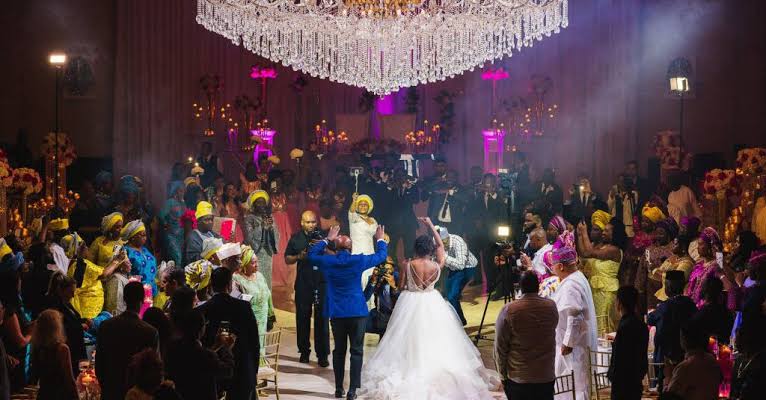
Nigerians love weddings. Let’s be honest—nothing quite compares to the grandeur of a Nigerian owambe. From the aso-ebi that lights up entire neighborhoods to the endless jollof rice debates, weddings here aren’t just personal milestones; they’re cultural showcases.
But here’s the million-naira question: does spending big on your wedding actually guarantee a long and happy marriage? According to insights from wedding experts and a growing body of research, the answer is not as straightforward as many assume. In fact, there’s a strong argument that financial choices made during a wedding might do more harm than good if couples aren’t careful.
Wedding Costs in Nigeria: A Reality Check
Planning a wedding in Lagos, Abuja, or Port Harcourt isn’t for the faint-hearted—or for the faint-wallet. The average Nigerian wedding now costs anywhere between ₦10 million and ₦25 million, depending on location, scale, and family expectations. Some even shoot beyond ₦40 million, especially for high-profile society weddings.
Where does all this money go? Here’s the breakdown most couples (and their families) face:
- Venue rental: Hotels, event centers, or even traditional halls in major cities can gulp anywhere from ₦1.5 million to ₦5 million.
- Catering: Food is the heart of Nigerian celebrations. Feeding 500–1,000 guests can easily cost ₦3 million to ₦7 million.
- Aso-ebi & fabrics: Guests expect coordinated outfits. Printing and distributing fabrics can run into several millions, depending on the design and fabric quality.
- Decoration & lighting: From flower walls to chandeliers, decorators charge anywhere between ₦2 million and ₦6 million.
- Entertainment: Live bands, DJs, MCs, and cultural troupes can collectively cost ₦1 million–₦3 million.
- Photography & videography: Couples spend up to ₦1.5 million on professionals to capture the big day.
- Bridal wear & accessories: A designer dress in Nigeria ranges from ₦500,000 to ₦2 million. The groom isn’t left out either—bespoke suits and agbada designs add another ₦300,000–₦800,000.
- Security, logistics & “miscellaneous”: In Lagos especially, these “little” things quietly rack up an extra ₦1 million.
Now, that’s already a mountain of expenses, and we haven’t even factored in traditional marriage ceremonies, which often require bride price payments, cultural rites, and community celebrations.
Sample Nigerian Wedding Cost Table (2025 Estimates)
| Venue Rental (hotel/event hall) | ₦1.5m – ₦5m | Prices higher in Lagos/Abuja; cheaper in smaller towns |
| Catering (500–1,000 guests) | ₦3m – ₦7m | Food & drinks are top priorities; often the biggest spend |
| Aso-ebi & Fabrics | ₦2m – ₦6m | Printing, sewing, and distribution add to the bill |
| Decoration & Lighting | ₦2m – ₦6m | Flower walls, stage, chandeliers—cost rises with design |
| Entertainment (Band/DJ/MC) | ₦1m – ₦3m | Includes cultural troupes and live performances |
| Photography & Videography | ₦800k – ₦1.5m | Professional coverage and drone footage |
| Bridal Wear & Accessories | ₦500k – ₦2m | Groom’s attire adds another ₦300k – ₦800k |
| Traditional Marriage Rites | ₦500k – ₦2m | Includes bride price, gifts, and cultural ceremonies |
| Security & Logistics | ₦800k – ₦1.2m | Cars, escorts, and crowd control |
| Miscellaneous/Extra Costs | ₦500k – ₦1.5m | Souvenirs, cakes, makeup, hair, small surprises |
Total Estimate: ₦10m – ₦25m (average Nigerian wedding)
💡 Cost Summary:
- Essentials (food, venue, photography, entertainment): ₦6m – ₦12m
- Cultural/Family Obligations (aso-ebi, traditional rites): ₦3m – ₦8m
- Aesthetics (décor, outfits, accessories): ₦2m – ₦6m
- Extras (souvenirs, logistics, makeup, cake): ₦1m – ₦3m
The Debt Factor: Starting Marriage on the Wrong Foot
Here’s the uncomfortable truth many couples don’t like to admit: a lot of Nigerian weddings are funded through loans or family debt. Parents borrow, siblings chip in, and couples themselves max out their savings or take salary advances just to “meet expectations.”
And the consequences? They can be heavy. Studies abroad already show that couples who start married life with debt face more arguments and higher divorce risks. Nigeria isn’t any different. With inflation biting hard, starting marriage with millions owed can create tension from day one.
Think about it: how do you enjoy newlywed bliss when creditors are knocking or when in-laws are grumbling about unpaid aso-ebi balances?
So, Does Spending More Guarantee Longer Marriages?
The evidence says no. Nigerian marriages don’t magically last longer just because the wedding day was lavish. In fact, the opposite might be true. Some regions in Nigeria where couples spend less—say in smaller towns or rural areas—often report more stable unions. Why? Because the focus is less on spectacle and more on building the relationship itself.
On the flip side, Lagos couples who splash ₦30 million on an extravagant show sometimes struggle to sustain the lifestyle that such spending sets up. Pressure mounts, reality hits, and cracks begin to show.
What Actually Predicts a Strong Marriage
Interestingly, research highlights a few things that matter more than money:
- Taking a honeymoon: Nigerian couples who carve out time—whether it’s a week in Dubai or a few days in Obudu Mountain Resort—report higher marital satisfaction. It’s not about where you go; it’s about slowing down and connecting after the chaos.
- Guest list size: This may surprise you. Data suggests that couples with bigger guest lists sometimes enjoy stronger marriages because community support acts like glue. Nigerians already live in communal systems where extended families matter—so this makes sense.
- Open financial communication: This is huge. Couples who talk about money honestly—how much they earn, where they want to invest, and what their goals are—tend to avoid resentment later. In a country where money arguments rank high among divorce triggers, this cannot be overstated.
- Shared values & emotional intimacy: Whether you’re Igbo, Yoruba, Hausa, or from a minority tribe, the long haul depends less on flashy events and more on shared beliefs, respect, and daily companionship.
Nigerian Wedding Trends: Local Flavour, Global Influences
There’s a growing wave of Nigerians cutting back on unnecessary spending. Some now prioritize intimate weddings with 100–200 guests, focusing instead on travel, buying land, or investing in joint businesses after the ceremony.
Still, others insist on grandeur—3,000 guests, imported champagne, and multiple outfit changes. And while that’s fine if you can afford it, experts warn that “status weddings” don’t predict marital longevity.
Globally, this pattern holds true. British couples spend the equivalent of ₦38 million on weddings, yet marriages last just over a decade. In Australia, couples average ₦60 million, but their unions often break down earlier than Nigerian marriages, which, culturally, tend to last longer—though not always happily.
The Engagement Ring Debate
Even engagement rings haven’t escaped scrutiny. A 2023 international study found that men who spent excessive amounts on rings faced higher risks of divorce than those who bought modest but meaningful ones.
In Nigeria, imported diamond rings can cost upwards of ₦3 million. But does a bigger stone guarantee commitment? Hardly. Many Nigerian brides actually prefer thoughtful, culturally relevant gestures—like gold jewelry, family heirlooms, or symbolic traditional items—over a flashy ring that stretches the budget.
What Couples Should Spend On—and What They Can Skip
If you’re planning a wedding in Nigeria, here’s a candid breakdown:
Worth spending on:
- Good food (people never forget the rice and meat quality).
- Photography/videography (memories last longer than décor).
- A comfortable, functional venue.
- Music and entertainment (after all, Nigerians live to dance).
What you can scale down:
- Oversized guest lists (do you really need 1,500 people?).
- Multiple outfit changes for the bride and groom.
- Imported décor pieces that don’t add real value.
- Lavish destination weddings, unless you can comfortably afford them.
Final Take: Time Together Outlasts the Party
Here’s the bottom line: marriages in Nigeria don’t last longer because of how much was spent on the wedding. They last because couples communicate, support each other, and build shared lives after the guests have gone home.
As one wedding expert put it, “It’s not about the money you spend, it’s about the time you spend—together—once the party ends.”
So, for Nigerian couples eyeing marriage, maybe the smartest investment isn’t the ₦15 million ballroom or the 10-layer cake. It’s the honeymoon, the conversations, the small daily choices that strengthen a bond far more than a glamorous one-day event ever could.