





The Nigeria Customs Service (NCS) is projecting a revenue target of about N9 trillion for 2026 as it intensifies trade facilitation measures following a strong performance in the previous fiscal year.
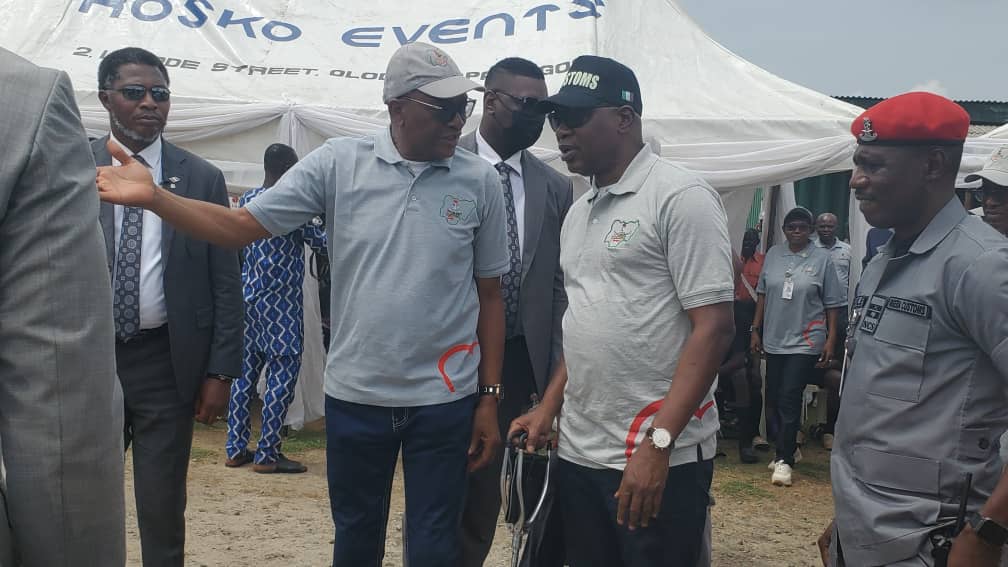
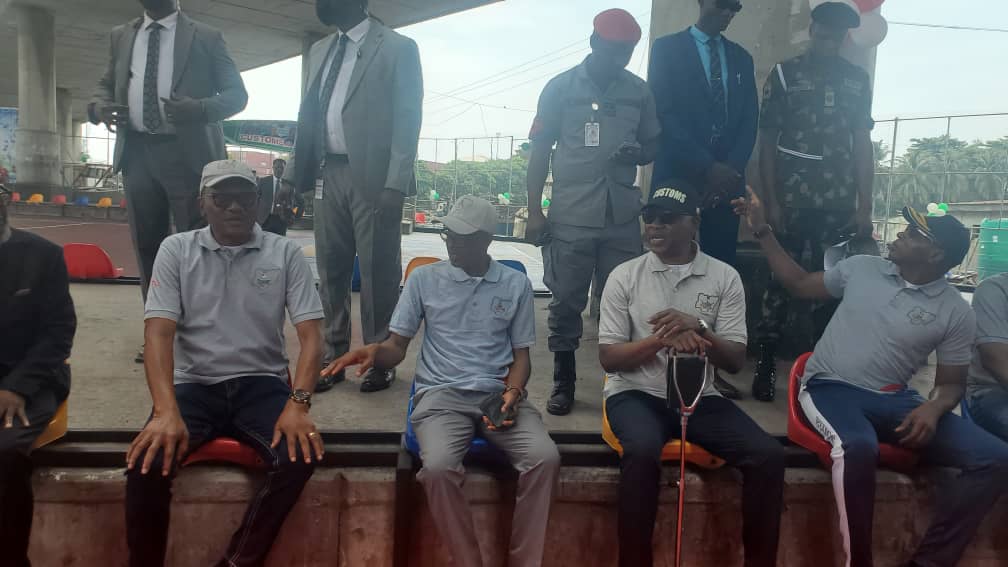
The Comptroller-General of Customs (CGC), Bashir Adeniyi MFR, disclosed this on Wednesday while speaking with journalists at the commissioning of the Wale Adeniyi Sports Arena (WASA), jetty, and signpost at the Service’s Western Marine Command.
Adeniyi said ongoing engagements with the National Assembly’s appropriation committees suggest that the Service’s 2026 revenue benchmark could rise significantly above previous targets.
“We are still meeting with the appropriation committees at the National Assembly, but from our experience and projections, we are likely to be looking at something in the region of N9 trillion this year,” he said.
The CGC also revealed that the Service exceeded its 2025 revenue target by 11 per cent, attributing the performance largely to improved trade facilitation initiatives and enhanced compliance by stakeholders.
According to him, the Service recorded over N100 billion in voluntary disclosures in 2025, a mechanism that allows importers who discover underpayments in their declarations to report and settle outstanding duties.
“We are not giving up on our mandates. We surpassed our budget by about 11 per cent last year. We are hopeful that this year will be more, but we want to devote greater attention to trade facilitation because when we facilitate trade, it increases turnover and enables us to generate more revenue,” Adeniyi stated.
He described the rising voluntary disclosure rate as unprecedented, noting that it reflects growing trust and transparency between Customs and the trading community.
“In 2025 alone, we recorded over N100 billion from voluntary disclosures. We have never seen that level before, and we hope to sustain it in 2026,” he added.
Speaking on the newly commissioned sports arena, Adeniyi said the facility forms part of efforts to enhance the welfare, fitness and operational readiness of officers and men of the Service.
He stressed that the physically demanding nature of Customs operations makes it essential for personnel to maintain both physical fitness and mental balance.
“This kind of facility is necessary because of the nature of our job. Our work is demanding, and we must remain physically and mentally fit. That is why we encourage officers to make full use of these facilities,” he said.
The CGC also commended host communities for improved cooperation with the Service, noting that strengthened community relations had facilitated the successful execution of several projects.
Earlier, in his welcome address, the Controller, Western Marine Command, Patrick Ntadi, described Wale Adeniyi Sports Arena as a corporate social responsibility initiative aimed at promoting youth engagement, community partnership and sustainable peace.
He said the facility, named after a former National Public Relations Officer of the Service, Wale Adeniyi, was designed to provide a safe recreational space that would help steer youths away from crime, drug abuse and other social vices.
Ntadi added that beyond enforcement duties, security agencies must invest in preventive initiatives that empower young people and strengthen community ties.
The event was attended by senior Customs officers, representatives of sister security agencies, community leaders, youth groups and other stakeholders.









 is projecting a revenue target of about N9 trillion for 2026 as it intensifies trade facilitation ...)