








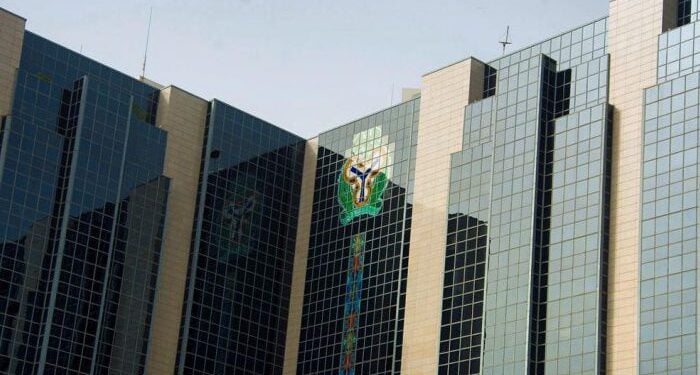
Nigeria’s financial regulators have renewed calls for stronger inter-agency and industry collaboration to preserve recent gains recorded in the fight against electronic payment fraud, as digital transaction volumes continue to expand rapidly.
The Central Bank of Nigeria (CBN) and the Nigeria Inter-Bank Settlement System Plc (NIBSS) made the call at the 2026 Nigeria Electronic Fraud Forum (NeFF) Technical Kick-Off Session held in Lagos on Wednesday. The event brought together regulators, commercial banks, payment service providers, security agencies, identity management institutions, and law enforcement bodies.
In his keynote address, the Deputy Governor of Financial System Stability at the CBN, Mr. Philip Ikeazor, said years of coordinated engagement under the NeFF framework had significantly strengthened the resilience of Nigeria’s payment ecosystem. He was represented at the event by Mr. Ibrahim Hassan, Director of the Development Finance Institutions Supervision Department.
According to Ikeazor, sustained cooperation among stakeholders since the forum’s establishment in 2011 has helped reduce fraud-related losses, even as digital payments have grown at an unprecedented pace.
He pointed to major milestones such as the industry-wide adoption of EMV chip-and-PIN cards, deployment of two-factor authentication, improved transaction monitoring, centralized fraud reporting mechanisms, and the integration of the Bank Verification Number (BVN) with the National Identification Number (NIN).
Despite these achievements, Ikeazor warned that emerging threats—including social engineering scams, SIM-swap fraud, insider compromise, and Authorised Push Payment (APP) fraud—require faster, more integrated responses across the ecosystem.
“The industry has committed to reducing fraud response times to under 30 minutes while deploying enterprise-grade fraud management systems powered by real-time analytics and shared intelligence,” he said.
In a separate keynote address, NIBSS Managing Director and Chief Executive Officer, Mr. Premier Oiwoh, disclosed that electronic payment fraud losses declined sharply in 2025, despite a surge in transaction volumes.
Oiwoh attributed the improvement to coordinated interventions by the CBN, the Nigerian Financial Intelligence Unit (NFIU), security agencies, and enhanced monitoring across payment channels.
However, he noted that internet banking and e-commerce platforms remained the most vulnerable channels, with social engineering and insider-assisted fraud emerging as dominant risk trends.
According to him, sustaining the gains recorded would require stricter internal controls, stronger regulatory compliance, and zero tolerance for non-reporting of fraud incidents. He warned that weak reporting frameworks, poor identity verification, and abuse of transaction limits continued to expose the system to significant risks.
Oiwoh emphasized the importance of effective Know-Your-Customer (KYC) and Know-Your-Device (KYD) protocols, supported by real-time validation of BVN and NIN data. He added that industry-wide reporting requirements and a centralized “Persons of Interest” database—covering more than 13,000 individuals—had enhanced fraud detection capabilities.
He further revealed that NIBSS is collaborating with the CBN and other stakeholders to deploy advanced AI-driven monitoring tools and develop a new national payment infrastructure to strengthen fraud prevention and expand financial inclusion.
Also speaking, Dr. Rakiya Yusuf, Director of the Payments System Supervision Department at the CBN and Chairman of NeFF, urged stakeholders to maintain coordinated action to address evolving fraud risks.
She highlighted gains from EMV migration, two-factor authentication, and improved identity management, while stressing the need for standardized frameworks, faster response times, and proactive deployment of ISO 20022 messaging standards and advanced analytics.
The 2026 NeFF Technical Kick-Off Session was held under the theme, “Shrinking Fraud Losses with ISO 20022 and Identity Management.”