








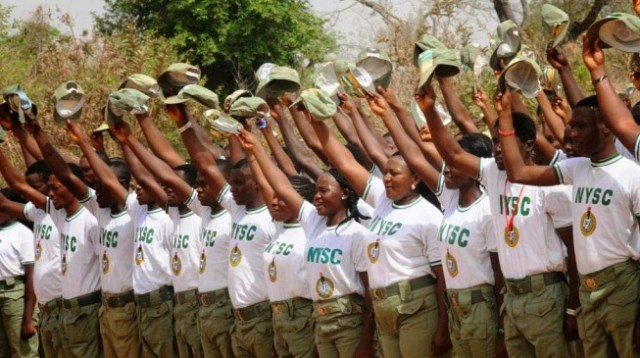
For more than five decades, the National Youth Service Corps (NYSC) has remained one of Nigeria’s most enduring national institutions, shaping the transition of millions of graduates from the classroom to public life. Since its establishment in 1973 in the aftermath of the Civil War, the scheme has symbolised national unity, exposing young Nigerians to cultures beyond their states of origin while promoting integration through compulsory one-year service.
For generations of graduates, the NYSC experience has been almost predictable. It begins with the excitement of receiving a call-up letter, followed by the iconic khaki uniform, the three-week orientation camp filled with military drills, parade rehearsals and morning exercises, before deployment to places many had never imagined living or working.
Yet, beneath the nostalgia lies an uncomfortable reality.
Nigeria’s labour market has evolved dramatically since the scheme was conceived more than half a century ago. Graduate unemployment continues to rise, employers increasingly demand practical skills over certificates, while technological disruption is reshaping the nature of work. In many cases, corps members complete their service year without acquiring the competencies required to compete in an increasingly digital and knowledge-driven economy.
These realities have fuelled longstanding debates over whether the NYSC, in its current form, still meets the aspirations of young Nigerians or the developmental needs of the country. That conversation may now be entering a new chapter.
The Federal Executive Council (FEC) has approved what government officials describe as the most comprehensive overhaul of the National Youth Service Corps since its creation 53 years ago. More than a cosmetic review, the reforms seek to fundamentally reposition the scheme from a programme known largely for ceremonial drills and geographical deployment into one focused on workforce development, entrepreneurship, employability and national productivity.
If fully implemented, the reforms will alter virtually every aspect of the NYSC experience, from leadership and orientation camp activities to deployment procedures, career development and even the identity of corps members themselves.
Perhaps the most symbolic change is the decision to place the scheme under civilian leadership, while retaining the military’s responsibility for security and orientation exercises. It signals a deliberate shift in philosophy, from preparing graduates primarily for national service to preparing them for the future of work.
The reforms also extend the orientation programme from three weeks to six weeks, introducing structured career development modules alongside specialised professional training intended to bridge the widening gap between higher education and industry demands.
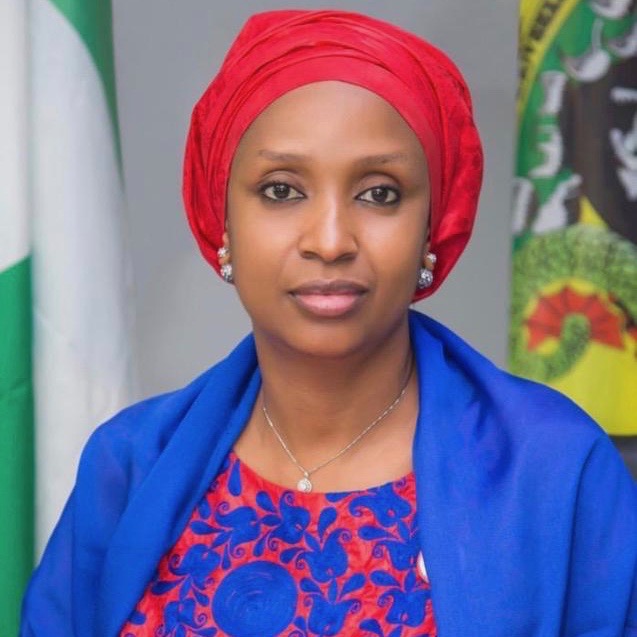
Speaking after the Federal Executive Council meeting where the reforms were approved, the Special Adviser to President Bola Tinubu on Policy Coordination, Hadiza Bala Usman, said the new orientation programme would be completely redesigned to ensure corps members leave camp with practical competencies that extend beyond military drills and civic education.
According to her, the six-week orientation programme will be divided into three carefully structured phases.
“The first two weeks will focus on civic responsibility, national values and leadership development,” she explained.
She disclosed that the second phase would shift attention to preparing graduates for life after school through career-focused training.
“The next two weeks will cover career mapping, financial literacy, business planning and access to finance,” she said, adding that government also intends to introduce “a structured Career Day programme to enable corps members to engage directly with the public.”
The final phase, Usman noted, would be devoted entirely to professional development.
“The final two weeks, which we consider a minimal period, will provide specialised training based on each corps member’s chosen career stream,” she said.
Unlike the existing structure, where all corps members undergo largely identical orientation activities regardless of their academic background, the reformed programme introduces a personalised approach to training.
Under the new framework, prospective corps members will select one of 11 specialised professional streams during registration. They include Agric Corps, Medical Corps, Education Corps, Tech and Digital Corps, Legal Corps, Public Service Corps, Infrastructure Corps, Green Corps, Enterprise Corps, Creative Economy Corps, and Paramilitary and Security Corps.
Once assigned to a stream, each participant will be recognised accordingly, for instance, as a member of the Medical Corps or Tech and Digital Corps and will undergo specialised training aligned with that professional pathway.
Usman said the objective is to ensure that national service contributes directly to graduates’ long-term careers rather than serving merely as a transitional obligation.
“The specialised streams are designed to equip graduates with practical skills tailored to their academic backgrounds, career interests and the country’s workforce needs,” she said.
Beyond skills development, the reforms also seek to address one of the most contentious issues surrounding the NYSC in recent years.

According to Usman, deployment procedures will now take prevailing security realities into account before corps members are posted across states.
She explained that the review introduces a more risk-sensitive deployment model intended to reduce exposure to insecurity while preserving the scheme’s national integration mandate.
The reforms further replace the traditional Passing Out Parade with a graduation ceremony and introduce a redesigned NYSC uniform aimed at reflecting professionalism and national pride.
Orientation camps across the federation will equally undergo grading and certification to standardise facilities and improve the overall camp experience.
Minister of Youth Development, Comrade Ayodele Olawande, described the changes as the first holistic review of the NYSC since its establishment in 1973, saying the reforms are intended to reposition the scheme as a strategic institution for youth development and national economic transformation.
Government officials believe the overhaul forms part of President Bola Tinubu’s broader human capital development agenda aimed at building a $1 trillion economy, with young graduates expected to become active contributors to national productivity rather than passive participants in mandatory service.
To provide legal backing for the reforms, the Federal Executive Council has directed the Attorney-General of the Federation, in collaboration with the Federal Ministry of Youth Development, to commence amendments to the NYSC Act and other relevant regulations before implementation begins.
Experts Weigh the Opportunities and Risks
While the announcement has generated excitement among many young Nigerians, policy experts argue that the success of the reforms will depend less on their ambition than on effective implementation.
Chief Executive Officer of Open Innovation Access, Sola Adekanye, while speaking on Channels Television, believes the reforms have the potential to transform the NYSC into one of Nigeria’s most strategic workforce development institutions.
“The reform aligns with the government’s ambition of building a $1 trillion economy because it repositions the National Youth Service Corps as a strategic platform for workforce development,” he said.
“Rather than being just a national service scheme, NYSC can now serve as critical infrastructure for developing the skilled workforce required to drive economic growth. This makes the $1 trillion economy agenda more achievable by providing a concrete implementation plan.”
However, Adekanye warned that good policies alone would not guarantee success.
“We believe this is the right direction for the country. However, some risks must be addressed. The first is execution risk. The reform still requires legislative approval and the necessary legal framework before it can be implemented.
“The second is funding risk. Without adequate funding, the reforms will remain good ideas on paper. Government must provide the resources needed to implement the programme effectively, including the certification framework that will give the specialised training credibility and recognition.”
He further argued that the reforms represent a philosophical shift in the purpose of national service itself.
“The reform reaffirms the true purpose of national service by focusing it on advancing Nigeria’s national agenda. Under the previous arrangement, the value of service was often questionable because it centred largely on geographical or rural deployment rather than on national development priorities.”
“With this reform, the emphasis shifts to identifying what the nation needs and equipping young people with the skills to meet those needs. The six-week orientation will focus on specialised training in participants’ chosen fields, ensuring they are prepared to contribute meaningfully.”
Drawing international comparisons, Adekanye noted that countries such as Germany have successfully linked youth development with workforce demands through vocational education, while Israel has demonstrated how civilian-led national service can strengthen innovation, cybersecurity and national resilience.
“This reform seeks to apply a similar principle by making national service more purposeful and aligned with Nigeria’s development goals,” he added.
Yet, despite the optimism expressed by policymakers and policy analysts, perhaps the most important voices belong to those who will ultimately experience the reforms, the thousands of Nigerian graduates preparing to wear the khaki uniform.
For many prospective corps members, the announcement has sparked cautious optimism, with hopes that the service year may finally become more relevant to their professional aspirations than ever before.
For Tunde Adebayo, a prospective corps member and Information Technology graduate from the University of Ibadan, the reforms represent an opportunity to make the service year more relevant to graduates’ career paths.
“It sounds encouraging because many graduates have always wanted their service year to contribute directly to their careers,” he said.
“If the Tech and Digital Corps is properly implemented, people with technology backgrounds can gain practical experience instead of being posted to assignments that have little connection with their profession. My concern is whether the selection process for the different streams will be transparent and fair.”
Chioma Nnamdi, another prospective corps member awaiting mobilisation in Enugu, believes the civilian leadership model could reshape the philosophy of the scheme.
“The emphasis should now be on preparing young people for work and entrepreneurship,” she said.
“If the government follows through with the promised business planning, financial literacy and career development programmes, graduates will leave camp with skills that can actually improve their chances in the labour market.”
Not everyone, however, is convinced that the reforms alone can address the challenges facing Nigerian graduates.
For Farouq Umar, who is awaiting mobilisation in Lagos, the success of the initiative will depend largely on what happens after the orientation camp.
“Skills acquisition is important, but graduates also need opportunities after service,” he noted.
“The reforms should not end with training alone. There should be stronger partnerships with employers, access to startup support and opportunities that help corps members translate those skills into jobs or businesses.”
Similarly, Blessing Ewache, a prospective corps member from Benue State, welcomed the introduction of risk-sensitive deployment but said more clarity was needed.
“Security remains a major concern for many of us. If deployment will now consider both our career paths and security realities, then the government should clearly explain how those decisions will be made so that prospective corps members understand the process.”
Among those already serving, the proposed changes have sparked reflection on what future batches could gain.
A serving corps member in Lagos State, Ibrahim Mohammed, believes the reforms address some of the longstanding criticisms of the orientation camp.
“Most of what we did during camp revolved around drills and parade rehearsals,” he said.
“If future corps members spend more time learning practical skills, networking with employers and preparing for life after service, then the programme will become much more valuable.”
Another serving corps member, Funmi Adeyemi, also serving in Lagos State, said successful implementation would require significant investment in infrastructure.
“The vision is commendable, but the government must improve the facilities in orientation camps; many camps still struggle with overcrowded hostels and inadequate infrastructure. Introducing new programmes without addressing those challenges could make implementation difficult,’’ she said.
To better understand how the transition to civilian leadership and the implementation of the reforms would be managed, Bizwatch Nigeria sought clarification from the National Youth Service Corps.
Efforts to obtain reaction from the NYSC’s Director- General, Brigadier-General Olakunle Nafiu, were unsuccessful, as of the time of filing this report.
The Federal Government has directed the Attorney-General of the Federation and the Federal Ministry of Youth Development to commence amendments to the NYSC Act and other relevant regulations to provide the legal framework for the reforms.









 has remained one of Nigeria's most enduring national institutions,...)