







KEY POINTS
- Bayelsa State has signed a partnership agreement with US-based Fulcrum LNG Incorporated to develop a gas gathering and processing facility.
- The project will begin with capturing flared gas for power generation and industrial use.
- Fulcrum LNG will conduct a field study to assess flare sites and determine the required technology and investment.
- The company says the investment size will be determined after the feasibility study.
MAIN STORY
The Bayelsa State Government has signed a partnership agreement with US-based energy company Fulcrum LNG Incorporated to develop a gas gathering and processing facility aimed at reducing gas flaring and supporting industrial growth.
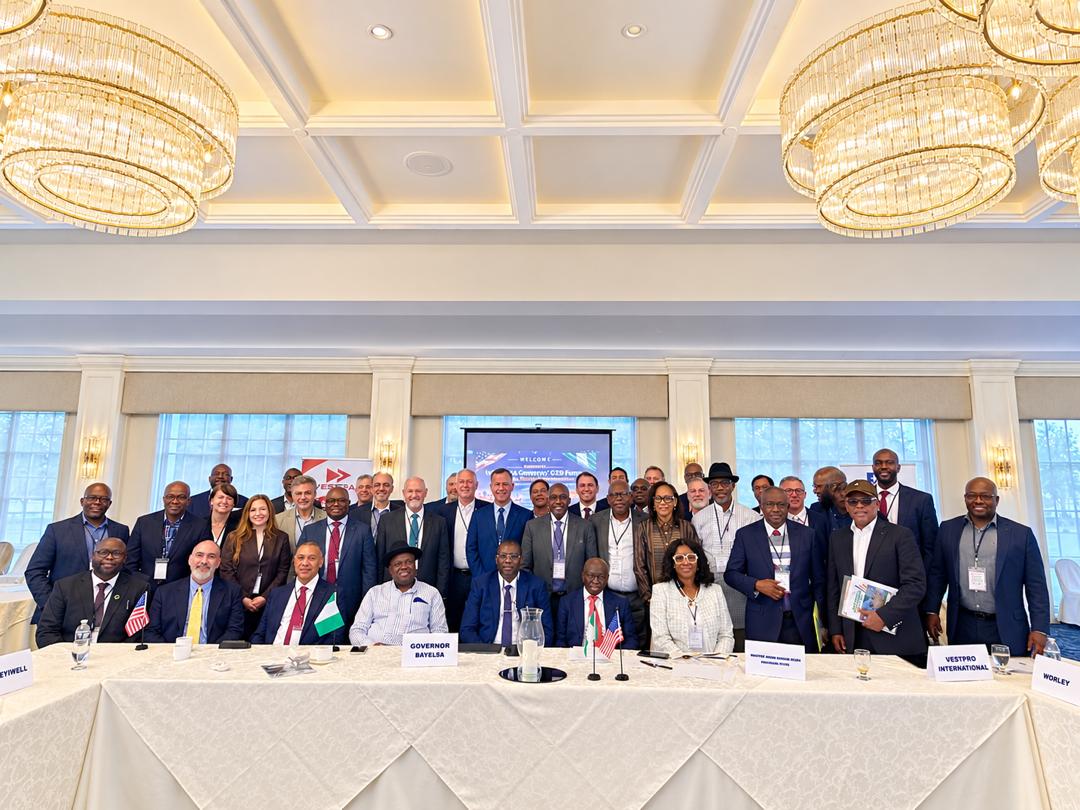
The agreement was reached at the end of the inaugural US-Nigeria Governors Government-to-Business (G2B) Forum on Energy, Mining and Infrastructure, held at the Sweet Water Country Club in Sugar Land, Texas.
Daniel Alabrah, Chief Press Secretary to Governor Douye Diri, disclosed this in a statement on Thursday.
The project will be implemented in phases, beginning with the gathering and commercialisation of gas currently being flared in the state. The gas is expected to supply Bayelsa’s Independent Power Plant and emerging industrial clusters.
A broader gas monetisation and development programme will follow, targeting the state’s gas reserves.
Fulcrum LNG Chief Executive Officer, Jesus Bronchalo, said the company would begin a comprehensive field study of Bayelsa’s flare sites to identify suitable technologies and the infrastructure required to gather the gas.
He said the feasibility assessment would establish why gas was being flared at different locations and whether the problem resulted from inadequate transportation infrastructure or insufficient capacity to reinject the gas.
Bronchalo explained that some flare sites could be too remote or commercially unviable to justify the cost of gathering the gas.
He said Fulcrum LNG would determine the investment requirement after understanding the conditions on the ground.
The company is currently executing a similar project in Guyana valued at about $3 billion. However, Bronchalo said the scale of the proposed Bayelsa investment would depend on the outcome of the feasibility study and could exceed the size of its South American operations.
He estimated that the period from final investment decision to commissioning could take about 12 months.
Diri described the agreement as a mutually beneficial partnership and said his administration was committed to moving the project forward.
He said the initiative was important to reducing environmental pollution and supporting the state’s industrialisation plans.
The governor also said Bayelsa holds an estimated 15 to 20 per cent of Nigeria’s proven gas reserves and supplies about 60 per cent of the gas used by Nigeria LNG Limited in Bonny, Rivers State.
THE ISSUES
Gas flaring occurs when oil and gas producers burn natural gas released during petroleum operations instead of capturing it for use. This wastes a resource that could otherwise supply power plants, industries and other users, while contributing to environmental pollution.
Bayelsa’s proposed partnership seeks to turn some of that wasted gas into a commercial resource. However, the first challenge is not simply building a processing facility. The gas must first be collected from flare sites and transported to where it can be processed and used.
That is why Fulcrum LNG’s field study is central to the project. The company must establish the location of the flare sites, the volume of gas available and the cost of connecting them to gathering infrastructure.
The commercial viability of each site will matter. As Bronchalo acknowledged, some locations may be too remote or expensive to develop. The feasibility study will therefore determine how much gas can realistically be captured and whether the investment can generate sufficient returns.
For Bayelsa, the proposed use of the gas to power its Independent Power Plant and emerging industrial clusters could support electricity supply and industrial activity. But these outcomes will depend on the quantity of gas gathered, the infrastructure delivered and the project’s eventual operating arrangements.
The proposed investment also remains at an early stage. The $3 billion Guyana project provides an indication of Fulcrum LNG’s experience, but it is not the confirmed value of the Bayelsa deal. The state will have to wait for the feasibility assessment to establish the actual investment requirement.
WHAT’S BEING SAID
“Our interest is how this project will reduce the effects of environmental pollution on our people and boost our industrialisation drive.” – Douye Diri, Governor of Bayelsa State.
“Some flares may be so remote or uneconomic that gathering may not be viable.” – Jesus Bronchalo, Chief Executive Officer, Fulcrum LNG Incorporated.
“The way we do it, we invest 100 per cent. If government wants equity, then it brings capital for that portion.” – Jesus Bronchalo, Chief Executive Officer, Fulcrum LNG Incorporated.
WHAT’S NEXT
Fulcrum LNG is expected to begin its field assessment of Bayelsa’s flare sites to determine the appropriate gathering technology, infrastructure requirements and investment size.
The findings will inform the project’s development plan and the decision on which sites can be commercially developed.
The company estimates that commissioning could take about 12 months from the final investment decision. However, that timeline depends on the outcome of the assessment and subsequent project approvals and execution.
BOTTOM LINE
The agreement offers Bayelsa an opportunity to capture gas that would otherwise be flared and redirect it towards electricity generation and industrial use.
But the partnership is not yet a completed investment. The feasibility study must establish how much gas can be recovered, what infrastructure is needed and whether the project is commercially viable.
For now, the key test is whether the proposed partnership can move from an agreement to a funded development plan and, ultimately, an operating gas facility.