









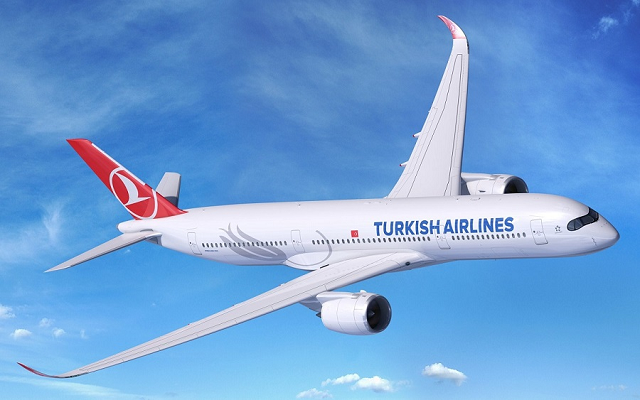
Turkish Airlines has officially launched a massive ₺100 billion (approximately $2.3 billion) investment initiative aimed at radically expanding its operational and digital infrastructure. On January 8, 2026, the national flag carrier held groundbreaking ceremonies for eight major facilities at Istanbul Airport, marking a critical step in its “2033 Vision” to become one of the world’s top five airlines.
Minister of Transport and Infrastructure, Abdulkadir Uraloğlu, stated that these projects would not only secure the airline’s global leadership but also generate 26,000 new jobs within the 2026 fiscal year, eventually rising to 36,000 upon completion.
At the heart of this expansion is the SmartIST Phase 2 project, which will more than double the airline’s cargo capacity from 2.2 million to 4.5 million tons annually by 2028. This will be complemented by a new Main Catering Facility, capable of producing over 500,000 meals daily, and an E-Commerce Complex focused on door-to-door logistics through the airline’s “Widect” platform.
To support its growing fleet, Turkish Airlines is also building a specialized Engine Maintenance Center in collaboration with Rolls-Royce, designed to service next-generation Trent XWB and Trent 7000 engines, which is projected to generate $1.5 billion in annual revenue.
The initiative also prioritizes digital resilience and human capital. The new Istanbul Data Center will serve as the digital backbone for operational continuity, while the first phase of a new Flight Training Center is scheduled to come online between 2026 and 2027. Additionally, new aircraft maintenance hangars slated for completion this year will increase the airline’s heavy maintenance capacity by 20%, allowing for the simultaneous service of 12 aircraft.
Turkish Airlines Chairman Ahmet Bolat noted that while the company’s current contribution to the Turkish economy stands at $65 billion, these strategic investments are expected to drive that figure to $144 billion by 2033.










 investment initiative aimed at radically expanding its operational and digital infrastructure. On January 8, 2026, the national flag carrier held groundbreaking ceremonies for eight major facilities at Istanbul Airport, marking a critical step in its "2033 Vision" to become one of the world's top five airlines.)