




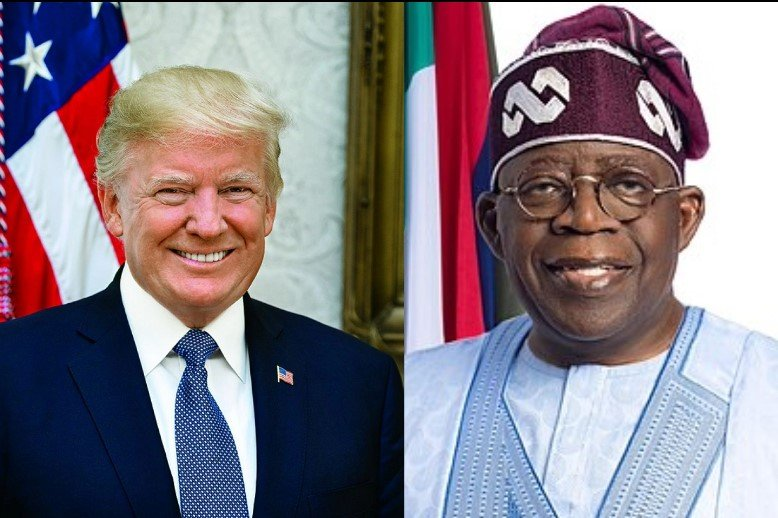
Debate intensified in Washington on Thursday as the United States House Foreign Affairs Subcommittee on Africa held a public hearing on President Donald Trump’s decision to redesignate Nigeria as a Country of Particular Concern (CPC) over alleged widespread persecution of Christians.
The hearing, chaired by Congressman Chris Smith, exposed deep divisions among lawmakers, religious leaders, and senior officials of the US Department of State, who offered sharply contrasting views on the scale and drivers of violence in Nigeria and the appropriate US response.
President Trump’s redesignation, announced earlier in the week, was accompanied by a controversial threat that the US military would intervene in Nigeria “guns-a-blazing” to eliminate Islamic extremists accused of atrocities against Christian communities.
US Officials Questioned Over Rising Violence
Appearing before the panel were Jonathan Pratt, Senior Bureau Official for African Affairs, and Jacob McGee, Deputy Assistant Secretary in the Bureau of Democracy, Human Rights, and Labour. Both faced intense questioning from lawmakers seeking clarity on the administration’s policy direction.
Pratt expressed concern over the spread of extremist violence beyond Nigeria’s North-East, citing Boko Haram, ISIS-West Africa, Ansaru and other armed groups as major drivers of insecurity. He said the Middle Belt had become a major flashpoint, with Christian communities frequently targeted.
“Terrorists, separatists, bandits and criminal militias are active across the country,” he said. “More must be done to protect vulnerable communities and bring perpetrators to justice.”
Pratt disclosed that a comprehensive plan was being developed to press the Nigerian government to prioritise Christian protection and improve religious freedom. The plan, he said, would involve coordinated action from the State Department, Treasury and potentially the Department of War.
Lawmakers Split on Motive and Responsibility
Rep. Chris Smith cited figures claiming that 89 per cent of Christians martyred globally were killed in Nigeria, accusing militant Fulani herders and jihadist groups of operating with “total impunity”. He blamed the previous US administration for removing Nigeria from the CPC list against expert advice.
Michigan lawmaker John James described Nigeria as “the deadliest place on earth to be a Christian”, accusing the Nigerian government of selective enforcement of the law and referencing the continued detention of separatist leader Nnamdi Kanu despite court rulings.
He pressed US officials on Nigeria’s response to the redesignation. Pratt confirmed that Abuja had “taken the designation very seriously”, noting that a senior Nigerian delegation was already in Washington for high-level meetings.
Congressman Bill Huizenga criticised what he called the Nigerian government’s inadequate response to Islamist attacks, accusing both US lawmakers and international media of downplaying religious-related killings. He questioned the effectiveness of US humanitarian support, especially in Benue State, where he said 1.4 million people were displaced.
Another representative, Johnny Olszewski, however urged caution against framing the crisis solely as religious persecution. He acknowledged the scale of Christian suffering but argued that Nigeria’s principal challenge was “a capacity problem, not institutional intent”. He stressed that both Muslims and Christians were victims of extremist violence.
Concerns Over US Rhetoric and Legality of Military Action
Representative Pramila Jayapal challenged the “oversimplification” of the crisis as purely religious, warning that such framing distorted the underlying causes and risked escalating tensions. She criticised President Trump’s threat of military intervention, asking US officials to clarify the legal basis for any potential strikes in Nigeria.
Jayapal warned that unilateral military action would violate international law and jeopardise critical US-funded health programmes in Nigeria.
Her concerns were echoed by Congresswoman Sara Jacobs, who described Trump’s rhetoric as “reckless”, saying it risked inflaming Christian-Muslim relations and worsening civilian harm. “Problems created by men with guns cannot be solved by turning to men with guns,” she added.
Bishop Anagbe Warns of ‘Near-Extinction’ of Christianity in Parts of Nigeria
In one of the most emotional submissions, Bishop Wilfred Anagbe of Makurdi Catholic Diocese warned that Christianity faced the threat of extinction in parts of Nigeria’s North and Middle Belt due to persistent attacks, displacement and alleged government inaction.
He described a series of deadly attacks, including the killing of several relatives in his hometown and the attempted assassination of a priest, Father Solomon Atongo. He referenced the June massacre in Yelwata, Benue State, where he said 278 people were killed.
“The government’s silence has deepened feelings of abandonment,” he said, urging targeted sanctions, stronger humanitarian assistance and the passage of the proposed Nigerian Religious Freedom and Accountability Act.
He thanked President Trump for the CPC designation but emphasised that “words must be followed by concrete action”.
A Divided Congress, An Unsettled Future
Thursday’s hearing highlighted an increasingly polarised US Congress, with some lawmakers insisting that Nigerian Christians face genocidal-level persecution, while others argued that the crisis is multifaceted, rooted in governance failures, corruption, weak security institutions and resource-based conflict.
What remained clear, however, is that Washington is recalibrating its engagement with Abuja. As Pratt noted, “Nigeria is a key partner, but the government must deliver results on the ground.”
The subcommittee said it will continue reviewing policy options, including sanctions, enhanced security cooperation, development support and diplomatic engagement.