









KEY POINTS
- The AfCFTA Secretariat has officially selected Nigeria as the pilot country for the Simplified Trade Regime (STR) in West Africa.
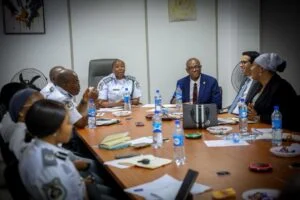
- A high-level delegation led by Pedro Estevao met with the Nigeria Customs Service (NCS) in Abuja to align the STR with national customs protocols.
- The regime targets small-scale cross-border traders, women, and MSMEs by reducing paperwork and accelerating clearance for low-value goods.
- Nigeria’s Customs CG, Bashir Adeniyi, confirmed that a new Standard Operating Procedure (SOP) is being finalized to digitize declarations and implement risk-based controls.
MAIN STORY
Nigeria has been positioned at the forefront of regional trade integration following its selection by the AfCFTA Secretariat to pilot the Simplified Trade Regime (STR). During a strategic engagement at the Nigeria Customs Service (NCS) headquarters, AfCFTA lead Pedro Estevao noted that Nigeria’s status as the region’s largest market makes it the logical engine for driving inclusive growth.
The STR is specifically designed to transition informal cross-border trade into the formal economy by stripping away the bureaucratic hurdles that typically stall small-scale merchants.
The NCS, represented by Deputy Comptroller-General Caroline Niagwan, presented a draft Standard Operating Procedure (SOP) during the session. This roadmap introduces digital declaration systems for passenger baggage and low-value e-commerce transactions.
By adopting “de minimis” thresholds—which allow low-value goods to pass with minimal or no duties—the NCS aims to make regional trade more transparent and accessible. This pilot phase marks a significant shift in customs operations, moving from traditional heavy-duty enforcement to a trade facilitation model that supports the continent’s “Renewed Hope” for economic unity.
THE ISSUE
The primary challenge addressed is the “Informality Trap.” Millions of dollars in trade currently move across West African borders through informal channels because the “Formal Documentation Gap” is too costly for small traders. While the STR provides a technical solution, the “Operational Alignment” between national laws and continental frameworks remains a hurdle.
Both parties admit that refining these strategies is necessary to prevent the simplified system from being exploited, while ensuring that women and small business owners aren’t squeezed out by the transition to digital-only platforms.
WHAT’S BEING SAID
- “Nigeria is strategically positioned to drive inclusive trade and regional economic growth,” stated Pedro Estevao, AfCFTA Secretariat Lead.
- “The engagement aims to make trade easier, more transparent and inclusive for small-scale traders,” noted DCG Caroline Niagwan, representing the Customs C-G.
- “Nigeria Customs is committed to facilitating trade and supporting MSMEs through simplified and transparent processes,” affirmed C-G Bashir Adeniyi via a formal statement.
- “The STR framework is designed to ease cross-border trade by reducing documentation and facilitating faster clearance,” added NCS Spokesperson Abdullahi Maiwada.
WHAT’S NEXT
- The NCS will move to refine its Standard Operating Procedure to ensure 100% alignment with the broader AfCFTA framework.
- Sustained meetings between AfCFTA and NCS technical teams will continue throughout 2026 to address live operational challenges.
- : A pilot digital platform for “low-value e-commerce” declarations is expected to be tested at select land borders in the coming months.
- The government plans to launch awareness campaigns targeting MSMEs and women-led trade groups to explain how to utilize the new STR benefits.
BOTTOM LINE
The Bottom Line is that Nigeria is becoming the laboratory for Africa’s “Border-Free” future. By piloting the STR, the country is attempting to prove that simplifying customs is not a risk to national security, but an invitation to economic prosperity. If successful, the Nigeria pilot will serve as the blueprint for the rest of West Africa, turning every small-scale trader into a legitimate player in the global market.




. During a strategic engagement at the Nigeria Customs Service (NCS) headquarters, AfCFTA lead Pedro Estevao noted that Nigeria’s status as the region’s largest market makes it the logical engine for driving inclusive growth.)