







KEY POINTS
- The Federal Government is targeting 20,000MW of electricity generation within three to five years.
- The 3,000MW Mambila Hydropower Project is a major part of the expansion plan.
- Government is also exploring small hydropower, grid rehabilitation and greater private sector investment.
MAIN STORY
The Federal Government says it is targeting 20,000 megawatts of electricity generation within the next three to five years as it pursues more stable power supply across Nigeria.
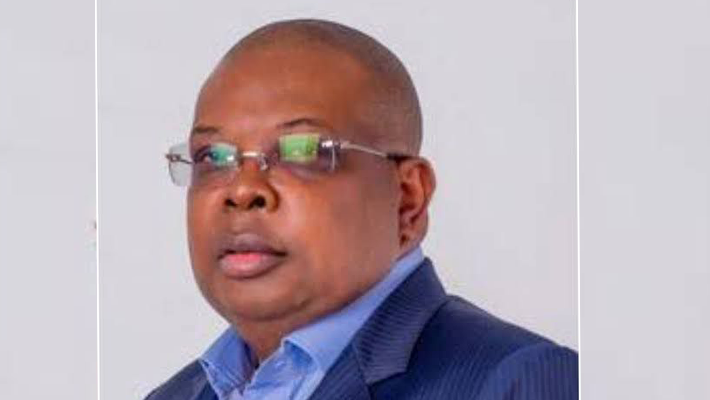
The Minister of Power, Mr Joseph Tegbe, disclosed this during an interview on TVC on Tuesday, according to a statement by the Ministry of Power.
Tegbe said the government was moving beyond the long-standing 10,000MW generation target, with several projects expected to increase the country’s generation capacity to about 20,000MW.
He said the plan involved expanding generation, strengthening transmission infrastructure, developing renewable energy and attracting private investment.
The minister identified the 3,000MW Mambila Hydropower Project as a major component of the expansion programme.
According to him, President Bola Tinubu has directed him to engage northern states to secure their participation in the project.
He added that Chinese companies had expressed interest in supporting its development, with potential financing from China Exim Bank in collaboration with Sinohydro.
Tegbe also disclosed that the government was exploring smaller hydropower projects across the country, with a policy on small hydropower nearing completion.
He said 21 dams had been identified along the proposed Sokoto-Badagry Superhighway for possible hydropower development. The President had approved the initiative, while discussions with prospective investors were ongoing.
The minister further said Aliko Dangote had expressed commitment to supporting Nigeria’s 20,000MW ambition.
He identified the Electricity Act 2023 as another driver of the expansion plan, noting that it allows state governments and private investors to develop electricity markets and pursue solutions such as mini-grids and gas-fired power plants.
Tegbe said decentralising the electricity sector would complement the national grid, improve access and create more opportunities for investment.
He also called for greater private sector participation in transmission and distribution, arguing that the sector needed additional capital and technical expertise to modernise its infrastructure.
THE ISSUES
Nigeria’s electricity challenge is not simply about generating more power. Electricity must also be transmitted through the national grid and distributed to homes and businesses before it can improve supply.
This distinction matters because increasing generation capacity to 20,000MW will not automatically mean that Nigerians receive 20,000MW. If transmission infrastructure cannot carry the additional electricity, or distribution companies cannot deliver it reliably, the benefits of new power plants will remain limited.
The minister’s emphasis on grid rehabilitation and transmission projects therefore addresses an important part of the problem. Generation expansion must happen alongside improvements to the infrastructure that carries electricity across the country.
The Mambila project could contribute significantly to the target, with its proposed 3,000MW capacity representing a substantial addition. However, the minister’s reference to Chinese interest and potential financing does not mean that construction funding has been secured or that the project is ready to deliver electricity.
The Electricity Act 2023 also creates room for states to develop their own electricity markets. This could allow states to pursue power solutions suited to local demand rather than depend entirely on the national grid. But decentralisation will require investment, functioning infrastructure and effective regulation.
For households and businesses, the key measure of success will not be the government’s generation target alone. It will be whether electricity becomes more reliable, reduces dependence on private generators and lowers the cost of running businesses.
WHAT’S BEING SAID
“Give me a time horizon of three to five years, and Nigeria will enjoy stable electricity.” – Joseph Tegbe, Minister of Power.
WHAT’S NEXT
The government says it will continue engaging private investors and development partners to advance generation and transmission projects.
It is also expected to complete its small hydropower policy and continue discussions on the Mambila project and possible hydropower development at the 21 identified dams.
Tegbe said the government was prioritising grid stability and better use of existing generation capacity while new projects were developed.
BOTTOM LINE
The Federal Government’s 20,000MW target sets out an ambitious expansion of Nigeria’s electricity supply. But meeting the target will require more than new power plants. Transmission and distribution infrastructure must also be strong enough to deliver the additional electricity to consumers.