






KEY POINTS
- China and Nigeria have reaffirmed their commitment to strengthening bilateral relations through sports, cultural exchange and people-to-people engagement.
- The eighth annual table tennis tournament was organised by the China General Chamber of Commerce in Nigeria and NUJ FCT Council.
- Chinese Embassy Cultural Counsellor Yang Jianxing described the competition as a platform for friendship and mutual understanding.
- The tournament featured men’s and women’s singles, men’s doubles and mixed doubles.
MAIN STORY
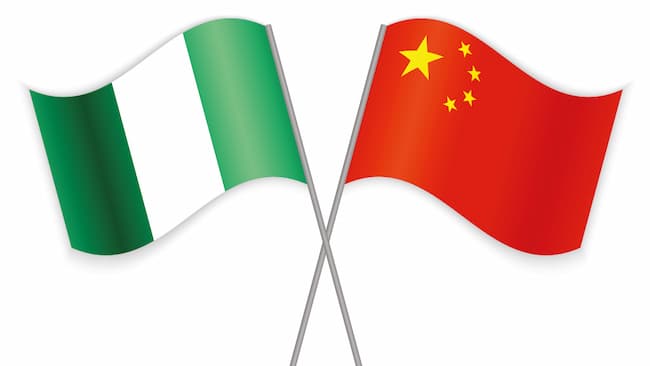
China and Nigeria have renewed their commitment to strengthening bilateral relations through sports and cultural exchange, using an annual table tennis tournament to bring members of both communities together.
The Chinese Embassy’s Cultural Counsellor in Nigeria, Mr Yang Jianxing, stated this at the opening ceremony of the eighth edition of the competition in Abuja.
The tournament was jointly organised by the China General Chamber of Commerce in Nigeria and the Nigerian Union of Journalists (NUJ), Federal Capital Territory Council.
Yang said the competition had grown beyond sporting activities to become a platform for building friendship, mutual understanding and cooperation between Nigerians and Chinese residents.
He noted that table tennis was popular in both countries and provided an opportunity for people from different cultural and language backgrounds to interact.
THE ISSUES
The counsellor said sports exchanges could help strengthen relationships by allowing participants to build trust and understanding outside formal diplomatic and business engagements.
He commended the NUJ FCT Council for its continued partnership with the Chinese Embassy and China Cultural Centre, while acknowledging the role of Nigerian media organisations in promoting understanding of relations between the two countries.
Yang also recognised the contributions of the China General Chamber of Commerce and Chinese businesses to trade, investment, industrial development and cultural exchanges in Nigeria.
He said the tournament was particularly significant because it coincided with the China-Africa Year of People-to-People Exchanges and the 55th anniversary of diplomatic relations between Nigeria and China.
He urged participants to use the competition to strengthen connections among the sporting, media and business communities.
WHAT’S BEING SAID
“Table tennis is a popular sport among the people of both China and Nigeria. More than that, it serves as a bridge of friendship, bringing our two peoples closer together,” Yang said.
Mrs Grace Ike, Chairperson of the NUJ FCT Council, described the competition as an opportunity for journalists to build relationships beyond newsroom assignments and professional deadlines.
“For eight editions, the Centre has continued to demonstrate genuine friendship and commitment to cultural exchange and people-to-people engagement,” she said.
Ike added that the value of the tournament extended beyond winning prizes, as it encouraged unity and professional solidarity among participants.
“We played to win. But we also remember that at the end of every match, we must remain one, united, colleagues and members of one professional family,” she said.
WHAT’S NEXT
The competition featured men’s and women’s singles, men’s doubles and mixed doubles.
In the men’s singles, Ignatius Nkwoh emerged winner, followed by Xu Haitao in second place and Eke Nwokeocha in third.
Xu Haitao and Shi Changqiang won the men’s doubles, while Nie Xiaohua took the women’s singles title. Zhang Yaping and Wu Tianxia finished second and third respectively.
Shi Changqiang and Zhang Yaping won the mixed doubles, with Xu Haitao and Wu Tianxia finishing second. Musa Odion and Chioma Love came third.
Ike congratulated the winners and other participants, expressing the council’s commitment to sustaining the partnership in future editions.
BOTTOM LINE
The annual table tennis tournament provides a platform for Nigerians and members of the Chinese community to build relationships through sport. Its continuation reflects efforts to complement diplomatic and commercial ties with direct cultural interaction between people of both countries.