






Innocent C. Ike, Group Managing Director/CEO of Access Holdings Plc, has told African leaders that sustaining global growth depends less on scale than on the institutions built around it. Growth alone, he argued, does not make a global chief executive.
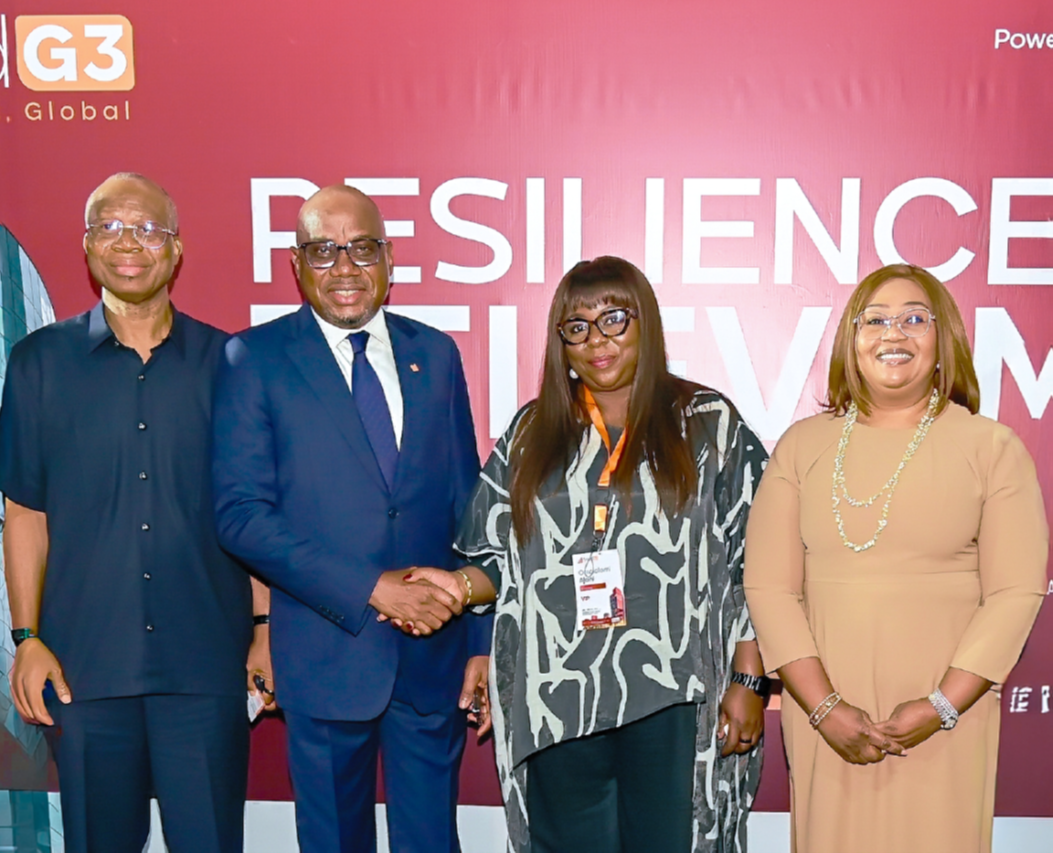
Ike delivered the keynote, “The Mindset of a Global CEO,” at the Stanford Seed G3 (Growth, Grit and Global) 2026 conference, held Oct. 14-15 at the Landmark Event Centre, Lagos. He said a global CEO should be judged by the quality of decisions made under complexity, not by the number of countries the firm operates in.
Scale is not the value
Ike acknowledged that scale brings real advantages: new markets, operating leverage, a wider pool of capital and greater influence. But he cautioned that it does not guarantee better economics. He urged leaders to treat expansion as a deliberate choice, with every growth plan showing what the institution will do better for its customers, investors, talent, markets and other stakeholders.
He described the shift from founder-led growth to institution-led value as the defining transition for any enterprise. A business becomes globally scalable, he said, when its success no longer depends on one individual’s continuous presence.
Ike set out six disciplines of a global CEO: thinking beyond geography, allocating capital objectively, building institutions rather than empires, competing against global standards, balancing opportunity with risk, and optimising for sustainable value. He said every growth ambition eventually becomes a decision on how to allocate financial capital, regulatory capital, people, technology, reputation and management attention. Strategic conviction, he added, must be tested against risk-adjusted returns, resilience and regulatory approval.
On technology, he called for responsible use of artificial intelligence and strong cyber resilience in every market an institution operates in.
Priorities for African firms
For African businesses with global ambitions, Ike set out nine leadership priorities. They include putting governance in place before complexity sets in, building credibility with regulators, developing leadership depth, and standardising what must travel across markets while adapting what must stay local.
He closed by asking leaders to test every growth plan against five questions: what becomes measurably better for the customer, what becomes stronger and more resilient in the institution, what value becomes more durable for society, what becomes more credible and responsible, and how scale creates sustainable returns for shareholders.
The conference
The event was convened by Seed Transformation Network, Nigeria, and drew entrepreneurs, investors, corporate leaders and policymakers. Access Holdings was a partner. Other speakers and attendees included Communications, Innovation and Digital Economy Minister Bosun Tijani; Aisha Rimi, CEO of the Nigerian Investment Promotion Commission; Ayodele Olojede, COO of the Development Bank of Nigeria; and Iyin Aboyeji, founding partner at Future Africa.
Seed Transformation Network, Nigeria, is part of the Stanford Seed Transformation Program, set up by Stanford’s Graduate School of Business to equip leaders of established SMEs in emerging markets to scale sustainably. The programme’s network spans more than 1,500 business leaders across Africa and Southeast Asia.
What’s being said
On the gap between growth and institutions, Ike said: “Many executives can grow a business. Far fewer can build an organisation that can operate across multiple jurisdictions, attract capital at scale, develop leaders across generations, and earn the trust of customers, regulators, and investors.” He added: “Scale is the outcome. Institution building is the capability.”
On what scale is for, he said: “Scale is a platform for value creation. It is not the value itself.” On founder dependence, he said: “The enterprise becomes globally scalable when success no longer depends on the continuous presence of one individual.”
On technology, he said: “Technology accelerates scale. Artificial intelligence amplifies judgement. Brand converts performance into trust.”
Closing, he said: “African businesses do not need smaller ambitions. They need stronger institutions around those ambitions. Scale creates opportunity. Institutional discipline makes value endure.”
Bottom line
Ike’s message to African executives is that expansion is a means, not a goal. For Access Holdings, which has built a multi-country footprint, the test he set out is one the market is likely to apply to the group itself: whether scale is producing stronger governance, regulatory credibility and shareholder returns.