




By Emmanuella Opara | October 25th 2026
KEY POINTS
- Works Minister David Umahi says the 750-kilometre Lagos-Calabar Coastal Highway is expected to be completed within three years.
- Umahi defended the direct procurement process used to award the project, saying it was lawful despite the absence of public bidding.
- The minister said about 17,000 kilometres of federal roads were under construction or reconstruction, excluding major legacy projects.
- He cited worsening congestion along the Lagos-Lekki corridor as one reason for the coastal highway project.
- Umahi said he would personally fund plans to engage 4,000 social media influencers to promote the administration’s projects.
MAIN STORY
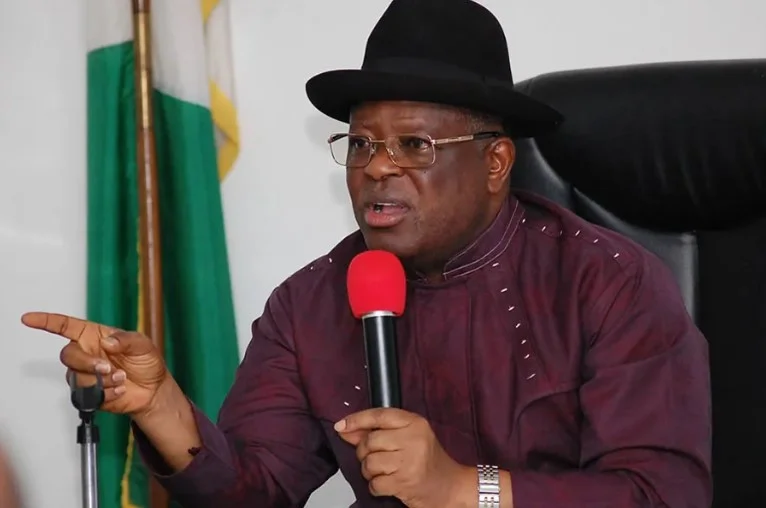
The Minister of Works, David Umahi, has projected that the 750-kilometre Lagos-Calabar Coastal Highway will be completed within three years, potentially placing its delivery around 2029.
Umahi gave the timeline during an interview on Arise Television on Friday, where he defended the Federal Government’s decision to prioritise major infrastructure projects despite concerns about the deteriorating condition of existing federal roads across the country.
Asked when the entire coastal highway would be completed, the minister said the government was working towards delivering the project within three years.
“We have four years plus by God’s special grace. So we are looking at three years,” Umahi said.
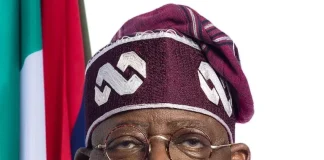
He linked the projection to his confidence in President Bola Tinubu’s administration, although he did not provide a detailed construction schedule or completion dates for individual sections of the highway.
“I am a child of God. Faith is the evidence of things not seen. Okay, so I’m giving you the faith I have and the president that I know, that I believe that within the next three years plus, that the president will be able to complete that project,” he added.
The minister also defended the procurement process used to award the highway contract, acknowledging that the project was not subjected to public bidding.
“There was no public bidding but there was direct procurement. It’s within the law. That’s all I’ve just said,” he stated.
The Lagos-Calabar Coastal Highway is one of the Federal Government’s flagship infrastructure projects, designed to connect coastal communities and improve transportation along Nigeria’s southern corridor.
Its implementation has attracted debate over procurement procedures, project costs, funding priorities and the allocation of public resources, particularly as motorists continue to contend with poor conditions on several existing federal roads.
Defending the government’s broader road construction programme, Umahi said the Ministry of Works was handling approximately 17,000 kilometres of road construction and reconstruction, excluding major legacy projects.
“Out of about 35,000 kilometres of our federal roads, the one that is before me in the Ministry of Works, if you remove the few legacy projects we are constructing, we are presently constructing 17,000 kilometres of roads,” he said.
He added that the ministry had completed about 1,700 kilometres of roads since the administration took office, alongside more than six kilometres of flyovers, bridges and underpasses.
Umahi also pointed to growing traffic congestion along the Lagos corridor, warning that urgent intervention was needed to prevent worsening gridlock around Lekki.
“In the next five years, unless something is done in the corridor VI to Lekki, it becomes, you know, a car park because of the conjecture. And that’s why we are building the seven taxi route,” he said.
The minister further addressed criticism surrounding plans to engage 4,000 social media influencers to promote the administration’s projects. He said the initiative would be funded personally rather than through public resources.
“I am funding 4,000 influencers to advertise what the president is doing and it’s a catalyst for campaigning for him all over Nigeria,” Umahi said.
The projected completion timeline places the coastal highway’s expected delivery around 2029, but the minister’s remarks did not include a detailed schedule to confirm when the different sections would be completed.
THE ISSUES
The proposed highway has become part of the debate over how the Federal Government should balance major infrastructure investments with the maintenance and rehabilitation of existing roads.
While Umahi argues that the coastal highway and other large projects are necessary to improve transportation and ease congestion, concerns remain over procurement, project costs and the distribution of public spending.
The minister’s three-year projection also leaves questions about the construction timetable for the full 750-kilometre route, as no detailed completion schedule was provided during the interview.
WHAT’S BEING SAID
“We have four years plus by God’s special grace. So we are looking at three years,” David Umahi, Minister of Works, said.
“There was no public bidding but there was direct procurement. It’s within the law. That’s all I’ve just said,” David Umahi, Minister of Works, said.
WHAT’S NEXT
The next key milestone will be progress on the highway’s construction sections and the release of more detailed timelines for their completion. The Federal Government will also face continued scrutiny over the project’s procurement process, costs and relationship with other federal road priorities.
BOTTOM LINE
Umahi says the Lagos-Calabar Coastal Highway could be completed within three years, potentially by 2029. However, the projection remains dependent on the construction process, and the minister has not provided a detailed timetable for delivery of the entire route.