








KEY POINTS
- The Trade Union Congress of Nigeria has called for the immediate conclusion and signing of CONUA’s proposed agreement with the Federal Government.
- CONUA says outstanding salary and benefit payments are threatening industrial harmony in public universities.
- The union clarified that it has not declared or embarked on a strike but may consider lawful industrial action if negotiations fail.
- Outstanding issues include withheld salaries, promotion arrears and unpaid wage awards.
- CONUA also wants fair representation in education funding decisions and increased investment in university facilities.
MAIN STORY
The Trade Union Congress of Nigeria (TUC) has thrown its support behind the Congress of University Academics (CONUA), calling on the Federal Government to conclude and sign a proposed agreement with the university lecturers’ union without further delay.
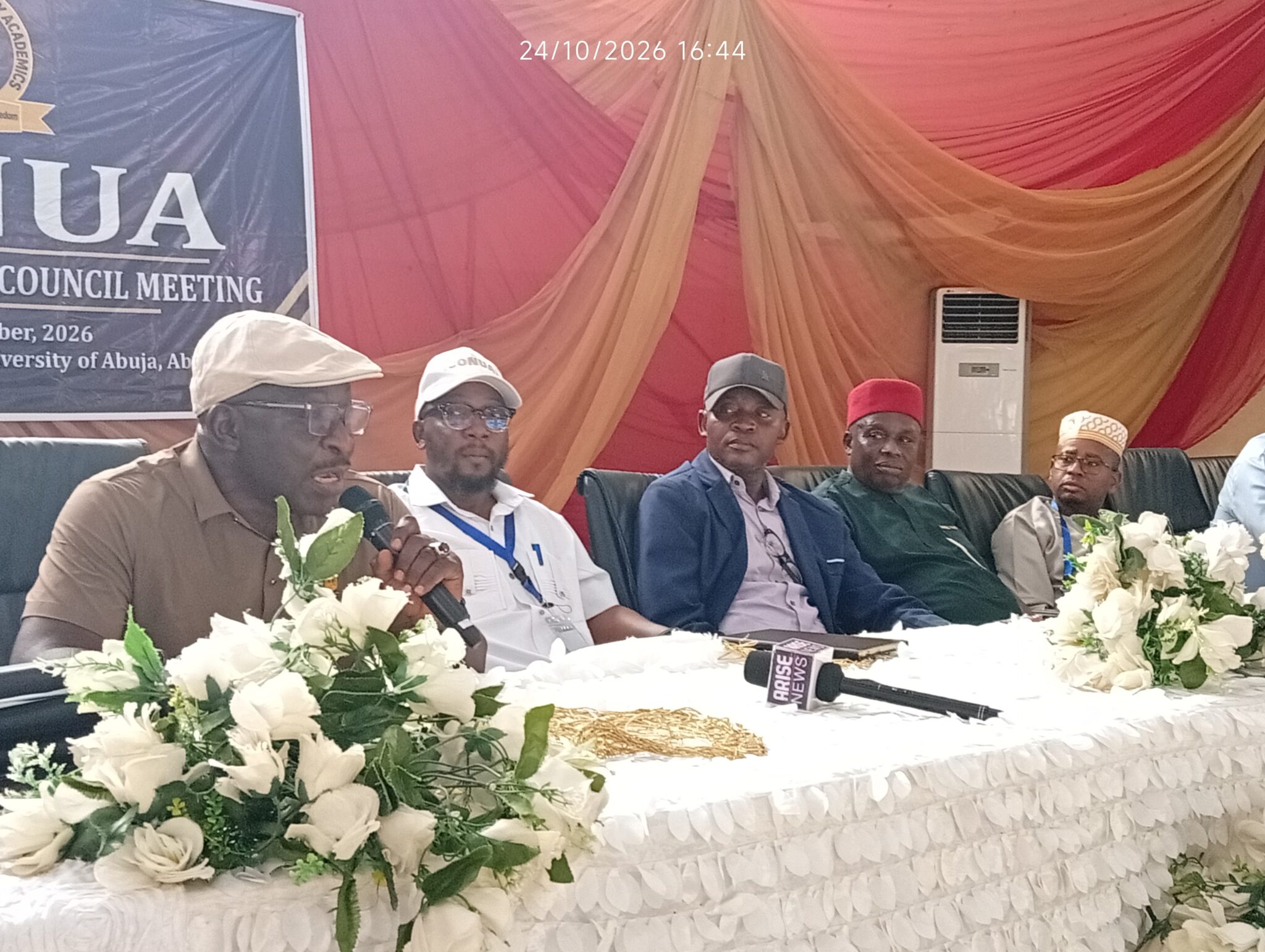
TUC General Secretary, Comrade Nuhu Toro, stated the position on Saturday after the congress’s National Executive Council meeting at the University of Abuja. He said CONUA deserved fair representation, better working conditions and the opportunity to negotiate effectively with the government.
Toro maintained that attacks on CONUA would affect the wider labour movement, urging the government to turn its recognition of the union into meaningful negotiations and a signed agreement protecting members’ interests.
In a communiqué read by Niyi Sunmonu, an associate professor of physics at Obafemi Awolowo University, Ile-Ife, CONUA said unresolved issues affecting staff welfare could threaten industrial peace in Nigerian universities.
The union called on the Ministries of Education and Labour and Employment, alongside other relevant government authorities, to complete negotiations on its proposed agreement. It warned that it could pursue lawful trade union action if the outstanding issues remained unresolved, while reaffirming its preference for dialogue.
CONUA clarified, however, that it had neither declared nor begun a strike. It called for clear communication, accurate records and timely payment of outstanding entitlements.
Among its concerns are three-and-a-half months of withheld salaries, unpaid promotion arrears and irregular payment of recently approved benefits in some universities. The union also demanded payment of outstanding arrears from the 25 per cent and 35 per cent wage awards.
The TUC said agreements reached through collective bargaining should be treated as commitments to be honoured, rather than favours granted by the government. It warned that failure to implement such agreements could undermine workers’ rights and damage industrial relations.
The congress also criticised inadequate funding for universities and the treatment of academic staff, arguing that neglecting workers and weakening negotiations could affect national development.
CONUA acknowledged some progress on pension entitlements, commending the Federal Government for steps taken to address members’ concerns. It also recalled a joint programme organised with the National Pension Commission on September 26, 2024, which helped members obtain information about their pension entitlements.
Beyond salary and welfare matters, the union raised concerns about its exclusion from committees and consultation structures linked to the Tertiary Education Trust Fund (TETFund) and needs assessment initiatives. It said excluding relevant academic representatives could weaken fairness, accountability and decision-making in the university system.
The union called for greater investment in university infrastructure, including reliable electricity, internet access, functioning laboratories and modern equipment. It also urged authorities to provide continuous training for academic and technical staff and improve digital facilities used for teaching, research and administration.
CONUA further criticised reported practices in which universities temporarily hire academic staff or rent equipment to meet accreditation requirements. It argued that accreditation exercises should reflect the actual staff strength and facilities available to institutions.
On wider national issues, the union called for credible and peaceful elections, improved security and restraint by political actors. It urged security agencies to protect citizens and uphold the rule of law.
THE ISSUES
The dispute centres on whether the government will conclude negotiations and meet outstanding obligations to CONUA members. Unpaid salaries, promotion arrears and wage awards directly affect academics’ incomes, while uncertainty over benefits can deepen dissatisfaction among university staff.
The disagreement also raises questions about how recognised unions are represented in negotiations with the government. For collective bargaining to work, both sides need a clear process for reaching agreements and a reliable way to ensure that commitments are implemented.
CONUA’s clarification that it has not called a strike is important for students and university administrators. Although the union has warned that it may take lawful action, it has also said it remains committed to dialogue. The immediate concern is whether negotiations can resolve the outstanding issues before tensions disrupt academic activities.
Funding and infrastructure remain broader challenges. Reliable electricity, internet access, laboratories and modern equipment are necessary for effective teaching and research. Addressing staff welfare without improving these facilities would leave other barriers to university performance unresolved.
WHAT’S NEXT
The next step is for the relevant ministries and negotiating authorities to engage CONUA and work towards concluding the proposed agreement.
The outstanding salary and benefit payments, the union’s representation in education-related committees and the government’s response to demands for improved university facilities will be important issues to monitor.
If negotiations fail, CONUA has reserved the right to pursue lawful trade union action, although it has not declared a strike.
BOTTOM LINE
The TUC’s support strengthens CONUA’s call for a signed agreement and payment of outstanding entitlements. Resolving the dispute will require meaningful negotiations, fulfilment of legitimate obligations and sustained attention to the working conditions and facilities that support Nigeria’s university system.


 has thrown its support behind the Congress of University Academics (CONUA), ...)