





By Emmanuella Opara | October 22nd 2026
KEY POINTS
- Bayelsa lawmakers approve the proposed constitutional amendment to establish state police services.
- The Assembly introduces bills on Ijaw cultural heritage and retirement ages for magistrates and customary court chairmen.
- The two bills will undergo further legislative consideration before any decision on passage.
MAIN STORY
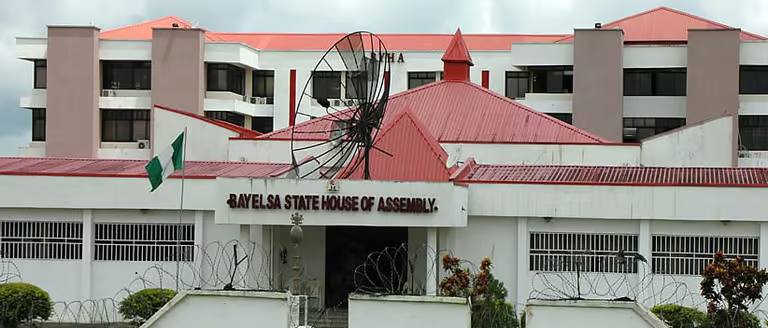
The Bayelsa State House of Assembly has approved a proposed amendment to the 1999 Constitution to provide for the establishment of state police services, joining the state legislatures considering the National Assembly’s constitutional amendment proposals.
The approval followed the transmission of the proposed sixth alteration to the Constitution by the National Assembly to the 36 state Houses of Assembly for consideration and endorsement.
Lawmakers considered the proposal during plenary in the Committee of the Whole before voting in favour of the amendment.
The Speaker, Abraham Ingobere, represented by Deputy Speaker Michael Ogbere, commended members for their prompt consideration of the proposal, describing the decision as a milestone for the Seventh Assembly.
He said the approval reflected the lawmakers’ commitment to their legislative responsibilities and the consideration of issues affecting governance, security and public welfare.
The proposed amendment seeks to establish a legal framework for state police services. However, its implementation will depend on the completion of the constitutionally prescribed amendment process.
In a separate development, the Assembly introduced two bills for first reading: the Ijaw Cultural Heritage Bill and the Retirement Age for Magistrates and Chairmen of Customary Courts Bill, 2026.
The Ijaw Cultural Heritage Bill is intended to address the preservation and promotion of Ijaw cultural heritage, while the second bill concerns the retirement age of magistrates and chairmen of customary courts.
Both bills are at the initial stage of legislative consideration and will proceed through the relevant stages before the Assembly decides whether to pass them.
The Speaker urged lawmakers to remain committed to their legislative duties and give due consideration to bills and motions presented before the House.
THE ISSUES
The approval of the state police amendment proposal forms part of the constitutional process required to establish state police services. The proposal must pass through the prescribed stages before it can take effect.
The two newly introduced bills also raise legislative matters relating to cultural preservation and the administration of justice in Bayelsa State. Their introduction does not amount to passage, as they must undergo further consideration by the Assembly.
WHAT’S BEING SAID
“The approval of the proposed establishment of state police services is a significant step in the constitutional amendment process. I commend members for their prompt consideration and commitment to the legislative responsibilities before the House,” Abraham Ingobere, Speaker of the Bayelsa State House of Assembly, said.
“The participation of members and their contributions during plenary demonstrate the importance we attach to issues affecting governance, security and the well-being of our people,” Abraham Ingobere, Speaker of the Bayelsa State House of Assembly, said.
“Our responsibility as lawmakers is to give careful consideration to matters before the House and ensure that our legislative decisions reflect the interests of the people we represent,” Abraham Ingobere, Speaker of the Bayelsa State House of Assembly, said.
WHAT’S NEXT
The proposed state police amendment remains subject to the completion of the constitutional amendment process. The Ijaw Cultural Heritage Bill and the Retirement Age for Magistrates and Chairmen of Customary Courts Bill, 2026, will proceed through further legislative stages before the Assembly determines their passage.
BOTTOM LINE
Bayelsa lawmakers have endorsed the proposed constitutional amendment for state police and begun considering two bills on cultural heritage and judicial retirement ages, with the next steps dependent on the relevant legislative processes.