








By Boluwatife Oshadiya | September 1st, 2026
Key Points
- Oil refining growth accelerated to 43.94% year-on-year in Q2 2026, according to the National Bureau of Statistics
- Dangote Refinery increased crude distillation capacity from 650,000 barrels per day to 700,000 barrels per day in February
- Nigeria’s petroleum product exports rose sharply as domestic refining capacity expanded, with 350,000 barrels per day exported in Q2 2026
Main Story
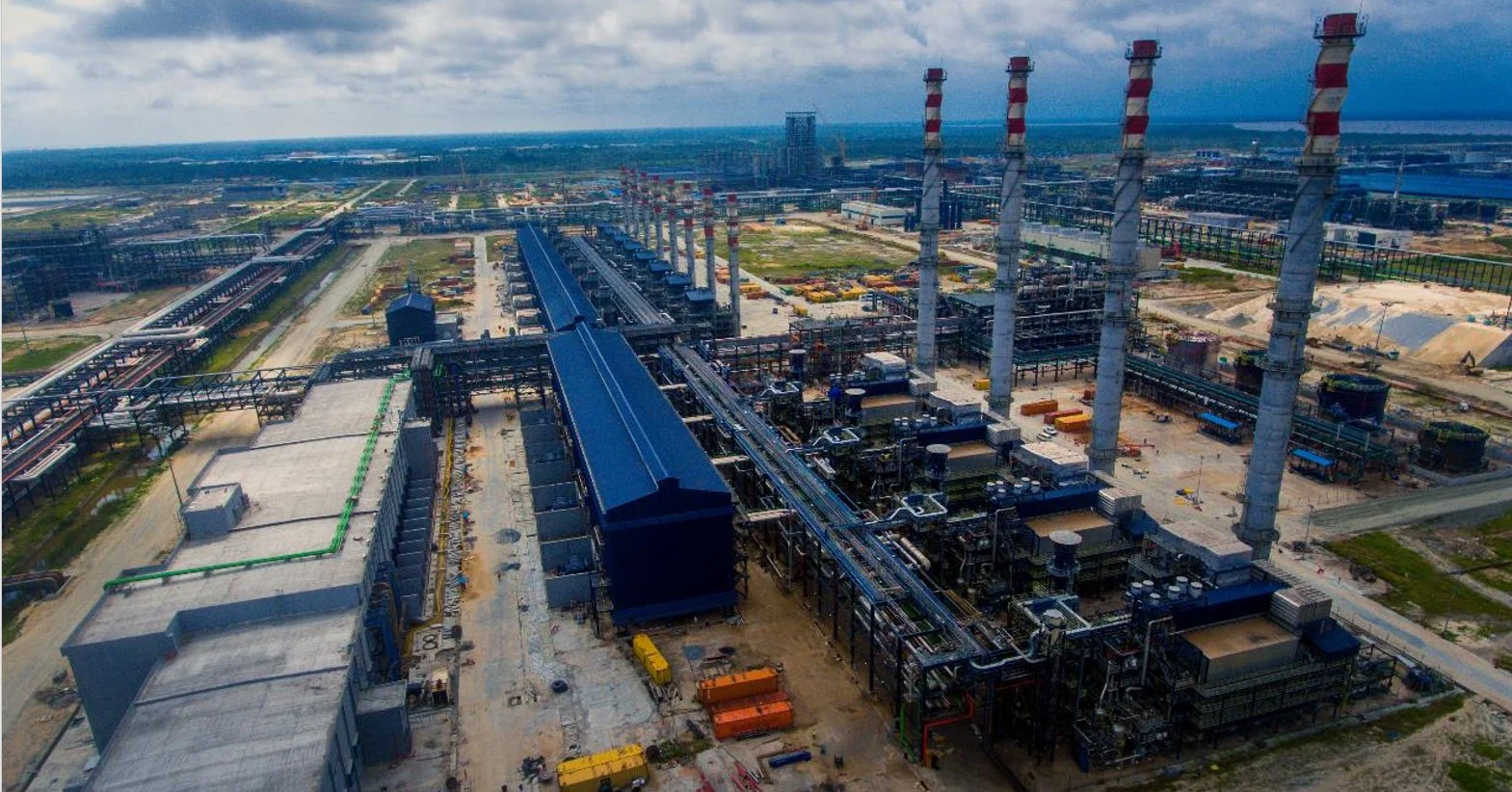
Nigeria’s oil refining sector expanded by 43.94% year-on-year in the second quarter of 2026, its strongest growth under the rebased Gross Domestic Product series, as higher output from the Dangote Petroleum Refinery boosted domestic refining activity.
The National Bureau of Statistics (NBS) disclosed the growth in its Q2 2026 GDP report released on Monday, August 31, covering the rebased quarterly GDP estimates for 2025 and the first two quarters of 2026.
The performance followed the completion of maintenance and expansion work at the Dangote Refinery in February, which increased its crude oil distillation capacity from 650,000 barrels per day (b/d) to 700,000 b/d. The U.S. Energy Information Administration (EIA) said the expansion coincided with a significant increase in Nigeria’s petroleum product shipments.
NUPRC data also showed that 53.7 million barrels of crude oil and condensate were supplied to local refiners between April and June, representing 97.4% performance under the Domestic Crude Supply Obligation (DCSO). Dangote Refinery accepted 52.6 million barrels after producers offered 68.1 million barrels against its requirement of 63 million barrels.
The expansion in refining activity is increasingly affecting Nigeria’s petroleum trade. EIA data showed that seaborne petroleum product shipments averaged 561,000 b/d in Q2 2026, while exports accounted for 350,000 b/d. Exports to Europe averaged 130,000 b/d, while shipments to other African markets reached nearly 120,000 b/d.
What’s Being Said
“The Commission reaffirms its commitment to achieving the government’s objective of energy sufficiency.” Eniola Akinkuotu, Head, Media and Corporate Communications, Nigerian Upstream Petroleum Regulatory Commission.
The EIA said Nigeria’s higher petroleum product supply has reduced its reliance on imports while increasing exports, with the expansion at Dangote playing a central role in the change.
What’s Next
- Dangote Group plans to add a second 750,000-b/d crude oil distillation unit by 2028, potentially doubling the refinery’s crude-processing capacity.
- NUPRC is expected to continue enforcing the Domestic Crude Supply Obligation as domestic refining capacity and crude requirements increase.
Bottom Line
The Bottom Line: Nigeria’s refining growth is moving beyond import substitution into a more export-oriented petroleum trade model. The key test will be whether crude supply, refinery utilisation and regulatory enforcement can sustain the higher output as domestic capacity expands.