



Keypoints
- UN Secretary-General António Guterres has formally condemned recent xenophobic attacks and intimidation of migrants in South Africa.
- The violence and incitement have been concentrated in parts of the KwaZulu-Natal and Eastern Cape provinces.
- Guterres reminded South Africa that its own liberation from apartheid was achieved through the solidarity of other African nations.
- The UN has called for prompt, independent, and impartial investigations into all recent acts of vigilantism.
- The statement coincided with South Africa’s Freedom Day, a national holiday celebrating the country’s first democratic elections.
Main Story
As South Africa celebrated Freedom Day on Monday, April 27, 2026, the United Nations issued a somber reminder of the work still needed to achieve true social inclusion.
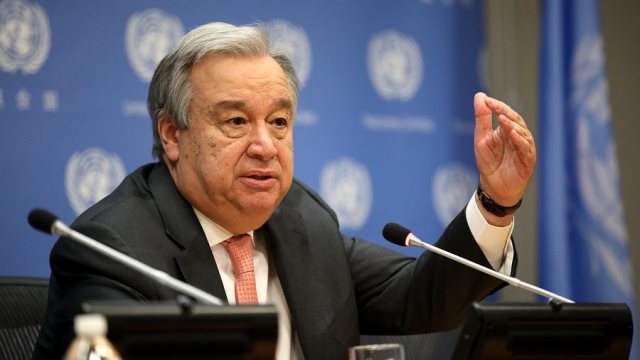
Secretary-General António Guterres expressed deep concern over a resurgence of criminal acts targeting foreign nationals.
In a statement delivered via his spokesperson, Stéphane Dujarric, Guterres noted that vigilantism and hatred have no place in a democratic society, especially one founded on the principles of African unity.
The Secretary-General highlighted that migrant contributions have been a historical driver of South African development.
While acknowledging the “complex socio-economic challenges” currently facing the country, such as high unemployment and inflation, he emphasized that these issues do not justify violence.
The UN’s message was a direct call for the South African government to move beyond rhetoric and fully implement its National Action Plan against Racism and Xenophobia to protect vulnerable migrant communities.
The Issues
The primary challenge is the solidarity-paradox gap; while South Africa relies on regional trade and history with its neighbors, local frustration over economic hardship is frequently redirected toward fellow Africans. Authorities must solve the problem of vibrant incitement, where social media and local “vigilante” groups move faster than law enforcement can react to protect foreign-owned businesses.
Furthermore, there is a diplomatic-reputation risk; as the UN chief pointed out, South Africa’s global standing is tied to its history of fighting exclusion. To succeed, the government must ensure that its investigations are truly “independent and impartial,” as any perceived bias in favor of local perpetrators could further isolate South Africa from its continental partners.
What’s Being Said
- “Violence, vigilantism and all forms of incitement to hatred have no place in an inclusive, democratic society,” stated António Guterres.
- The UN scribe reminded the nation that the struggle against apartheid was built on a foundation of “global and African solidarity.”
What’s Next
- The South African Police Service (SAPS) is expected to increase patrols in identified violence hotspots across the Eastern Cape and KwaZulu-Natal.
- International human rights groups are anticipated to monitor the “impartiality” of investigations into the recent attacks as requested by the UN.
- South Africa may face increased pressure at the African Union (AU) to provide concrete security guarantees for migrant traders and workers.
- The South African government is likely to launch a public awareness campaign linking Freedom Day values to the protection of all residents, regardless of nationality.
Bottom Line
The UN’s intervention on Freedom Day is a strategic plea for South Africa to return to its “Rainbow Nation” roots. By calling for impartial investigations, Guterres is signaling that the world is watching how South Africa treats the very neighbors who once supported its quest for freedom.