








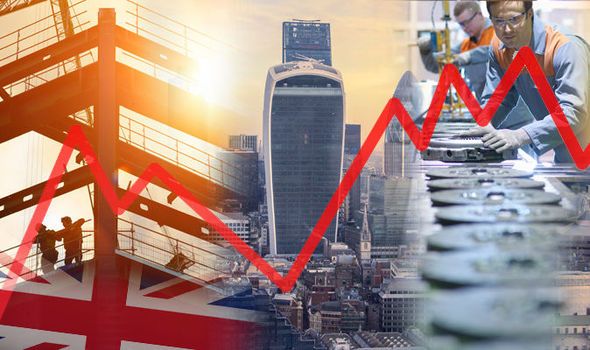

The Federal Government has introduced a new National Industrial Policy (NIP) designed to reverse decades of industrial decline and transform Nigeria into a global production hub. Announced by the Minister of State for Industry, Trade and Investment, Senator John Owan Enoh, on February 16, 2026, the policy aims to raise the manufacturing sector’s contribution to the Gross Domestic Product (GDP) to 25% by 2030.
This ambitious goal comes as the sector currently contributes less than 10% to the national economy, a sharp drop from its 20% peak in the early 1990s.
A central part of this strategy is the massive recapitalization of the Bank of Industry (BOI) to 3 trillion naira, intended to provide long-term, low-interest loans for local producers. The policy also proposes that Nigeria spend between 3% and 5% of its annual GDP specifically on industrial development.
Minister Enoh emphasized that unlike previous plans, this version includes a strict implementation matrix with specific timelines and measurable outcomes to ensure it does not end up as another “paper policy.”
The framework is built on six pillars: competitive industrial production, value-chain deepening, import substitution, MSME-to-industry transition, trade competitiveness under AfCFTA, and strong institutional governance.
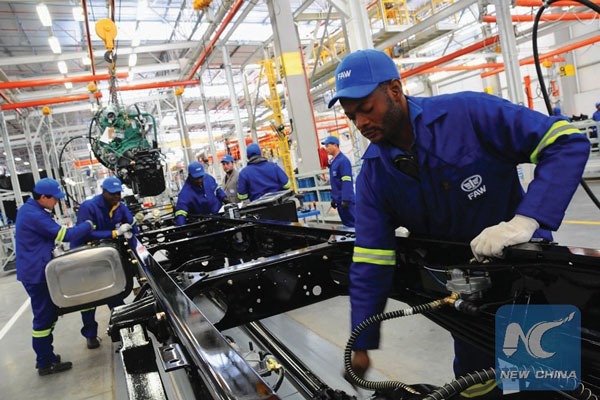
A key move under this policy is the enforcement of the “Nigeria First” mandate, which compels all government agencies to prioritize locally manufactured goods in their procurement. By focusing on reviving dormant factories in sectors like textiles, automotive, and agro-processing, the government hopes to reduce the country’s heavy dependence on imported raw materials and finished goods.
To lower the high cost of doing business, the government plans to establish industrial clusters with shared infrastructure and dedicated energy facilities. This is designed to help small and medium enterprises (SMEs) bypass the expenses of private power generation and logistics.
As the formal launch by President Bola Tinubu approaches, the focus is now on the newly formed “industrial revolution working group” to coordinate these efforts and ensure that the policy translates into real jobs and a more resilient economy.










 designed to reverse decades of industrial decline and transform Nigeria into a global production hub. Announced by the Minister of State for Industry, Trade and Investment, Senator John Owan Enoh, on February 16, 2026, the policy aims to raise the manufacturing sector's contribution to the Gross Domestic Product (GDP) to 25% by 2030.)