






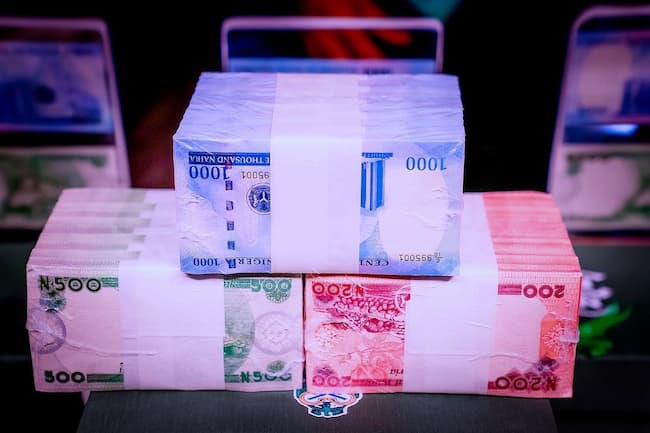
The naira recorded a mild depreciation at Nigeria’s official foreign exchange market, continuing its narrow trading pattern amid steady dollar inflows and balanced demand conditions.
Data released by the Central Bank of Nigeria (CBN) showed that the local currency slipped by 0.09 percent at the official window, closing at ₦1,420.69 per dollar. During the trading session, the exchange rate touched an intraday high of ₦1,423/$, where it eventually settled.
Market analysts said exchange rate pressures remained contained, largely due to sufficient dollar supply and sustained foreign portfolio investor participation in Open Market Operation (OMO) bills.
The naira reportedly traded as strong as ₦1,419/$ intraday, with increased foreign inflows helping to offset demand pressures. Analysts also pointed to rising FX inflows from exporters and non-bank corporates, alongside individual market participants, as factors supporting relative stability.
However, the parallel market told a different story. In the informal segment, the naira weakened further, trading around ₦1,480 per dollar, highlighting persistent divergence between the regulated official market and the street market.
Meanwhile, global commodity markets reflected heightened geopolitical uncertainty. Oil prices advanced on Wednesday as traders assessed the impact of a temporary shutdown at two major oil fields in Kazakhstan, expectations of higher U.S. crude inventories, and renewed geopolitical tensions linked to U.S. tariff threats and territorial ambitions.
Brent crude rose by 1.39 percent, gaining 89 cents to trade near $65.08 per barrel. U.S. West Texas Intermediate (WTI) crude also edged higher by 0.23 percent, hovering around $60.50 per barrel.
In the precious metals market, gold surged to unprecedented levels, breaking above $4,800 per ounce for the first time. The rally was fueled by escalating geopolitical tensions, including renewed uncertainty surrounding U.S. foreign policy ambitions, which boosted safe-haven demand.
Spot gold climbed by 1.15 percent to $4,818.34 per ounce, while U.S. gold futures rose by 1.20 percent to $4,823.20 per ounce.
Analysts expect global markets to maintain a cautious, risk-off posture in the near term, with strong gold prices signaling investor anxiety even as oil price movements remain sensitive to supply disruptions and geopolitical developments.