







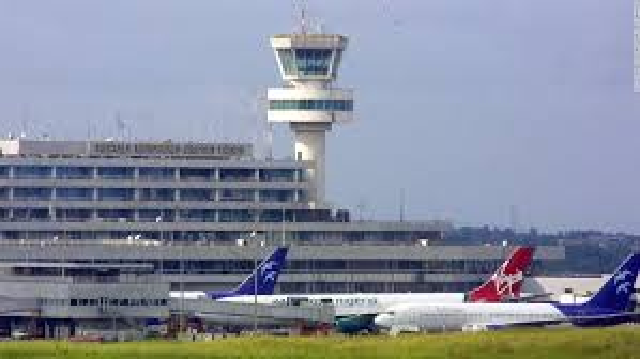
The Federal Ministry of Aviation and Aerospace Development has earmarked ₦7.46 billion in the 2026 Appropriation Bill to overhaul flight safety and operational efficiency across Nigeria. This targeted funding focuses on a comprehensive digital transformation, including the automation of ministry registries and the implementation of advanced performance management systems. The investment is part of a broader ₦87.3 billion sectoral budget designed to stabilize the aviation industry through technology and infrastructure upgrades.
A significant portion of the ₦7.46 billion will be directed toward technical capacity building and safety-critical hardware. This includes ₦100 million for specialized aviation operations training and ₦800 million for ICT upgrades, artificial intelligence applications, and enhanced Wi-Fi connectivity across major international airports.

To support data driven decision making, the ministry plans to develop a statistical database for real time analysis and e-library digitization for research.
In addition to technology, the budget prioritizes the professional development of the workforce. Specifically, ₦100 million has been allocated for the training of air traffic controllers and meteorologists, while ₦3 billion is set aside for the continued development of the African Aerospace and Aviation University in Abuja. Institutional capacity will also be bolstered by a ₦5 billion investment in a new corporate headquarters and staff accommodation to centralize ministry operations.
Despite a 23 percent decline in total sectoral funding compared to the previous year, the 2026 plan maintains a strategic focus on safety critical projects. These include the certification of airports nationwide and the installation of Category III Airfield Lighting to allow for safer landings during low visibility. By shifting toward automation and sustainable infrastructure, the government aims to reduce human error and enhance the global credibility of Nigeria’s airspace.